GUIDE TO A 45-MINUTE MEDITATION ON THE SEVEN WORDS OF CHRIST FROM THE CROSS
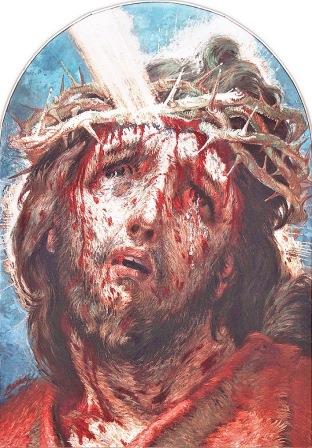 From the lived experience of generations of holy men and women, we know that one of the surest ways to grow into personal union with Christ is regular meditation on His suffering. There is a longer meditation on the seven words, where we reflect on each word for 20 minutes, for a total of two hours and twenty minutes. The faithful traditionally pray this longer form on Fridays.
After meditating on the suffering Jesus endured on the night from Thursday into Friday – the day of His death – we continue with the prayer of the Stations of the Cross. This meditation on His suffering lasts about half an hour, and the Stations likewise take about half an hour.
The meditation presented here takes about 40 minutes, and the way it is structured helps overcome distraction while reflecting on the truth in question.
Let us pause and reflect more deeply on Jesus’ last words as He was crucified and dying on the cross.
(This meditation may be prayed by an individual or a small group.)
The first word from the cross: “Abba (Father), forgive them, for they do not know what they are doing.”
First, we become aware of the wound in the right hand.
To help keep your mind from wandering, you can tap a pencil on the table, letting it call to mind the hammer blows of the crucifixion. After each tap, say “Aaa” quietly, with your breath, and inwardly hold “Father”. On the second tap, say “baaa” and reflect on Jesus’ words, “forgive them (for they do not know what they are doing)”. Repeat this two more times.
Do the same praying to the wound in the left hand, and the left and right foot.
After this first word, try to grasp – at least in part – the truth of being crucified with Christ.
The ‘old self’ is our nature corrupted by sin. The faculties of the soul are the mind, the will, and the memory. For another 5 minutes or so, we keep using the tapping. For example, I repeat three times: “Now my proud mind is crucified with Christ in me,” and just before the word ‘crucified’, I tap. In the same way, repeat it for the co-crucifixion of the will, the memory, and the idolatrous heart.
Then comes the second word: “Jesus, remember me when You come into Your Kingdom.” — “Amen… today you will be with Me in Paradise.”
Here I try to identify myself with the repentant criminal and make his public confession of guilt my own: ‘I have sinned’ and ‘I suffer justly’. Together with him, I also personally turn to Jesus and say: ‘Jesus, remember me…’ Realize that after this confession of guilt, and after calling upon the crucified and humiliated Jesus, you too receive the assurance of forgiveness and paradise.
The third word: “Behold your Mother.”
To become more deeply aware of this truth, I repeatedly receive Jesus’ mother into my heart. I receive her into my own (Gr. eis ta idia, into myself). It can be likened to a spiritual transplant of a new heart – a new nature.
The fourth word: “I thirst!”
I realize that Jesus suffers great pain on the cross, yet He thirsts to endure the greatest suffering and death for the sake of our salvation. He thirsts to rid me of the poisoned seed of the devil, original sin. I become aware of Jesus’ cry from the cross and quietly, slowly repeat His words: “I thirst… I thirst… I thirst…” I also realize that Jesus cries the same in me: “I thirst… I thirst… I thirst…” I remain prayerfully in this truth for five minutes.
The fifth word from the cross: “Eloi, Eloi, lema sabachthani?”
Jesus reaches the height of spiritual suffering – being forsaken by the Father. His suffering surpasses the torment of all who are damned in hell. The reason their pain is unimaginably great is that they abandoned and rejected God, who created them and gave them an immortal spirit and existence. Jesus bears this suffering of abandonment in the depths of both His divine and human being. We try, at least to some extent, to enter into this reality from four angles: 1) abandonment, 2) death agony, 3) deliverance from eternal death, 4) the height of the torments of dying. This truth, expressed in the words “Eloi, Eloi”, can be reflected on for longer than 5 minutes.
The five words of the suffering Saviour on the cross express our own participation in His crucifixion. There is only one ‘old self’, that is, one human nature wounded by sin, which each of us bears. Original sin – the spiritual poison that tainted our human nature – was the cause of Christ’s suffering on the cross and also of His death. You, too, were born with original sin. So it can be said: “You crucified Christ,” and yet also: “You were crucified with Him.” The fact that original sin still remains within our wounded nature is another matter. From the moment of Christ’s death, through baptism and faith, we share in the absolute victory over this devil’s seed within us. But victory over the old self is found only in Christ. That is why we must fight the fight of faith, so that we may step into this victory. If the old self were defeated in such a way that it could no longer show itself at all, the new nature would literally be forced upon us even against our will. But then we would be stripped of the freedom to choose between good and evil, and with it any possibility of merit.
Two truths from the cross that relate to Christ’s death
The sixth word from the cross: “It is finished.”
By His death, Jesus broke through the spiritual darkness of separation. Salvation is finished! A pillar of light from the cross reaches all the way to the Father. By His death, Jesus has opened up a connection with the Father for me too. I experience the reality of the power of Christ’s death in my soul, and then I carry out the mission of faith on the basis that there is one baptism that unites us. I make certain gestures that help me remain in faith in this mystery. At the same time, I realize that the pillar of light opens the prison in which the old self held my spirit. By this act of faith, the path is prepared to leave this prison together with Christ’s spirit into the Father’s arms. This takes place within the pillar of light, and it is expressed fully in the seventh word from the cross.
The seventh word from the cross: Christ’s death: “Father (Abba), into Your hands I commit My spirit.”
As a preparation, it is fitting to pray the Lord’s Prayer five times, but not slowly. As I do, I hold my arms outstretched. If it becomes painful, I may alternate between holding them out and raising them upward.
Now follows a meditation – an attentive contemplation – of Christ’s suffering, contained in His seven words from the cross.
Some pray this meditation each day except Sunday, when – beginning Saturday evening – they reflect on the truth of Christ’s Resurrection. The celebration of Sunday begins on Saturday after 9 p.m., that is, after the blessing given by bishops and priests each day to those who conclude the daily Holy Hour, lasting from 8 to 9 p.m.
Structure of the Prayer
The first word from the cross: “Father, Abba, forgive them, for they do not know what they are doing!”
(The prayer leader introduces the prayer with the words:) At the sound ‘Aaa’, I feel as though I can hear the blow of the hammer and Jesus’ agonized cry, “Aaa — Father!”
At the sound ‘baaa’, I feel as though I can hear the next blow of the hammer and Jesus’ urgent plea, “Forgive them, for they do not know what they are doing!”
(We kneel, with our arms outstretched and bent at the elbows in the shape of a cross.)
 (The prayer leader says:) Jesus’ right hand is being nailed to the cross.
(Everyone prays together:) Aaa – baaa… – Aaa – baaa… – Aaa – baaa…
(The prayer leader says:) Jesus’ left hand is being nailed to the cross.
(Everyone prays together:) Aaa – baaa… – Aaa – baaa… – Aaa – baaa…
(The prayer leader says:) Now they are nailing Jesus’ left foot.
(Everyone prays together:) Aaa – baaa… – Aaa – baaa… – Aaa – baaa…
(The prayer leader says:) Now they are nailing Jesus’ right foot.
(Everyone prays together:) Aaa – baaa… – Aaa – baaa… – Aaa – baaa…
(Note: Before each ‘Aaa’ and ‘baaa’, the prayer leader taps the table with an object, for instance, a pencil to illustrate the hammer striking the nail in the hand or foot.)
Co-crucifixion with Christ
(The prayer leader introduces the prayer with the words:) The Word of God says, “The old self (was) crucified with Christ.”
The ‘old self’ is our fallen human nature, wounded by the deadly infection of original sin. The faculties of the soul are the mind, the will, and the memory. In spirit, I gaze upon the cross and, in faith, enter into the reality of being crucified with Christ.
(We kneel, with our arms outstretched and bent at the elbows in the shape of a cross.)
(The prayer leader says:) Co-crucifixion of the mind:
The old self was crucified with Christ on the cross.
Now my proud mind is crucified with Christ in me.
Now my proud mind is crucified with Christ in me.
Now my proud mind is crucified with Christ in me.
Co-crucifixion of the will:
Our sinful nature, or the old self, was crucified with Christ on the cross.
Now the egoism of my rebellious will is crucified with Christ in me.
Now the egoism of my rebellious will is crucified with Christ in me.
Now the egoism of my rebellious will is crucified with Christ in me.
Co-crucifixion of the memory:
Our sinful nature, or the old self, was crucified with Christ on the cross.
Now the self-centredness of my memory is crucified with Christ in me.
Now the self-centredness of my memory is crucified with Christ in me.
Now the self-centredness of my memory is crucified with Christ in me.
Co-crucifixion of the selfish heart:
Our sinful nature, or the old self, was crucified with Christ on the cross.
Now the selfishness of my idolatrous heart is crucified with Christ in me.
Now the selfishness of my idolatrous heart is crucified with Christ in me.
Now the selfishness of my idolatrous heart is crucified with Christ in me.
(Before saying the word ‘crucified’, the prayer leader may illustrate the blow of the hammer with a tapping sound using some object, for example, a pencil.)
The second word from the cross: “Jesus, remember me when You come into Your Kingdom.” — “Amen… today you will be with Me in Paradise.”
(We stand.)
(The prayer leader introduces the prayer with the words:) Do you not fear God?
By your sins, you have condemned yourself to eternal death in hell.
I confess: I have sinned. — I have sinned.
I suffer justly. — I suffer justly.
The wages of sin is death… eternal death.
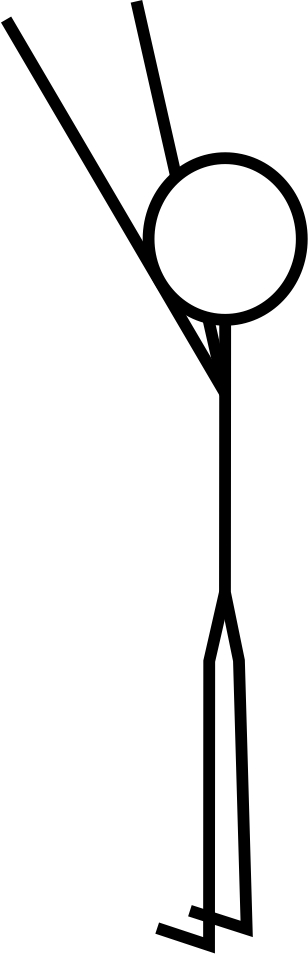 (Everyone prays together:) Ye-ho-shu-aa-aa-aa-aa-aa
(The prayer leader says:) I have sinned. — I have sinned.
I suffer justly. — I suffer justly.
The wages of sin is death… eternal death.
(Everyone prays together:) Ye-ho-shu-aa-aa-aa-aa-aa
(The prayer leader says:) Jesus, remember me in Your Kingdom. — Jesus, remember me in Your Kingdom.
(Everyone prays together:) Ye-ho-shu-aa-aa-aa-aa-aa
(The prayer leader says:) Jesus, remember me in Your Kingdom. — Jesus, remember me in Your Kingdom.
(Everyone prays together:) Ye-ho-shu-aa-aa-aa-aa-aa
(The prayer leader says:) Amen, I say to you, if you die now, you will be with Me in Paradise… you will be with Me in Paradise. Amen, I say to you, if you die now, you will be with Me in Paradise.
The third word from the cross: “Behold your Mother!”
(The prayer leader introduces the prayer with the words:) “Standing near the cross was Jesus’ mother… When Jesus saw His mother, and the disciple standing nearby, He said to His mother, ‘Woman, behold your son,’ and to the disciple, ‘Behold your Mother!’ And from that hour, the disciple received her into his own (Gr. eis ta idia).”
(We stand with our arms bent at the elbows, stretched out in front of us.)
(Prayer part [2×])
(The prayer leader says:) In spirit, I stand beneath the cross.
Jesus, You see me.
Jesus, You now speak to me.
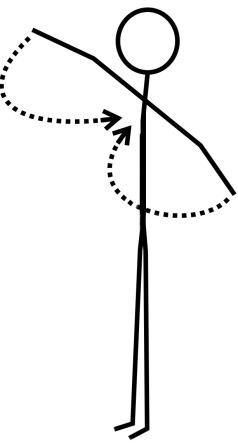 Behold your Mother! — Behold your Mother!
I receive her into my heart — I receive her into my heart.
(All pray together:) Ye-ho-shu-aa-aa-aa-aa-aa — Ye-ho-shu-aa-aa-aa-aa-aa
(Note: At the third, fourth and fifth ‘aa’, I bring my arms in from an outstretched position and cross them over my chest, saying inwardly, ‘I receive her into my heart.’)
The fourth word from the cross: “I thirst!”
(The prayer leader introduces the prayer with the words:) Jesus, You suffer great pain on the cross, yet You thirst to endure the greatest suffering and death for the sake of our salvation. You thirst to rid me of the seed of the devil, original sin.
(We kneel, with our hands raised.)
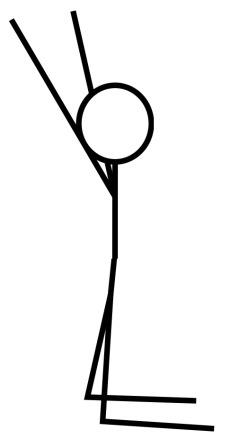 (The prayer leader says:) Jesus, You cry out on the cross:
“I thirst… I thirst… I thirst.”
You cry out in me, too:
“I thirst… I thirst… I thirst.”
We remain prayerfully in this truth for five minutes.
(I repeat the word silently in my mind, at whatever rhythm feels natural to me.)
The fifth word from the cross: “Eloi, Eloi, lema sabachthani?”
(We stand with our arms bent at the elbows, stretched out in front of us.)
(The prayer leader slowly guides the prayer with brief reflections. Everyone says “Eloi” slowly and in a low voice. As you breathe out, say “Eee” in a low voice, then the same with “looo” and “iii”.
Alternatively, “Eloi” may be prayed as “Eee-eee-looo-looo-iii-iii”. The group should agree beforehand which form of prayer they will use.)
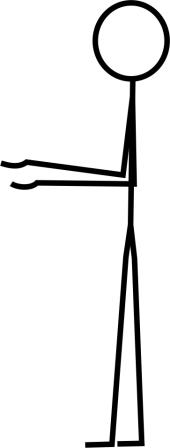 Abandonment:
Jesus, abandoned on the cross for me, You cry out in the depths of darkness: “My God, My God, why have You forsaken Me?”
Eee-looo-iii! Eee-looo-iii!
Jesus, now crucified and abandoned in me, You cry out:
Eee-looo-iii! Eee-looo-iii!
The agony of death:
Jesus, You suffer the agony of death on the cross for me:
Eee-looo-iii! Eee-looo-iii!
Jesus, You suffer the agony of death in me:
Eee-looo-iii! Eee-looo-iii!
Deliverance from eternal death:
Jesus, on the cross, You deliver my soul from eternal death:
Eee-looo-iii! Eee-looo-iii!
Jesus, crucified in me, You deliver my soul from eternal death in hell:
Eee-looo-iii! Eee-looo-iii!
The height of the torments of dying:
Jesus, abandoned and dying on the cross for me, You cry out:
Eee-looo-iii! Eee-looo-iii!
Jesus, abandoned and dying in me, You cry out:
Eee-looo-iii! Eee-looo-iii, lema sabachthani?
“It is finished!” — A breakthrough!
(The prayer leader introduces the prayer with the words:) By His death, Jesus triumphantly broke through the spiritual darkness of separation. Salvation is finished! A pillar of light from the cross reaches all the way to the Father. By His death, Jesus has opened up a connection with the Father for me too.
(We stand.)
(Prayer part [we pray 3 times: the first time, for example, for America; the second time, for Russia; the third time, for Europe])
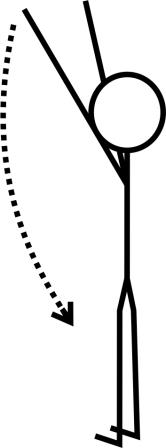 (The prayer leader says:) Christ’s death – Breaking through the darkness
(Everyone prays together:) Ye-ho-shu-aa-aa (When saying “Ye-ho-shu”, we raise our hands. Saying the first “aa”, we lower them and realize: “You created me.” Saying the second “aa”, we make the sign of the cross and realize: “You redeemed me through the cross.”)
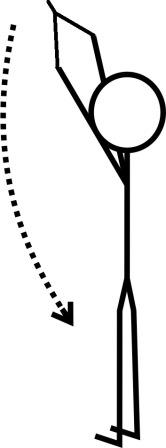 (We raise our hands again and press our palms together.)
(The prayer leader says:) Through baptism in me. (We experience this through faith as we slowly lower our hands to our sides.)
(As we do so, we all breathe out the sound:) “aa”
 (The prayer leader says:) Through baptism in you, (e.g.) Americans. (We stretch out our arms and become aware of the power of Christ’s death flowing to the right and to the left into all the baptized. Breathing out the sound “aa-aa-aa”, we remain for a moment within this cross of Christ’s power. When we pray for a nation in a particular territory – e.g. for America – we place ourselves in spirit at its centre, approximately in Topeka, Kansas. I become aware of the power of Christ’s death flowing down from God above into me and then, through me, flowing outward to the right and to the left, reaching all the baptized throughout that land.)
(We all breathe out:) “aa-aa-aa”
(Let us remember that there is one baptism: through it, I am united with God, and through the same baptism we are all united as one Mystical Body of Christ. In this sense, we are connected like communicating vessels.)
Christ’s death: “Father, Abba, into Your hands I commit My spirit!”
 (We kneel with our arms stretched to the sides.)
(The prayer leader introduces the prayer with the words:) We pray five Our Fathers at a slightly faster pace, one for each of Christ’s five wounds.
(All pray together:) Our Father… (5×)
 (The prayer leader says:) Through baptism, Jesus, crucified, has descended into the depths of my being. Now, by the power of His death, He is bringing my spirit out of the prison of original sin and placing it in the arms of the Father. With a quiet yet fervent cry of “aa”, I give my assent as I remain in these words:
Father… with Jesus… I commit my spirit.
(We remain in this truth for about two minutes.)
Download: GUIDE TO A 45-MINUTE MEDITATION ON THE SEVEN WORDS OF CHRIST FROM THE CROSS