BCP: The solution to save Africa: Patriarchate /Celebration of the seventh day – Part 12/
13 April 2026
The renewal of the Church begins with the renewal of the spiritual life of the family. This renewal is deeply connected with keeping the third commandment: “Six days you shall labour… but the seventh day is a day of rest, a holy day.” (Deu 5:12-15) God reminds us to stop from our everyday work on the seventh day. Why? Not only so that we can rest, but also so that we remember how He freed His people from slavery in Egypt. Today, many people live as slaves of a modern Egypt – the system of this world. It traps them in many kinds of addictions and distractions. But most of all, it keeps them from pausing, from stepping out of the slavery of their own ego and the spirit and system of this world.
Watch this video on: https://youtu.be/c6gItGoakbo
https://rumble.com/v78utz2-solution-to-save-africa-12.html
https://cos.tv/videos/play/68771120074229760
https://crowdbunker.com/v/PhDmDyXAqq
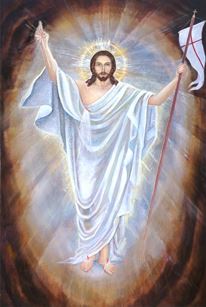
The seventh day belongs to God, to the care of one’s soul and to the spiritual good of the family. If the seventh day, the Lord’s Day, is not kept in the right way, our living relationship with God begins to fade. That is why it is essential to set aside time each week, on the Lord’s Day, for prayer. Jesus Christ, the Son of God, set us free on the cross at Calvary, and our salvation was completed through His glorious resurrection. The first Christians celebrated the liturgy during the night from Saturday to Sunday (Acts 20:7). The governor of Bithynia mentions in a letter to Emperor Trajan (98-117 AD) that Christians gathered on Sundays early in the morning, before sunrise – in the very night when Christ rose from the dead.
To be witnesses of Christ – martyrés, faithful to Him even unto death, as millions of martyrs have been – we need the light and strength of the Holy Spirit.
The renewed celebration of Sunday begins already on Saturday evening, after the Holy Hour, with songs and reflection on the truths of the Resurrection. The first hour is divided into three parts.
In the first part, about twenty minutes, we experience Christ’s Resurrection as the manifestation of God’s almighty power. The Resurrection of Jesus is the greatest proof of His divinity.
In the second part, we share in the joy of the Virgin Mary as she meets the Risen Jesus.
And in the third part, we reflect on the meaning of holy baptism. Through baptism, we were not only immersed in Christ’s death but we were also raised with Him (see Col 2:12). In baptism, we received new life – God’s life. Only the Holy Spirit can lead us into the depths of this mystery – the mystery of baptism and of Christ living in us.
On Sunday morning, we begin at 5 a.m. and pray until 7 a.m.
We reflect on the events of the Resurrection that took place on that first Sunday morning. Our prayer is accompanied by songs.
In the first part, we enter into the moment when the angels appeared to the women at the tomb. Mary Magdalene and Mary, the mother of James, witnessed the angel rolling the stone away. The guards, overcome with fear, fled. Then the angel of the Lord said to the women:
“Do not be afraid! I know you are looking for Jesus, who was crucified. He is not here, for He is risen!”
In the second part, we remember how Jesus appeared to Mary Magdalene at the tomb. At first, she did not recognize Him; she thought she was speaking with the gardener. But when He spoke her name, her eyes were opened, and she knew it was the Risen Lord. Filled with wonder and joy, she ran to the apostles and announced: “I have seen the Lord – and this is what He said to me!”
In the third part, we reflect on how Jesus appeared to the women. These were the same women who stood near His cross on Good Friday. Early Sunday morning they hurried to the tomb, and as they were returning, Jesus appeared to them and said: “Rejoice!” They fell at His feet and worshipped Him. Then He sent them with a message for His disciples – to tell them ahead of time that He would appear to them in Galilee. That very evening, the Risen Jesus came to the apostles, and again the following Sunday evening. This time, Thomas was with them. Soon after, they all went on to Galilee.
In the second hour, during the first part, we contemplate the appearance of the Risen Jesus to the repentant apostle Peter. We, too, open our hearts to the spirit of repentance. We once again recognize the many ways we have denied Christ in various moments of our lives. Each one of us personally repents for every act of unbelief, for our indifference toward Jesus, for our neglect of the salvation of our own soul, and for the duties we have failed to fulfil. We feel sorrow and share in Peter’s sorrow. Peter wept at the empty tomb over his denial of Jesus. And it is precisely there, in the midst of his tears of contrition, that Jesus appears to him.
In the second part, we reflect on Jesus’ first appearance to the apostles in Galilee. This, too, happened on a Sunday morning. The apostles had been fishing all night and had caught nothing. Jesus stood on the shore, and when He told them to cast the net on the right side of the boat, the net became so full of fish that it was nearly torn apart. Here, by the Sea of Galilee, Jesus asked Peter three questions after Peter had denied Him. When Jesus had been led to Caiaphas, a servant girl had said to the others: “This man was also with Jesus the Nazarene!” But Peter swore that he did not know Him… and he did this three times, out of fear. Now, at the lakeside, Jesus asks him three times: “Simon, son of John, do you love Me?” The third time, Peter broke into tears and answered: “Lord, You know everything – You know that I love You.” Peter showed that he was ready to give his life for Jesus. And in time, he did – he was crucified upside down in Rome.
We too let this question touch our own hearts: Am I willing to place Jesus – and the salvation of my soul – first in my life?
In the third part, we recall the final appearance of Jesus on the fortieth day after His resurrection, in Jerusalem. On that day, Jesus ascended gloriously into heaven from the Mount of Olives. Gathered there were the apostles, many disciples, devout women, and the Mother of Jesus.
After about an hour’s break, we continue with a prayer to the Holy Spirit.
In the first part, we recall the descent of the Holy Spirit upon the apostles on Sunday, the day of Pentecost, around nine o’clock. At the same time, we ask that the Holy Spirit may be given to us anew in His fullness.
In the next part, we ask for and receive the gift of prophecy. We also pray that we may use this gift well in the coming week. The apostle Paul urges us to strive especially for this gift (1Cor 14:1ff). The gift of prophecy serves to build up our spiritual life as well as the life of the Church.
Attending the liturgy
Those who cannot be physically present at the liturgy can still take part spiritually by using the booklet (see https://vkpatriarhat.org/en/wp-content/uploads/2022/07/en-The-mystery-of-faith-%E2%80%93-the-Eucharist.pdf).
In the afternoon, we continue celebrating the Lord’s Day in fellowship. Ideally, about three to five families gather together. It is best if the group divides so the men and women can speak separately and discuss topical issues more freely. The meeting lasts about two hours. It may conclude with a reflection on Jesus’ appearance to the disciples on the road to Emmaus (about 20 minutes).
The celebration of Sunday ends in the evening with the Holy Hour from 8 to 9 p.m. Each family prays at home.
In the first part, we recall Jesus’ appearance in Galilee to more than five hundred brothers at once, and we ask for a missionary spirit. As in the previous hours, the prayer is accompanied by songs.
In the second part, we reflect on Jesus’ appearance on Sunday evening to the ten apostles and the two disciples from Emmaus who were gathered on Mount Zion.
In the third part, we reflect on the next appearance, which took place a week later on Sunday evening, when Jesus again appeared to the apostles. He urged Thomas to put aside his unbelief and to convince himself of His real resurrection by touching His wounds. Thomas cried out: “My Lord and my God!”
The way we celebrate Sunday includes applying the four fundamental principles of the early Church in Jerusalem: 1) prayer, 2) the apostles’ teaching, 3) liturgy, 4) fellowship (see Acts 2:42).
It is impossible to truly keep Sunday holy if family members do not put away their smartphones and refrain from spending the day in supermarkets. Sunday is meant, in truth, to be the Lord’s Day.
+ Elijah
Patriarch of the Byzantine Catholic Patriarchate
+ Methodius OSBMr + Timothy OSBMr
Secretary Bishops
Further information about celebrating Sunday can be found on the Patriarchate’s website.
Actual VIDEO
- BCP: A Call for a Revolution in the Catholic Church – From the Head (Part 2)
- BCP: A Call for a Revolution in the Catholic Church – From the Members (Part 1)
- BCP: Was Pope Francis a public heretic or not? Part 13
- BCP: Was Pope Francis a public heretic or not? Part 11
- BCP: Was Pope Francis a public heretic or not? Part 9