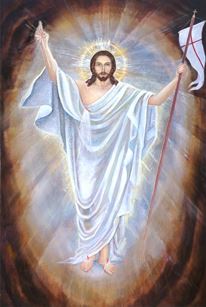
Meditations on the Passion and the Way of the Cross
 Contemplating the Lord’s passion is an ancient tradition. It helps you realize more deeply what Jesus suffered for your sake. From this knowledge comes true respect, love and gratitude.
It is recommended to contemplate the Lord’s passion especially on Thursday evening and Friday, the day of Christ’s redemptive suffering and death.
Reflection
(a verse from a Lenten hymn, e.g. Kyrie eleison)
- Jesus washes the apostles’ feet: On Thursday evening Jesus celebrates the Last Supper with His apostles.
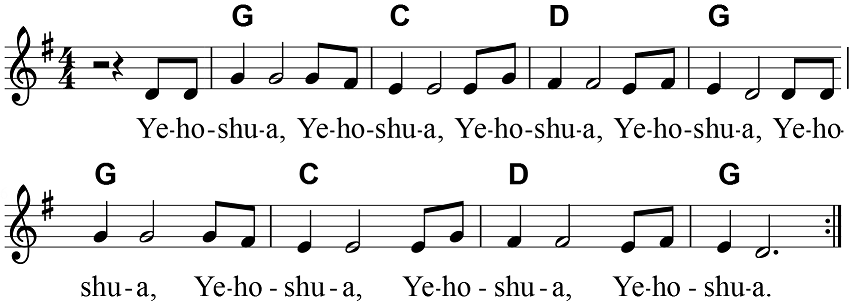
At the beginning, Jesus washed the apostles’ feet. Thus He gave them the example of humility. He warns them against betrayal, behind which is the devil. Only a humble person can overcome the devil. Humility is truth, and truth makes you free. (We sing “Yehoshua” to the melody “You Are Our Peace”)
- At the Last Supper, Jesus instituted the bloodless sacrifice: He was condemned to death that very night, and He completed His salvific sacrifice in a bloody manner on the cross at Calvary. The Mass makes present Christ’s sacrifice on the cross. In it, we receive His Body and Blood. Someone who is in state of grave sin may not receive Holy Communion.
(Singing “Yehoshua” [2×])
- Gethsemane: Jesus went out with His disciples to a garden called Gethsemane. He said: “My soul is very sorrowful, even to death. Stay here and watch with Me.” And He prayed: “Father, if You are willing, remove this cup from Me. Nevertheless, not My will, but Yours, be done.” (Lk 22:42) Jesus was in such agony of spirit that His sweat fell to the ground like great drops of blood.
Do you watch with Christ at least one hour?
(Singing “Yehoshua” [2×])
- Jesus is arrested: The apostle-traitor brought soldiers and temple guards with torches into Gethsemane. He came near to Jesus and gave Him a traitorous kiss. And the soldiers seized Jesus.
What is hidden behind the betrayal of Christ and conscience? Dirty money. Judas is an example of this. He resolved to sell what was most precious – God, his conscience, and his soul. Then, as the Scriptures say, “Satan entered into him”. And what followed? Even though he threw down the money, he did not repent, and hanged himself.
Betrayal is a process. If you have betrayed God, even in a small thing, repent immediately like Peter, or else you will end up like Judas.
(Singing “Yehoshua” [2×])
- Jesus before Annas: They brought Him to the high priest Annas. He questioned Jesus about many things. One of the guards struck Jesus in the face, saying: “Do You answer the high priest like that?”
It is a mean thing to do wrong to someone who is persecuted unjustly in order to gain favor with those who are in power. Have I done such a mean thing too?
(Singing “Yehoshua” [2×])
- Jesus before Caiaphas: When they had bound Him, Annas sent Jesus to the high priest Caiaphas. Caiaphas said: “I put You under oath by the living God, tell us if You are the Christ, the Son of God.” Jesus replied: “You have said so.” The high priest tore his clothes and said: “He has uttered blasphemy!” The crowd began to shout: “He deserves death!” Then they started to spit in Jesus’ face and strike Him on the head.
Caiaphas refused to officially recognize Jesus as the Son of God in that it would threaten his career. Hearing the truth, he called it blasphemy. Whose side do I take? Do I support the truth or the official hierarchy whose aim even today is to condemn and kill the living Christ and His disciples?
(Singing “Yehoshua” [2×])
- Peter denies Christ: Peter was sitting outside in the courtyard. Here he denied Christ three times, swearing: “I do not know the man.” When the rooster crowed, he went out and wept bitterly.
Peter repented immediately; he did not delay. The waters of all the seas will not quench the flames of hell, but a single tear of contrition will save me from them.
(Singing “Yehoshua” [2×])
- The first time before Pilate: In the morning, the Church hierarchy led Jesus bound away to Pilate, the governor. After hearing both sides, Pilate said: “I find no guilt in this man.”
Pilate spoke the truth; however, he was aware that behind the high priests was the spirit of death which was in power and sought to destroy the truth and the Bearer of Truth. I often know what the truth is, but I do not serve the Spirit of truth because it would cost me career, humiliation, or conflict with authority. I deceive my own conscience like Pilate – I do admit the truth theoretically, but I am not willing to make sacrifice for its sake.
(Singing “Yehoshua” [2×])
- Jesus before Herod: Pilate sent Jesus to Herod.
Herod questioned Jesus with many words, but He answered him nothing. Herod treated Him with contempt and clothed Him in a white garment like a fool. St. Paul said, “We are fools (Gr. moroi) for Christ’s sake.” (1Cor 4:10) Am I ready to be considered a fool by the spirit of the world for the sake of Christ?
(Singing “Yehoshua” [2×])
- The second time before Pilate: Herod sent Jesus back to Pilate. Pilate said to the high priests and the fanatic crowd, “I have found no fault in this man; no, neither did Herod.”
Pilate should have acted on principle. He should have released the innocent Christ. But he continued absurdly, “I will punish Him…” We ask: What for? I also compromise on evil for fear that the defense of the truth would cost me a sacrifice which I am not willing to make. The result is defeat.
There are wise compromises which do no wrong to others, and there are compromises which start an avalanche-like process of betrayal and self-destruction. The fact that Pilate sought a compromise, telling the truth but not acting accordingly, did not help him.
My possible betrayal and spiritual suicide consists in the fact that I do not want to truly admit that I need to “lose my soul for Christ’s sake and the Gospel’s” (Mk 8:35). That is why I must put Jesus and my salvation first in my life.
(Singing “Yehoshua” [2×])
- Barabbas: They had then a hated criminal Barabbas who was sentenced to death. When Pilate asked them whether they wanted him to release Jesus or Barabbas, they chose Barabbas. And they demanded death for Jesus.
Whom do I choose in critical situations? Barabbas or Christ?
(Singing “Yehoshua” [2×])
- Jesus is scourged: Pilate believed that the Church hierarchy would be satisfied with cruel scourging and calm down. He ordered Jesus to be scourged.
Our body is a living temple of God. It is defiled by impure thoughts, images, feelings, words or acts. Jesus suffered the cruel scourging for my sins too. Am I aware of it?
(Singing “Yehoshua” [2×])
- Jesus is crowned with thorns: The soldiers then put a crown of thorns on His head, spat in His face, struck His head and mocked Him.
Jesus is deeply humiliated and ridiculed because of my pride. He is God, and who am I?
(Singing “Yehoshua” [2×])
- Ecce homo: Pilate presented the scourged Jesus with a crown of thorns on His head before the crowd, saying, “Behold the man – Ecce Homo!” The chief priests and the crowd shouted, “Crucify Him, crucify Him!” Pilate said to them, “You take Him and crucify Him, for I find no fault in Him.” (Jn 19:5-6) But the Jews cried out, saying, “If you let Him go, you are not Caesar’s friend. Whoever makes himself a king speaks against Caesar.” (v.12) When Pilate heard these words, he decided to condemn Christ to death.
An effective method of destruction is to shout down the truth and its defenders: “Crucify Him, crucify Him!” This is what my sin shouts too. Therefore I have to make a radical break with sin.
(Singing “Yehoshua” [2×])
The Way of the Cross
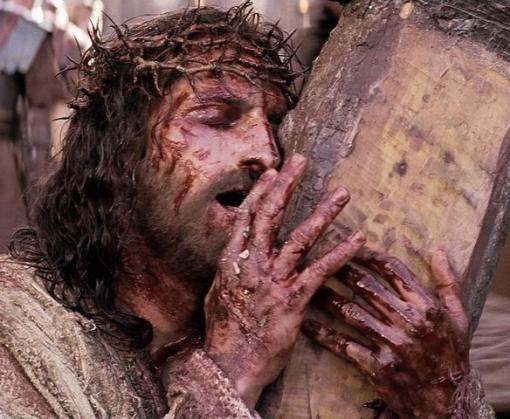 The Way of the Cross devotion with its 14 stations was prayed by believers especially during Lent, not only in church, but also at home. This devotion, like many others, is endowed with so-called indulgences. This means the remission of temporal punishments that a Christian would otherwise have to suffer in purgatory. The fourteen paintings of the Stations of the Cross can be used as aids to contemplation. You can photograph them, for example, in one of the churches where they are still displayed, or display them on a wall. If obtaining images is problematic, it is still possible to pray the Stations of the Cross in front of a large or small cross, or in front of an image of the crucified Christ or His face with the crown of thorns.
- Jesus is condemned to death: Pilate hypocritically washed his hands, saying: “I am guiltless of the blood of this righteous one.” And he delivered Jesus to death!
Pilate’s gesture does not justify him. He is guilty of judicial murder. My sin too was the cause of Christ’s death.
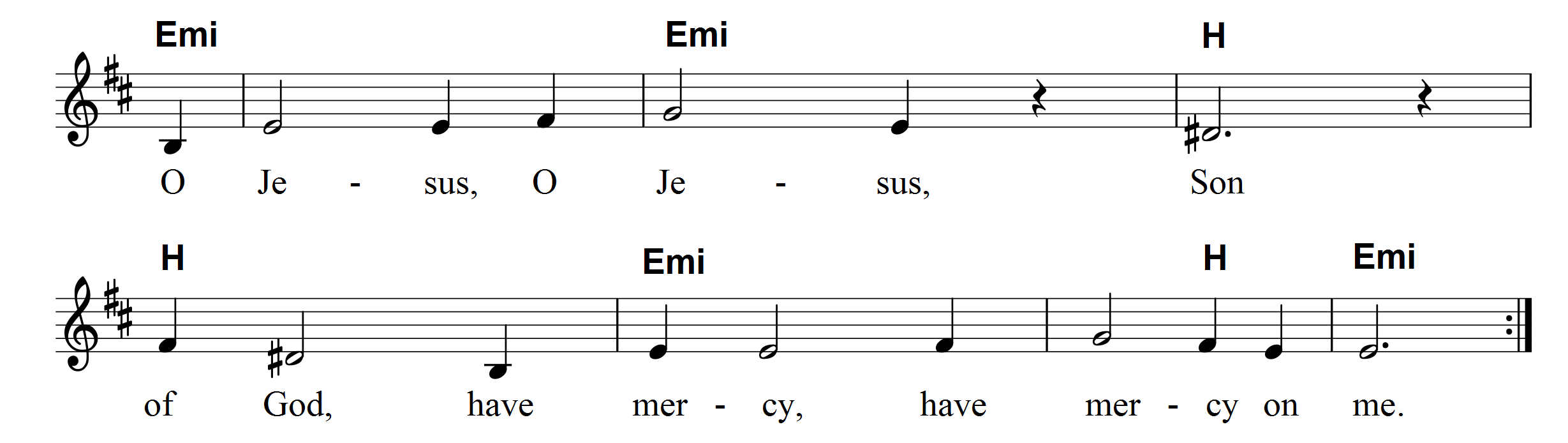
Byzantine chant: “O Jesus, O Jesus, Son of God, have mercy, have mercy on me” [2×]
At the end, those who are standing kneel. Those who are kneeling make a deep bow of the head to the ground.
- Jesus takes up the cross: Jesus’ words are true for everyone and in every time: “Deny yourself, take up your cross and follow Me.”
(chant repeated)
- Jesus falls under the weight of the cross: The heavy cross strikes the tortured Jesus to the ground. I also break down under the weight of my cross. I have to deny myself and rise. What is my cross at the present time? My cross may be mental or physical suffering which I should analyze before God from the perspective of eternity and accept it as God’s will by which God seeks my good and the good of my neighbors.
(chant repeated)
- Jesus meets His Mother: No one has ever been in a deeper union with Jesus than His Mother. She is His most faithful disciple. She sees Jesus being led to death in disgrace. What were her feelings when she met Him on His way to Calvary? What were her feelings when she stood by the cross and when the tortured body was taken down from the cross?
What is my relationship to the Mother of Jesus? And what is my relationship to Jesus Himself?
(chant repeated)
- Simon of Cyrene: They compelled Simon to carry His cross.
When I am to do something for Jesus or my neighbor, I have to force myself – deny myself. Many times this compulsion is very useful, even when it comes from enemies. If I accept it in faith, Jesus will fill my heart with peace.
(chant repeated)
- Veronica: Tradition has it that this woman offered Jesus a headcloth. It was not only an act of compassion but of great courage too. To show our support for a victim of cruel violence who is declared persona non grata is a risk and an act of great heroism.
If I deny Christ, He will also deny me before His Father. Confess Jesus with courage, and show your support for honest people who risk everything for the sake of truth!
(chant repeated)
- Jesus falls the second time: Jesus falls under the weight of the cross. I often fall too. How many good resolutions; but I make a few steps and fall. I have to rise again and continue the way of carrying and solving my problems, carrying my everyday cross.
(chant repeated)
- The weeping women: Jesus admonishes them: “Daughters of Jerusalem, do not weep for Me, but weep for yourselves and for your children.”
Do I weep for myself and my sins in prayer? Do I weep for my relatives and friends who are on the broad way to destruction? It would be a sign of cynicism if I remained indifferent to their temporal and eternal good.
(chant repeated)
- Jesus falls the third time: The last fall was most painful. Jesus gives me the example of readiness to rise again. I also have to summon all mental and physical strength and follow Him.
(chant repeated)
- Jesus is stripped of His garments: Jesus came to Calvary. The soldiers stripped Him of the robe and threw Him to the ground to crucify Him.
Do I use clothing for sin? Fashion employs terror and ridicules everyone who is modest in dress. What clothes do I wear?
The garment of Jesus was soaked with His blood. It stuck to the wounds in many places. When they pulled it roughly off, they reopened the wounds, causing more bleeding and more pain. Jesus is now standing almost naked in humiliation, ready to be nailed to the cross.
(chant repeated)
- Jesus is nailed to the cross: I can hear the hammer blows. I see the soldier driving nails into Jesus’ hands – the skin is torn, the hand is pierced, the nerve fibers are painfully severed, the blood vessels are bleeding… In this great pain, Jesus utters these words: “Father, forgive them, for they do not know what they do.” Then He answers the repentant criminal and promises him paradise for his faith and repentance. Before His death, Jesus gives His mother to the disciple as His last will and testament, saying: “Behold, your Mother.” After that, Jesus cries out: “I thirst!” The most severe suffering, not only physical but also mental and spiritual, is expressed in words: “Eloi, Eloi, lema sabachthani?”
Jesus suffers all this for me, for the forgiveness of my sins.
(chant repeated)
- Jesus dies on the cross: Streams of blood run down Jesus’ deathly pale face, getting darker and darker. The cheeks covered in wounds lengthen and His head lowers to His chest. Jesus said: “It is finished!” With His last surge of strength, He presses His feet against the nail and cries out with a loud voice: “Father, into Your hands I commit My spirit!”
And Jesus breathed His last. It was three o’clock in the afternoon.
(chant repeated)
- Jesus is taken down from the cross: While He was still alive, Jesus gave His Mother over to all of God’s children – sons and daughters who believe and are born of water and the Holy Spirit. The brave men Joseph of Arimathea and Nicodemus, together with the Apostle John, take Jesus down from the cross. They place His dead body in the arms of His Holy Mother. Three decades earlier, Mary cradled Him in her arms as a defenseless child. She holds Him in her arms again and now she sees the martyred Jesus up close. Her loving gaze upon her tortured Son, her tender kiss upon His deep wounds… As Simeon once prophesied: “A sword of pain will pierce your soul.” (Lk 2:35)
John looks compassionately at the one whom Jesus has entrusted to him as his mother. I now feel for the Mother of Jesus, too. Moreover, I realize that it was my sin that caused His deep wounds and painful death.
(chant repeated)
- Jesus is laid in the tomb: Joseph of Arimathea, Nicodemus and John carried Jesus’ body, which was wrapped in white linen, into a nearby tomb. They rolled a large stone to the entrance of the tomb. Night was approaching. Jesus’ mother, the pious women and the apostle John stood by the tomb for a long time. Even in this painful moment, Mary remained steadfast in her faith in the resurrection.
At the end, a couple of verses from a Lenten hymn.
Those who contemplate the Passion of Christ and the Stations of the Cross, if they are in the state of grace, obtain a plenary indulgence.
Download: Meditations on the Passion and the Way of the Cross
Actual VIDEO
- BCP: A Call for a Revolution in the Catholic Church – From the Head (Part 2)
- BCP: A Call for a Revolution in the Catholic Church – From the Members (Part 1)
- BCP: Was Pope Francis a public heretic or not? Part 13
- BCP: Was Pope Francis a public heretic or not? Part 11
- BCP: Was Pope Francis a public heretic or not? Part 9