Reflection on Mt 5:32
 But I tell you that anyone who divorces his wife, except for marital unfaithfulness, causes her to become an adulteress, and anyone who marries the divorced woman commits adultery.
At the time of Jesus, marriage was not yet a sacrament, which is why, as we know, for example, King David had several wives. In this verse, which refers to the indissolubility of marriage, Jesus points to the Old Testament practice where it was said: Anyone who divorces his wife must give her a certificate of divorce. But Jesus says: But I tell you that anyone who divorces his wife, except for marital unfaithfulness, causes her to become an adulteress, and anyone who marries the divorced woman commits adultery.
What does the Catholic Catechism say? What is the sacrament of marriage?
The sacrament of matrimony is a sacrament that sanctifies the indissoluble union between a Catholic man and woman and entitles them to special graces for the due performance of marital duties.
Reflection on Mt 5:29
 If your right eye causes you to sin, pluck it out and cast it from you.It is better for you to lose one part of your body than for your whole body to be cast into hell.
This verse is a continuation of the preceding verse speaking of an impure look, which is the root of the sin of adultery. Jesus gives the saving instructions in the words “cut it off and cast it from you”. In another place, He says “pluck it out”. It is not about physically cutting off your hand or foot or plucking out your eye, but rather about making an inner self-denial by cutting off a thought or feeling, that is, a momentary sensation which can take control of the human mind or will and lead a person to an irresponsible act, sin or even crime.
The words about cutting off the hand or foot mean that we should not use our members as instruments of sin. Scripture says in another place: “Men should pray with holy hands lifted up to God.” (1Ti 2:8) Our feet should not walk where there is danger.
Reflection on Mt 5:27-28
 “You have heard that it was said, ‘You shall not commit adultery.’ But I say to you that whoever looks at a woman lustfully has already committed adultery with her in his heart.”
On the evening before His death, Jesus emphasized: “Whoever has My commandments and keeps them is the one who loves Me.” Many commandments are part of the Sermon on the Mount, which opens with the eight Beatitudes. Jesus touches on an issue that is extremely topical today, namely moral purity. He says: “Blessed are the pure in heart, for they shall see God.” The Lord, through Moses, gave people the Sixth and Ninth Commandments of the Decalogue. Jesus speaks here as the supreme Lawgiver, saying: “You have heard that it was said, ‘You shall not commit adultery.’ But I say to you…” When a judge promulgates a law, he does so in the name of political authority and power, such as a kingdom or republic. Being God, Jesus promulgates moral laws by His own divine authority. He Himself says that He did not come to destroy but to fulfil the essence of what had already been given by God in the Old Testament before His coming. Jesus now clarifies the question of purity, and says: “Whoever looks at a woman lustfully has already committed adultery with her in his heart.”
Reflection on Mt 5:22
 But I say to you that everyone who is angry with his brother will be liable to judgment; whoever insults his brother will be liable to the council; and whoever says, ‘You fool!’ will be liable to the hell of fire.
The Lord Jesus explains anger with one’s brother in connection with the Fifth Commandment: “You have heard that it was said to those of old, ‘You shall not murder; and whoever murders will be liable to judgment.’ But I say to you…” Jesus speaks here as the divine Lawgiver. He emphasizes: “But I say to you…” Then He speaks of three degrees of the expression of anger, almost hatred. Firstly, there is the one who is angry and unwilling to forgive. Jesus says in another place, too, that such a one will not be forgiven – it means that he will be liable to judgment. He who insults his brother will answer for it. And if anyone spreads malicious slander about his brother and calls him a fool or, in other words, a mentally ill person, with the intention of morally destroying – killing – him and removing him from social life, he will be liable to the hell of fire.
Reflection on Rom 8:9
 But you are not in the flesh but in the Spirit, if indeed the Spirit of God dwells in you. Now if anyone does not have the Spirit of Christ, he is not His.
What does it mean to be in the flesh, in other words to be carnal, and what does it mean to be in the Spirit, in other words spiritual? To be in the flesh means to have a carnal mind, which takes seriously neither God nor God’s judgment nor eternity. Scripture says that the works of the flesh are envy, murders, quarrelling, impurity, sorcery etc.
What does it mean to be in the Spirit? To have our mind most deeply united to the Spirit of God. Then the following applies to us: “The Spirit Himself bears witness with our spirit that we are children of God.” (Rom 8:16)
Our spirit is the innermost essence of our being. The human spirit was created by God in His image; it is immortal. Our flesh is mortal. Our being is spiritual in essence: we are a soul with a spirit clothed in a body. In this earthly life, our body is like a spacesuit that we take off at the hour of death.
True love of yourself
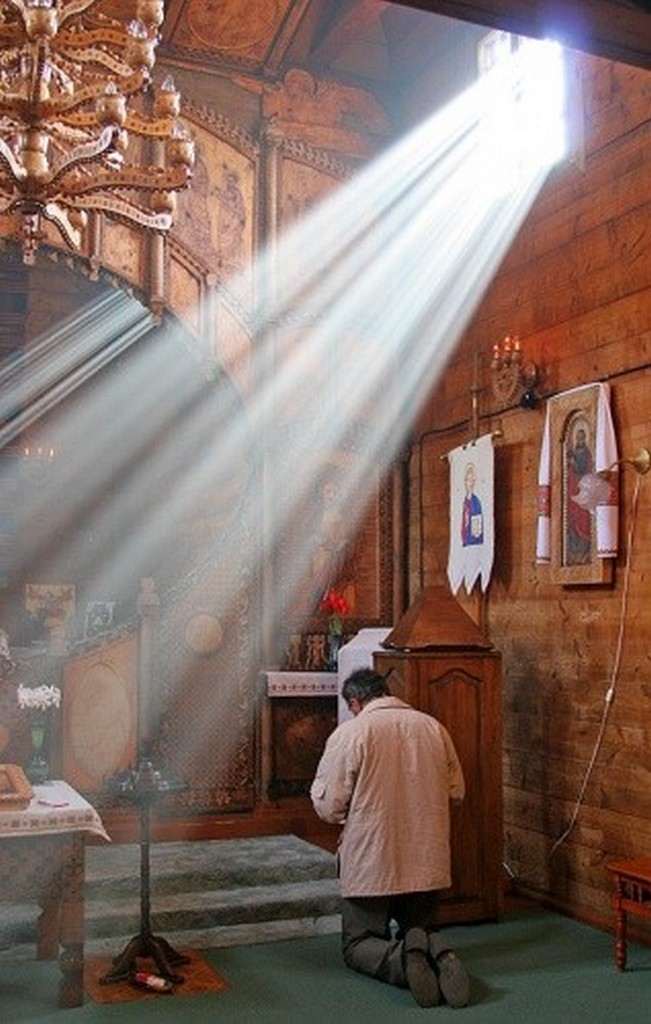 How often it happens that the worst vagabond, if he turns to God with a sincere heart, is saved rather than righteous pharisees. But the fact is that pharisaism and deceit is in the hearts of us all. That is why Jesus speaks about it in the Gospel. When a tax collector and a Pharisee went up to the temple to pray, the Pharisee prayed thus: “O God, I thank You that I am not like this tax collector. I fast twice a week, I give tithes of all that I get…” The Pharisee’s deeds were not bad, but what was his heart like? His heart was not broken before God.
The Apostle Peter said to the Jews on the day of Pentecost: “You killed God; you crucified Jesus!” They were cut to the heart… and they asked: “What shall we do?” “Repent, and you will receive the gift of the Holy Spirit.”
Indeed, the Holy Spirit comes each time we repent. Every day we make mistakes time and time again, we sin by thoughts, finding fault with everyone… We must stop: “Lord, forgive me, I am twice as bad. And if this person sins and causes offence, forgive him too.” But we immediately condemn our neighbour and think how good we are.
Reflection on Mt 5:20
 For I say to you, that unless your righteousness exceeds the righteousness of the scribes and Pharisees, you will by no means enter the kingdom of heaven.
If we want to be honest about love, we need to lay the foundation of righteousness (or justice). Today, people often speak about love. You can hear this word in every other sentence; however, to many it means anything but true love. Righteousness towards God means to give Him what belongs to Him – the first place in our life, true worship, submission, and observance of His laws and commandments. Then we are obliged to practise righteousness towards our neighbours. Here, unfortunately, many Christians, even persons consecrated to God, lack a proper understanding of righteousness. The current trend is a purely subjective egocentric approach looking to one’s own interests and rights. The rights and interests of others are mostly ignored. This is the cause of quarrels, hatred, etc.
God wants to open our eyes
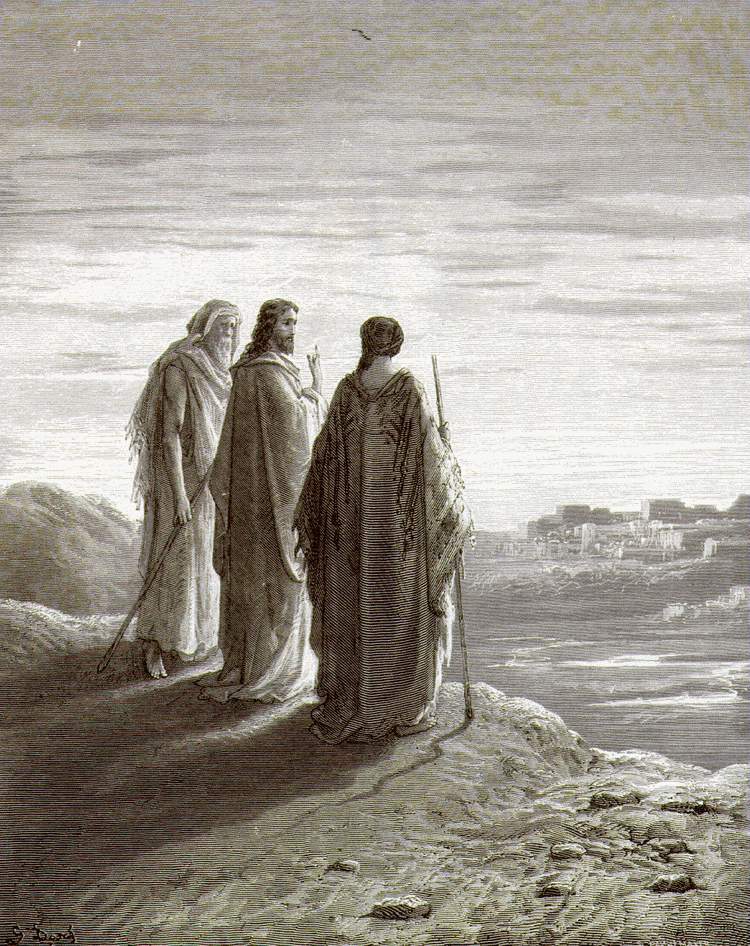 If we deal with problems only by our reason or emotions, we obtain some experience but it is not sufficient. The most important thing in our life is to walk in the truth, i.e. to be humble. The devil is a very, very intelligent spirit. Even the very last spirit of lies is more intelligent than Einstein or anyone else. If we try to fight against the spirit of lies with logic, he deceives us. He exploits everyone’s weakness – women’s emotions and men’s logic. However, if we really want the Holy Spirit to lead us and to work through us, we need to stop: “Lord, I see, feel or understand it in this way but now I stand in Your light.” Jesus says: “I am the light of the world.” So if we stand in the light of God, Jesus opens our eyes as He opened the eyes of Mary Magdalene after His resurrection. She did not know Him; she supposed Him to be the gardener. Only when Jesus called her by name, her eyes were opened and she cried out: “Rabboni!” On the same day, two disciples went to Emmaus and were joined by Jesus who pretended to be a pilgrim.
God speaks to us…
 God speaks to us but the problem is that we are unable to hear Him. The problem is in our receiver. Our heart needs to be attuned to His voice. He wants to work through you, through your faith too. The weaker we are, the more trust we need to place in the Lord, because “when I am weak, then I am strong”. Jesus, I trust in You.
Do not indulge in self-pity but go to Jesus, cling to Him and learn from Him. He will give you true wisdom, He will give you strength, He is alive, He is here, and He loves you more than your parents or your children can love you. He loves you more than you love yourself.
Reflection on Jn 21:17
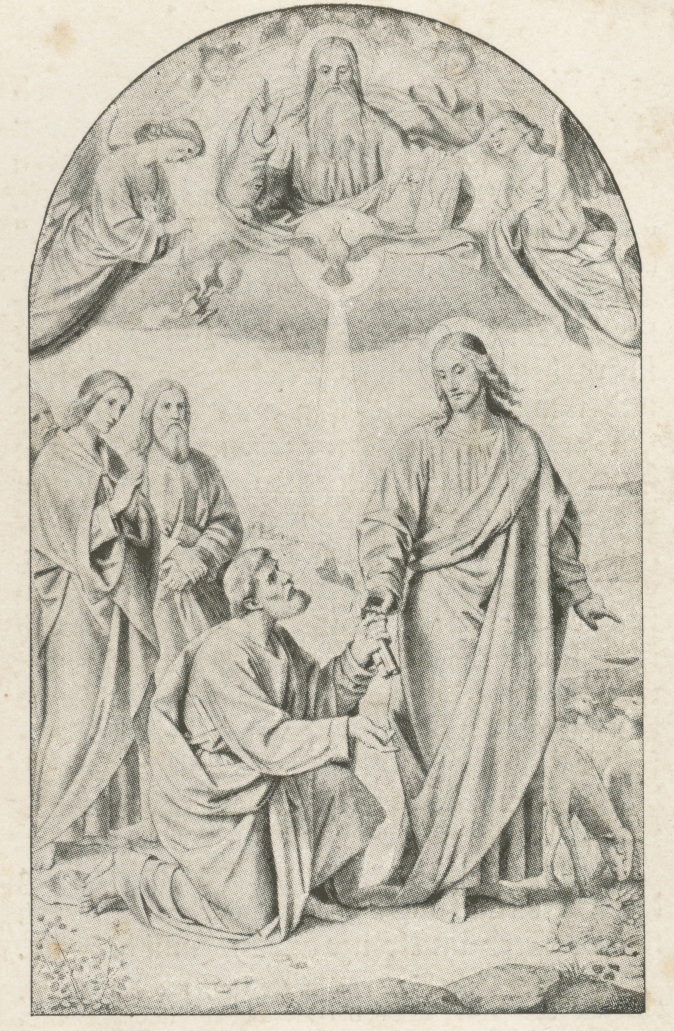 He said to him the third time, “Simon, son of Jonah, do you love Me?” Peter was grieved because He said to him the third time, “Do you love Me?” And he said to Him, “Lord, You know all things; You know that I love You.” Jesus said to him, “Feed My sheep.”
Peter was the first of the apostles to whom Jesus appeared. On Sunday morning, Peter overcame the fear that paralysed the apostles and came to Christ’s open tomb.
At the Lake of Gennesaret, where Jesus appeared to seven apostles, He asked Peter three times about his relationship to Him. The Apostle Peter had publicly denied Christ three times with an oath. Although he immediately repented of his denial and wept bitterly, he lost the office that Jesus had entrusted to him as the head of the apostles, saying, “You are Peter (which means ‘rock’), and on this rock I will build My church.” (Mt 16) By his denial, Peter ceased to be the rock; his faith and love for the Saviour failed. Peter did repent of his sin, but he only did so in private. Even though Jesus forgave him, the public guilt and offence required public satisfaction. How could he remain the head of the apostles if he had publicly renounced Christ with an oath? Jesus therefore demanded public repentance and public confession of a personal relationship of love – namely, divine love (agape) rather than human love – when He asked Peter twice about it.
Why are you weeping? Whom are you seeking?
 Why are you weeping? Whom are you seeking? It is a question addressed to each of us. Why are you weeping? We weep when we lose something or when we feel pain in our soul.
Now is a time when the souls of defenceless children are being deprived of Jesus. Whenever we lose the living Jesus, we should weep. If the soul takes pains to seek God, God can touch this soul.
Whom are you seeking? Jesus! And whom are we seeking? How often we seek pleasure, money, human praise, vanity… But all glory is senseless. We should seek God, seek the truth, seek moral values, seek what gives us eternal life, and our eternal life is in Jesus. Our heart should ache at the living Christ being cast out of the souls. Without Him there is no eternal life, without Him there is eternal punishment and moral devastation.
Reflection on Isa 53:6
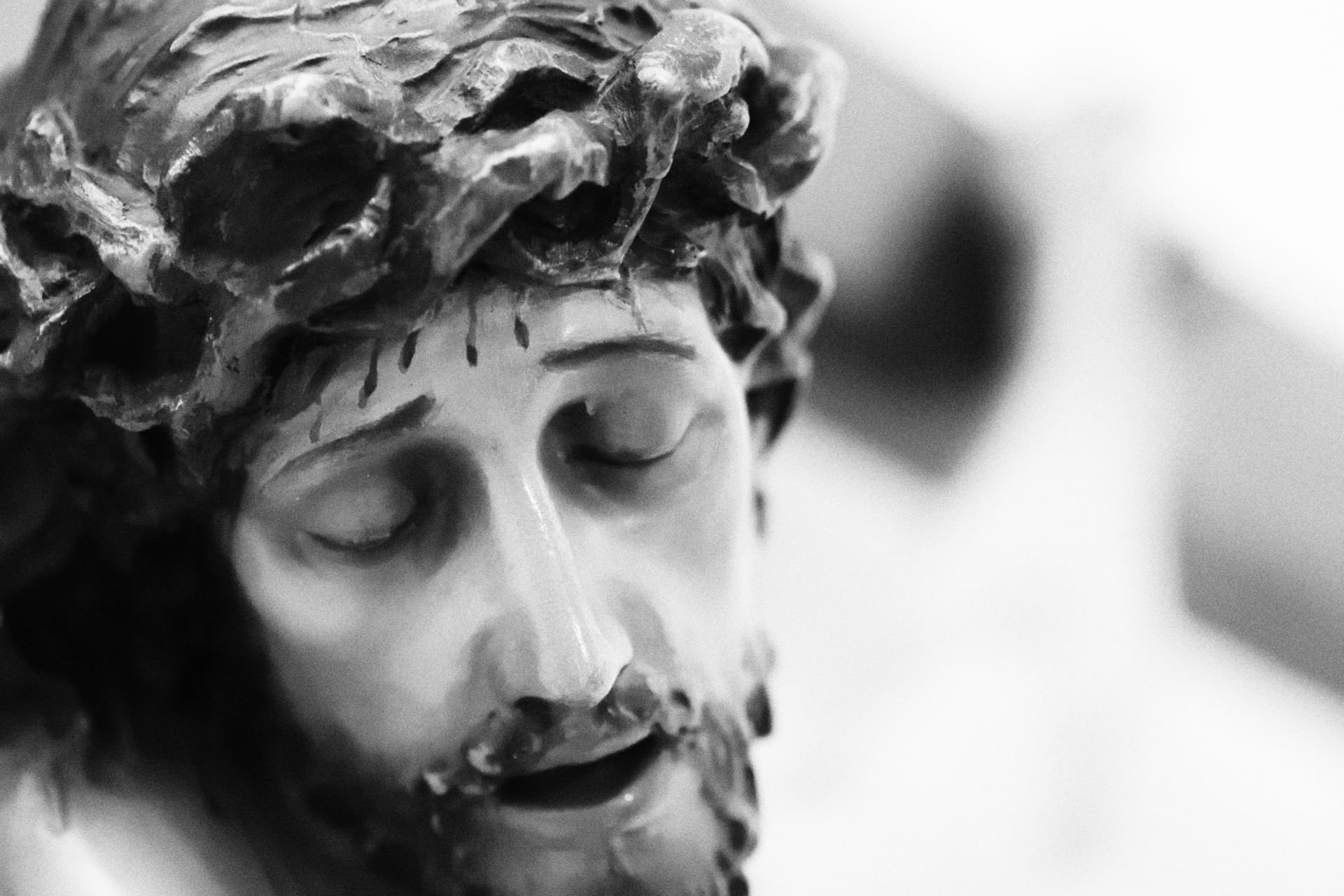 “All we like sheep have gone astray; we have turned, every one, to his own way; and the Lord has laid on Him the iniquity of us all.”
After verse 6, we read: “He was oppressed and He was afflicted, yet He opened not His mouth; He was led as a lamb to the slaughter, and as a sheep before its shearers is silent, so He opened not His mouth.” Let us realize the fact: “We all have gone astray.” If God’s Word says all, however sure you may be that it does not concern you, you need to know that no one is an exception. Not only had we gone astray in the past but to some extent even now, despite having received much light from God’s Word and for our effort to keep God’s commandments, we often go astray in small things because of our stubbornness, unwillingness to learn or humble ourselves, etc. There is then a price to pay for our stupidity: quarrels in families, conflicts between husband and wife, children and parents. Why is that? Because we do not have enough light and spiritual harmony, which is connected with God’s grace. What should we do? We should come to know more deeply the truth about ourselves and about evil within us which leads us into self-deception, even in small things.
The old self must be judged

The liar and murderer constantly pulls our leg. We have found ourselves betrayed a thousand times and yet we habitually believe and believe and believe him and ourselves, and we do not believe God. That’s the order of the day. Whenever we are to receive something by faith, we immediately get into a bad mood or feel resentment. The spirit of lies simply leads us by the nose in our spiritual life without end. Concerning material things, we can see it easily; we look back and know that we were deceived. We singe our feathers and so we are more careful the next time. However, concerning spiritual things, it is pitiful that we keep believing the liar! You ask: And when will we manage to believe Jesus at last? Answer: When we stop being curious like Eve and stop pondering on the liar’s intrusive thoughts by which he attacks us in the smallest matters every day. We fail to walk in God’s Word or to think about it in particular situations, but whenever we get an idea to do something and feel like doing it, we do it so, cling to it and take it as our own, and it never crosses our mind that we should ask in faith what God wants us to do.
Reflection on Isa 53:5
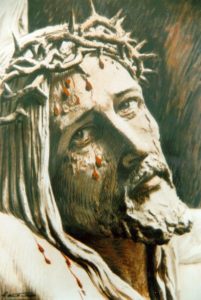 “But He was wounded for our transgressions, He was bruised for our iniquities; the chastisement for our peace was upon Him, and by His stripes we are healed.”
Who does the prophet Isaiah talk about? He talks about the suffering of Jesus Christ as the expected Messiah. The prophet Isaiah heard and wrote his words in the period 740-700 BC. The Spirit of God revealed to him the mystery of Christ’s suffering for our sins. Verses 3 and 4 read: “He is despised and rejected by men, a Man of sorrows…” On the day of the Lord’s death, the apostles abandoned Him for fear and one of them, Judas, even betrayed Him. The Apostle Peter denied Him three times that morning. Jesus endured great suffering especially when being scourged to the point of severe bleeding, crowned with thorns, and on the Way of the Cross. This suffering came to a peak when He was hanging on the cross in humiliation and abandonment.
The prophet Isaiah continues: “Surely He has borne our griefs and carried our sorrows; yet we esteemed Him stricken, smitten by God, and afflicted.” And verse 5, which we are going to recite for the next two weeks, reads: “But He was wounded for our transgressions, He was bruised for our iniquities; the chastisement for our peace was upon Him, and by His stripes we are healed.” Indeed, it was for our sins that Jesus’ hands and feet were wounded with nails and, finally, His heart pierced with a spear. It was for our transgressions and iniquities. It is said in the end that by His stripes – wounds – we are healed. Not only by the wounds inflicted at the crucifixion, but also by the wounds caused by the cruel scourging and the mocking and painful crowning with thorns.
The only remedy for everything is Jesus
 The only remedy for everything is Jesus. On our part we need to learn to deny our self, our self-centredness, faultfinding, envy or self-pity time and again. If we nourish it, there may be a price to pay for it – the enemy will claim his right to harm us. Therefore, it is better and wiser – for our own sake – to humble ourselves, and we will be sound in mind and body. But of course our soul can only be healed by Jesus. He is our Healer and by His wounds we are healed. Let us give all our sins, illnesses and problems to Him. If we do not do so, if we are only concerned with ourselves and do not care about Him, we cannot be healed, or our problem develops into another one and the enemy is given a new chance to claim his right.
Reflection on Pro 14:2
 Whoever fears the Lord walks uprightly, but those who despise Him are devious in their ways.
Why should we fear the Lord? Does the Book of Psalms not say in many places, “The Lord is good”? Psalm 136, for example, reads: “Oh, give thanks to the Lord, for He is good! For His mercy endures forever. … To Him who by wisdom made the heavens, for His mercy endures forever. … To Him who divided the Red Sea in two and made Israel pass through the midst of it, but overthrew Pharaoh and his army in the Red Sea, for His mercy endures forever.”
Why should we fear God if He is good and merciful? The problem is within us. There is a source of evil in our heart which entered our human nature with the first sin of our first father Adam. This evil deceives us in a masterly fashion. Its goal is to bring us into the bondage of sin, so that we finally lose our soul by abandoning God and becoming one with the evil in us. Therefore, because He loved us, the Good Father gave His only-begotten Son for us. Jesus became man and dying in disgrace on the cross delivered us from this evil in us which we love. We also call it our self and we feel hurt if someone points out the evil we do.
Actual VIDEO
- BCP: A Call for a Revolution in the Catholic Church – From the Head (Part 2)
- BCP: A Call for a Revolution in the Catholic Church – From the Members (Part 1)
- BCP: Was Pope Francis a public heretic or not? Part 13
- BCP: Was Pope Francis a public heretic or not? Part 11
- BCP: Was Pope Francis a public heretic or not? Part 9