Reflection on Rom 8:8
 Those who are in the flesh cannot please God.
This concerns the way we think. Our minds are rooted either in the flesh – that is, in our own selfish interests – or in the Spirit. To be rooted in the Spirit means to respect God’s laws and to have a heavenly perspective – that is, to keep eternity in mind and to strive to do God’s will.
In the past, people believed that our Earth was at the centre and everything revolved around it – they were adherents of geocentrism. But it was found to be a false opinion and people started to believe the theory about the Sun being the centre around which everything revolves – i.e. heliocentrism. This too was found to be a false theory. In spiritual terms, many people regard their ego as the centre of the whole universe, which is egocentrism. If we do not truly live by faith in the Triune God, egocentrism becomes the guiding principle and central focus of our lives and we are on a false path. The true view is theocentrism, which means that Theos (God) is the centre of the universe and of our life.
Reflection on Rom 8:7a
 “Because the carnal mind is enmity against God.”
Romans 8:7 reads, “Because the carnal mind is enmity against God; for it is not subject to the law of God, nor indeed can be.” Over the next two weeks, we will be repeating the first part of this verse: “Because the carnal mind is enmity against God.”
The preceding verse reads, “For to be carnally minded is death, but to be spiritually minded is life and peace.”
The Spirit of God through the Apostle Paul once again repeats and categorically emphasizes the basic contradictions: to be carnally minded and to be spiritually minded. We need to be aware that our mind reflects our life. If we live according to the flesh, we set our minds on the things of the flesh. And if we live according to the Spirit, we set our minds on the things of the Spirit.
Reflection on Rom 8:6
“For to be carnally minded is death, but to be spiritually minded is life and peace.”
 Where does the inspiration for the thinking of the flesh come from? Above all, it comes from the poisoned root – the source of evil within us – and from the spirit of this world, which is hostile to God. Today, public opinion is often treated as the norm, even though it does not respect God’s laws, fails to acknowledge God, and takes no account of death, God’s judgment, or eternity – not to mention eternal punishment or eternal reward. Yet not everything in the world is evil. There are many neutral things, ideas, and truths that are naturally good. The problem is that they are ultimately directed toward a goal that contradicts the path that leads to eternal life. At stake is the question of truth and falsehood, good and evil, virtue and enslaving dependence, as well as our relationship with ourselves, with other people, and with God. The spirit of the world, together with egoism, uses others for its own so-called good – or rather, for sin – and falsely calls this love. It often refuses to accept objective truth, treating half-truths or even lies as truth. The spirit of the world forms a unity with the poisoned source of evil within us and with the spirit of lies and death, who is the devil. From this poisoned root, sooner or later, death will ultimately emerge.
Reflection on Romans 8:5
“For those who live according to the flesh set their minds on the things of the flesh,
but those who live according to the Spirit, the things of the Spirit.”
 Over the past two weeks, we recited the Bible verse from the Letter to the Romans. The truths revealed here are essential. We are not given life simply to seek out entertainment, but so that our lives may become a path of following our Lord Jesus Christ. There is a struggle taking place within us over what matters most: eternal life!
Our life in this world is only a test of whether we will remain faithful to the Lord Jesus in the struggle against our own pride – that is, our insistence on having our own way – which ultimately prevents us from reaching our final goal: eternal life.
In Baptism, God gave us the fullness of the Holy Spirit. We have also personally received the same Spirit as the apostles and other Christians, especially those who walked in the Spirit and attained holiness. We, too, are called to attain holiness in the circumstances in which we live. God has given us the help of the Holy Spirit for this purpose, and Jesus, as He was dying, gave us His Mother.
Reflection on Rom 8:2
 “For the law of the Spirit of life in Christ Jesus
has made me free from the law of sin and death.”
We live in time. Through physical death we enter into eternity. The Apostle reminds us: “Redeem the time!” How should we redeem it? By walking in faith, i.e. in the Spirit of God, and thus abiding in Christ. Those who abide in their self, i.e. in their intellect, in their will and in their feelings, are under the law of sin. Those who are in Christ Jesus are not under the law of sin. The secret of a victorious life in time of trial is to enter into Christ by faith and to abide in Him. If you lose union with Christ, you yield to the law of sin and commit a sin. What to do? Become aware of your wretchedness and repent at once. How? Stand in spirit by the cross of Christ and confess your sin. Receive forgiveness by faith in the power of the Blood of Christ. This is the first step. But you are still not in Christ Jesus. You must unite to the crucified Christ through faith by surrendering your will to Him. And then the law of the Spirit works. At that moment you cannot sin because by your will you are fully united to Christ’s death through which He has overcome the power of sin also in you.
Reflection on Rom 8:1
 “There is therefore now no condemnation to those who are in Christ Jesus,
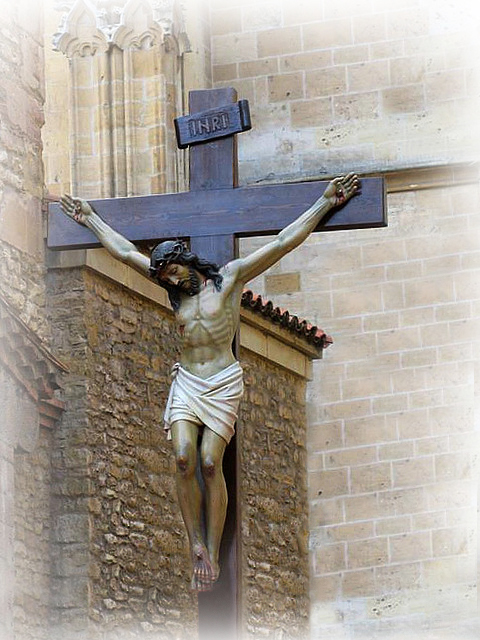
who do not walk according to the flesh, but according to the Spirit.”
These Scripture verses from the Epistle to the Romans are a continuation of the preceding verses where the Apostle cries out: “O wretched man that I am! Who will deliver me from this body of death?” In chapter eight we read that those are free who are in Christ Jesus. The law of the Spirit of life in Christ Jesus makes us free from the law of sin and death. The process of our deliverance in every new situation is accomplished again and again only in Christ Jesus.
The law of sin is a machine against which we are powerless relying on our human efforts. The law of the Spirit of life works in those who “walk according to the Spirit of God rather than according to the flesh” (Rom 8:1).
Reflection on Mt 10:41
“He who receives a prophet in the name of a prophet shall receive a prophet’s reward.”
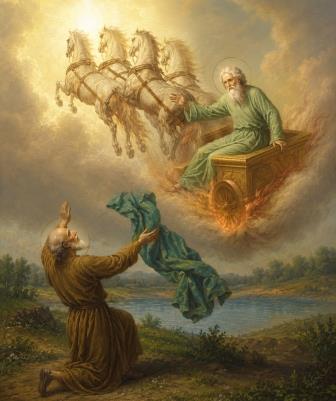 Who is a prophet today? A prophet is someone who proclaims God’s truths, stands by them, and suffers for them. Not everyone who prophesies is a prophet. Even a child can prophesy when they speak a statement inspired by the Spirit of God, whether to encourage, instruct or rebuke. In his letter to the Corinthians, the Apostle urges us to earnestly strive for the gift of prophecy. Prophecy is not fortune-telling. The biblical term ‘to prophesy’ means proclaiming God’s word in God’s power in a way that touches the human heart and is relevant to the situation.
Even today, however, there are false prophets, and there are many of them. In theological faculties, they are liberal theologians who deny the divinity of Christ, His real and historical resurrection, and even the divine inspiration of Holy Scripture. In effect, they do not believe in any miracle recorded in the Bible. They do not openly admit this, however, and so it seems as though they are articulating the truth quite eloquently. However, by using ambiguous terms, they distort it to such an extent that they effectively destroy it.
Reflection on Mt 10:28b
“Be afraid of the one who can destroy both soul and body in hell.”
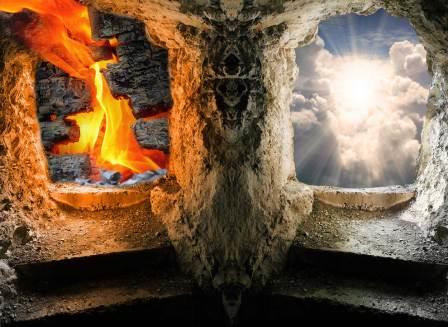 This statement by Jesus remains exceptionally relevant today. Earlier, Jesus says, “Do not be afraid of those who kill the body but cannot kill the soul.” This means that people must not allow themselves to be intimidated and must not stray from the truth, even at the cost of their own life. The thousands of martyrs serve as an example of this. They remained steadfast in their faith and were not afraid. Naturally, we fear those who harm our physical well-being, and even more so when they threaten our lives. Therefore, we need to draw strength from the Holy Spirit through prayer so that we can stand firm in the face of trials.
Now, however, we are dealing with the question of whom we should truly fear. Sadly, most people are not only completely unafraid of the one against whom Jesus warns them, but even willingly let themselves be deceived by him. This is a strange paradox. Our fallen nature – or, as Scripture calls it, our old self with its misguided way of thinking – takes no account of death, God’s judgment, or eternity, and reacts instinctively in a distorted way.
Reflection on Rom 5:8
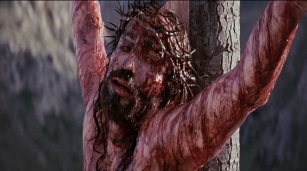
“But God demonstrates His own love toward us,
in that while we were still sinners, Christ died for us.”
 What is emphasized?
The love of God. Verse 5 says that God’s love has been poured into our hearts through the Holy Spirit. In the Greek original, God’s love is denoted by the word ‘agape’, unlike human love which is denoted by the word ‘philia’. There is a difference between these two kinds of love. God’s love is a gift and is intrinsically linked with the Holy Spirit! We can say that if we have fully received the Holy Spirit, this love is within us and we are ready to be ‘martyres’ (witnesses, martyrs). We must not quench the fire of love of the Holy Spirit by indifference or disbelief! God’s love – agape – on our part is connected with a willingness to lose everything for Christ.
Reflection on Rom 5:5
“And hope does not put us to shame, because God’s love has been poured into our hearts
through the Holy Spirit who has been given to us.”
 What is emphasized?
Hope. Christian hope has its model in the hope of Abraham, who against hope believed in hope (Rom 4:18). So Abraham believed that God is almighty, and facing Him in powerlessness he trusted that God was able to work a miracle.
Practical application:
In time of hopelessness, realize God’s presence and His almightiness, and repeat several times in faith, “Jesus, I trust in You.”
Reflection on Rom 8:12-13
 “Therefore, brethren, we are debtors – not to the flesh,
to live according to the flesh.
If by the Spirit you put to death the deeds of the body, you will live.”
Question: According to Rom 8:12a, what are we not debtors to?
Answer: ………………
Question: What follows from this according to Rom 8:12b?
Answer: ………………
Question: According to Rom 8:13a, what will happen to those who live according to the flesh?
Answer: ………………
Question: According to Rom 8:13b, how are we to put to death the deeds of the body?
Answer: ………………
Question: According to Rom 8:13c, what will happen to those who put to death the deeds of the body by the Spirit?
Brief reflection on the Descent of the Holy Spirit
 We are now in the 40 days’ Easter period, commemorating the glorious victory of Christ over death and sin. The Word of God points out a deep relation to the mystery of the Resurrection of Christ through the Holy Spirit: “The Spirit of Him who raised Christ from the dead dwells in you…” (Rom 8:11f).
New life – the life of the risen Christ should be manifested in us through the Holy Spirit. The condition is to walk by faith and to give all our plans, worries and everything to Jesus. Let us not cling to anything, be it our thoughts, hurt feelings, doubts about God and His Word, or self-pity. Let us give our all to Him. He will then work through us in power, maybe in secret only, but our union with Him in faith will bear fruit for eternity.
At the end of May, we will celebrate the descent of the Holy Spirit. May the Holy Spirit fill you again and endow you with the true divine joy and His gifts. It is not enough to receive gifts; we need to receive the Giver! Let us do our best to live in the presence of God, seeking His will, so that our decisions, words and acts would not be our own but of God. To abide in and walk with God, we need practical faith. Indeed, we need to walk by faith like Abraham. And we need to revive our faith ever anew in all trials. No manifestation of a living faith is in vain or without response!
Reflection on Jn 16:13
 “But when He, the Spirit of truth, comes, He will guide you into all truth.”

The Spirit of God brings light. This enables you to realize a truth that you previously did not see at all, or saw only in a distorted way. For example, He reveals that what seemed like a coincidence in your life was not a coincidence at all; now, after several years, you recognize this. What you saw as a loss was actually a gain. The harm that troubled you turned out to be ultimately beneficial. What you saw as misfortune was merely a barrier that prevented an even greater misfortune. At the time, you couldn’t understand this.
The Spirit of God gives us understanding, particularly with regard to spiritual matters. He convicts us of sin. He opens up the Scriptures. Certain previously incomprehensible passages in Scripture suddenly touch your heart deeply, leading you to a personal awareness of sin and of God’s forgiving love.
The Spirit of God brings us into an intimate relationship with our Saviour, so that we may come to know Him better and love Him more. The greatest obstacle to loving God is original sin within us – our tendency to believe lies and commit evil. Without the Spirit of God, all truths, whether from Scripture or the catechism, are merely a letter that kills, as God’s Word says. But the Spirit gives life! (2Cor 3:6) Jesus said to the apostles, and He says to us as well: “I have much more to say to you, more than you can now bear. But when He, the Spirit of truth, comes, He will guide you into all truth.” (Jn 16:12-13)
Reflection on Rom 6:4
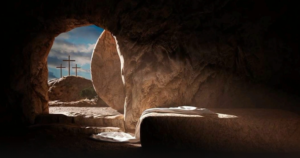 “We were buried with Him through baptism into death,
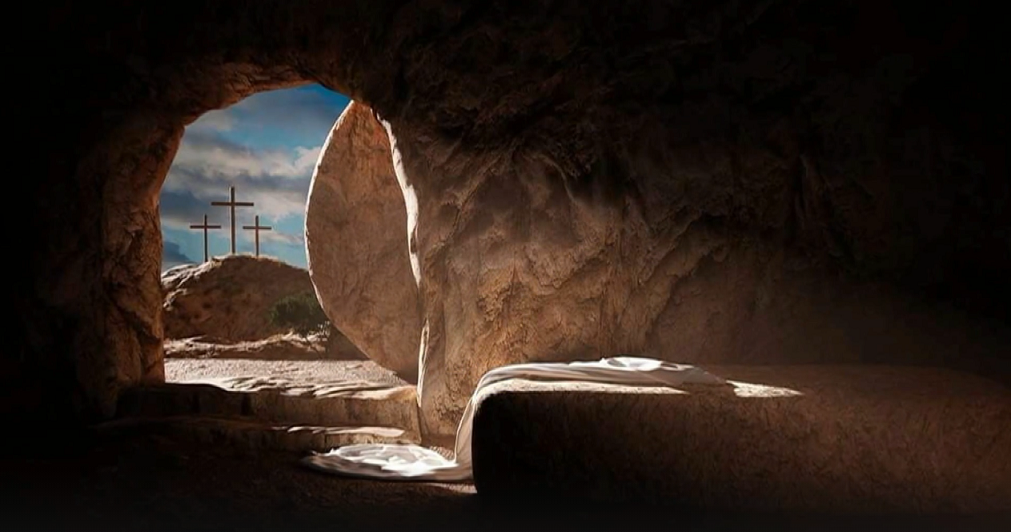
that just as Christ was raised from the dead…,
even so we also should walk in newness of life.”
The verse speaks not only of Christ’s death but also resurrection. Again, it draws our attention to baptism, saying that we are buried with Christ through baptism into death, which means renunciation of our own will at the present moment. The consequence is that we live a new life, or rather that Jesus lives in us. He then works in us through the power of His resurrection.
One reality is Christ’s historical resurrection in Jerusalem 2000 years ago, and the other reality is our union with His resurrection in baptism. Baptism itself is not enough. In order for you to have light in your house, you need electric wiring in the walls, a switch and a bulb. You are connected to the source of energy. But if you don’t switch the light on, your house will be in darkness. Only when you do, the bulb will shine. We can compare baptism to the wiring and the switch to active faith. Christ lives in me in power through baptism and active faith.
Reflection on Romans 4:25
 “Jesus was delivered over to death for our sins
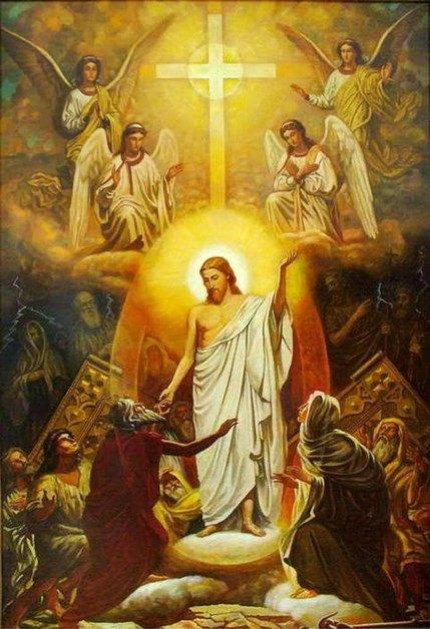
and rose again for our justification.”
What is the focus of this Word of Life? It is on the resurrection. The previous verse says that the Father raised Jesus from the dead (We believe in Him who raised Jesus our Lord from the dead /v.24/), but we also read in the next verse that Jesus Himself rose again by His own power. Jesus said, “I and the Father are one.” (Jn 10:30) Jesus shares the same divinity as the Father. So does the Holy Spirit. We read in Romans 8:11, “But if the Spirit of Him who raised Jesus from the dead dwells in you, He who raised Christ from the dead will also give life to your mortal bodies through His Spirit who dwells in you.” It tells us that the whole Holy Trinity – the Father, the Son, and the Holy Spirit – is involved in the resurrection. The three of them are one, one God in three Persons – God the Father, God the Son, and God the Holy Spirit. The resurrection is a manifestation of God’s power. His almighty power created the universe, millions of galaxies, and billions of stars. He sustains it all. He also created our earth. He is the Supreme Lord and Lawgiver. He has the power to intervene in the laws of nature, and we call such an occurrence a miracle.
Jesus appears to Peter by the Lake of Gennesaret
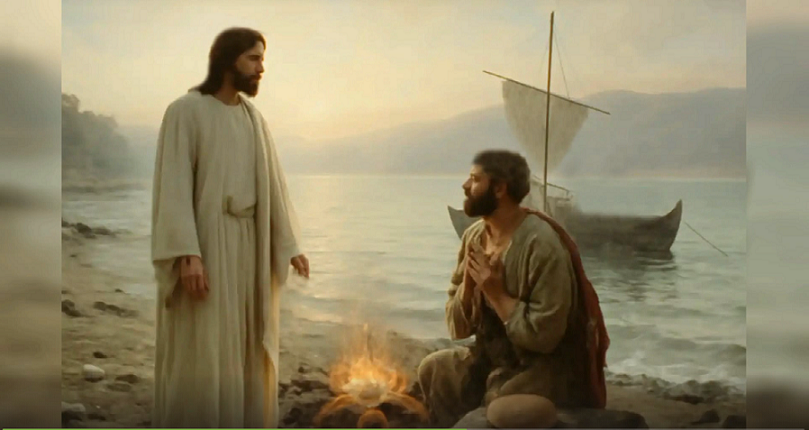 When the Scripture speaks about Peter’s first encounter with the Risen Lord by the tomb, it makes no mention of a dialogue. It was a mere glance… But now Jesus asks Peter: “Simon, son of Jonah, do you love Me?” My prayer should not be just a reflection on Peter’s encounter with Jesus. During prayer, I should realize the presence of Jesus – Jesus is here now; He sees me and knows me. Jesus is here, the same Jesus as by the Lake of Gennesaret. With an aching heart, I confess together with Peter: “I betrayed You, I denied You.” Looking back on my life from early childhood, how many times I have denied Jesus! I have denied Him by every single sin, be it a weakness when sin was stronger, or fear, or pride, when I was afraid to confess Jesus.
Actual VIDEO
- BCP: A Call for a Revolution in the Catholic Church – From the Head (Part 2)
- BCP: A Call for a Revolution in the Catholic Church – From the Members (Part 1)
- BCP: Was Pope Francis a public heretic or not? Part 13
- BCP: Was Pope Francis a public heretic or not? Part 11
- BCP: Was Pope Francis a public heretic or not? Part 9