The Eighth Pan-Orthodox Council, which is to take place on the feast of the Holy Spirit, 19 June 2016, will launch the process of expulsion of the Holy Spirit from the Orthodox Church. It will de facto be the beginning of gradual spiritual suicide – suicidium. The main initiator of the Synod is the apostate Patriarch Bartholomew and the apostate Patriarch Kirill. Both of them are under an anathema – God’s curse – according to Gal 1:8-9. Through “theological dialogues” with the apostate Vatican, they want the spirit of the New Age to infiltrate the entire Orthodox Church. The Pre-Council Conference conclusions are formulated in a positive light. However, they actually disguise the real intention, i.e. self-destruction of the Church as well as of the Russian and the Greek nation. Other Orthodox nations will likewise be drawn into this self-destruction process.
Merkel has enforced suicidal legislation and sodomism through an incomprehensible text of the Lisbon Treaty. A similar method of positive terms is applied by the Vatican globalists. Unfortunately, the apostate Patriarchs are in unity with them nowadays.
“When you do a charitable deed, do not let your left hand know what your right hand is doing.”
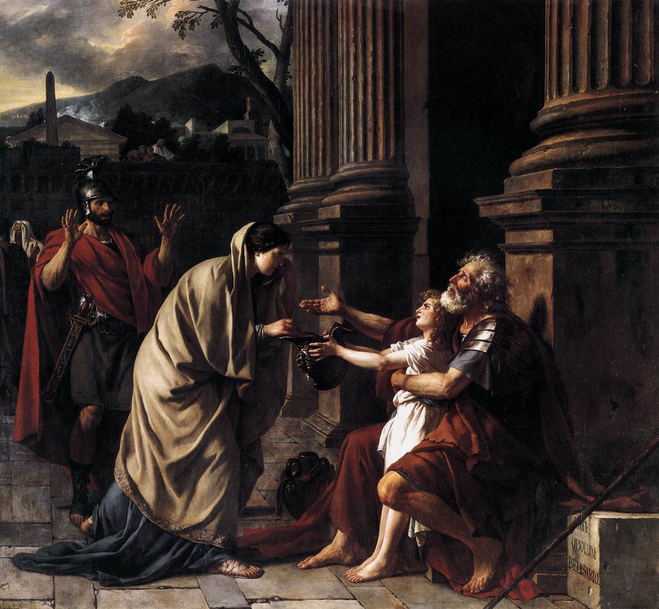 These words, which our Lord Jesus tells us, are not intended for discussion but rather for practice, and they have a deep meaning. They involve a double sacrifice: partly you renounce something of your own on behalf of others and partly, if you do it in secret, you renounce human praise. Jesus explains that the purpose is “that your charitable deed may be in secret; and your Father who sees in secret will Himself reward you openly”. He will give you a divine, eternal reward rather than a human one. It holds true that we lose to gain. We lose the material to gain the immaterial. We offer the temporary to gain the eternal. Remember: Your Father sees what you do in secret, and Jesus reminds you: “He will reward you!”
 Further analysis of the theological and literary activity of T. Halík:
5. Method of an impersonal approach to the faith
Halík writes: “What I found offensive was the film’s (note: The Passion of the Christ by M. Gibson) Christological heresy. Our Lord’s act of salvation is presented as a heroic human deed. Jesus is portrayed in true American style as a champion, excelling in his endurance of pain, one who, in his bout with the devil, is knocked out a thousand times but gets back on his feet again – and at the end worthily mounts the victors podium.” (Night of the Confessor, 2006, p.152)
It is the height of blasphemy to compare the redemptive suffering of Christ to sadomasochism and to call our Saviour a champion, excelling in his endurance of pain.
 Further analysis of the theological and literary activity of T. Halík:
4. Method of virtual reality
Halík writes: “The Resurrection is an event of an eschatological character – that is indicated by the expression “the third day”, which is not simply a chronological fact – bursting into time; it needed time to penetrate the hearts and minds of the disciples and bring light thereto, enabling them also to understand the meaning of Christ’s suffering and cross.” (Night of the Confessor, 2006, p.216)
Why is Halík so disturbed by the expression “the third day” in the Scripture? Because he tolerates no concrete facts and no reality. He floats in imagination, eschatology and virtual reality, and cannot bear a concrete reality. The third day is the third day; what does he mean to discover about it? Number three is number three and a day is a day. Every small child knows that third comes after first and second, and that a day is a day and not a week, month or year. And because he is not clear about it, he must invent a kind of knockout theory and so he says, in other words, that it was only on the third day that the apostles realized that the Lord Jesus had died three days before, and that was the resurrection in their minds which we are to believe in, as Halík tries to convince us.
 Further analysis of the theological and literary activity of T. Halík:
3. Method of manipulation (deliberate vagueness)
Halík continues his manipulation of the fundamental Christian truths – the death and Resurrection of Christ: “Or (it can be read) as a drama in one act in which both versions of the story take place at the same time. Nevertheless it is the second interpretation, the ‘parallel’ one, that is actually reading with the eyes of faith. Faith here means two things, however: on the one hand, the realization that the story is paradoxical (that the other aspect of the story, ‘the resurrection’, is a reinterpretation of the first, not its subsequent happy outcome)…” (Night of the Confessor, 2006)
This is illogical nonsense cloaked in obscure language, and Halík makes great mysticism of it. Those who do not believe in this mysticism are, in his opinion, totally primitive because: “…it is the second interpretation, the ‘parallel’ one, that is actually reading with the eyes of faith.” It means that if, reading the Gospel, you fail to fabricate total nonsense out of it which does not correspond with the reality, e.g. that death and resurrection is one and the same thing, and if you then fail to read this nonsense with the eyes of faith, you lack faith.
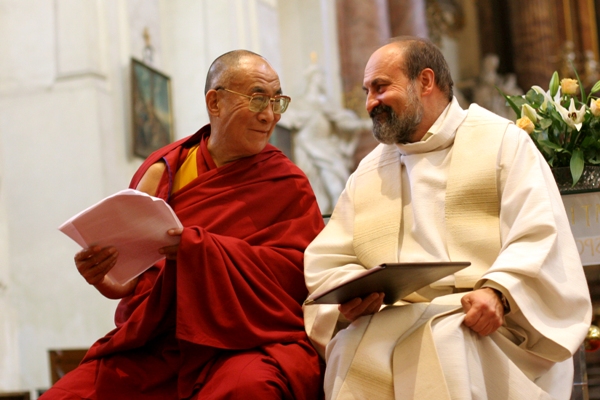 Catholics want to be clear about whether the Catholic priest Halík is a true-Catholic priest or a heretic. He cannot be both this and that, even though he claims to be.
The second method used by Halík is:
2. Method of ridicule
Halík ridicules the truths of faith, and even calls the Resurrection of Christ a myth and fairy tale with a happy ending.
Quote: “The Easter story can be read in two quite different ways. Either as a drama in two acts, where in the first act a just and innocent man is sentenced to death and executed, and then, in the second act, is resurrected and accepted by God. … In the first interpretation the ‘Resurrection’ is the happy ending, and the entire story is a typical myth or optimistic fairy tale.” (Night of the Confessor, 2006)
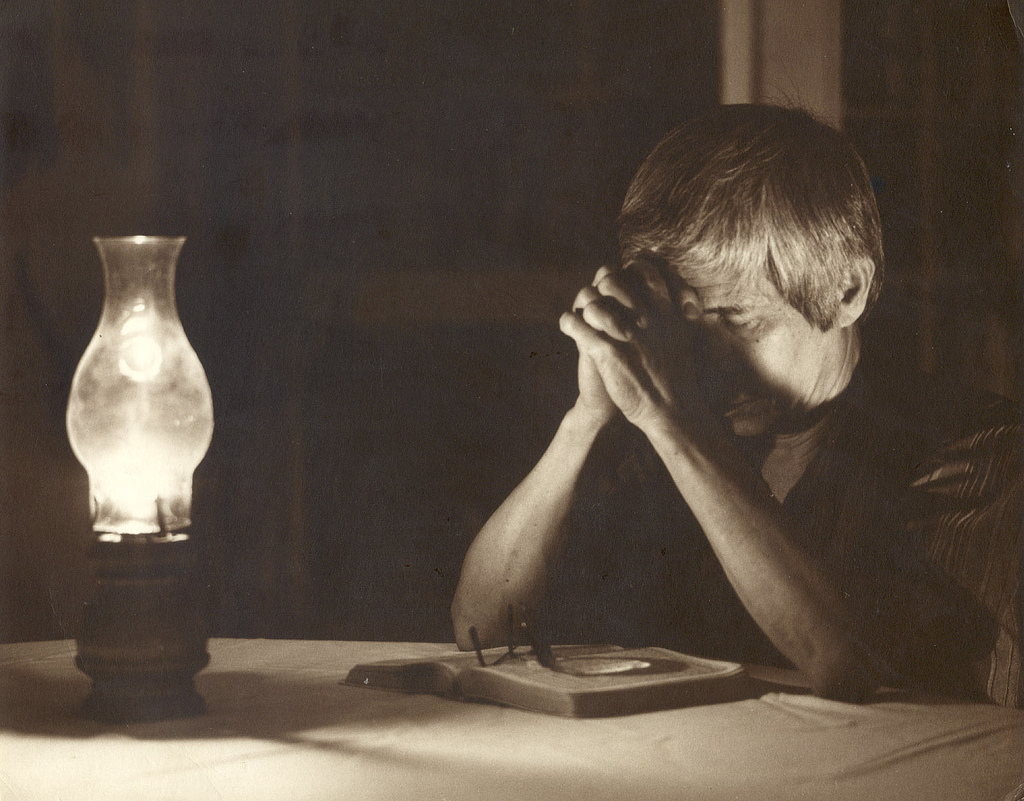 The Old Testament reads: “You shall not hate your brother in your heart. You shall surely rebuke your neighbour…” (Lev 19:17-18) Jesus explains why we should love our enemies and pray for those who persecute us: “…that you may be sons of your Father in heaven; for He makes His sun rise on the evil and on the good, and sends rain on the just and on the unjust. For if you love those who love you, what reward have you? Do not even the tax collectors do the same? And if you greet your brethren (friends) only, what do you do more than others? Do not even the pagans (tax collectors) do so? Be perfect, therefore, just as your Father in heaven is perfect.” (v.45-48)
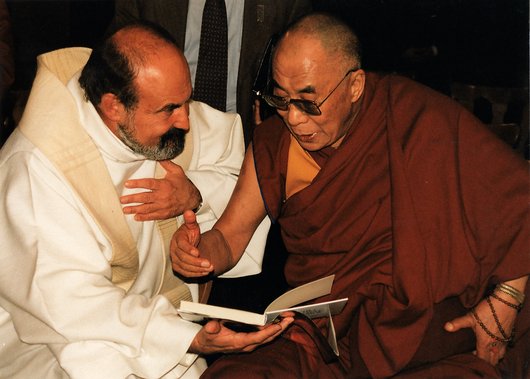 Who is the priest Tomáš Halík and who do people say that he is? He acts as an advocate and saviour of Christianity despised by him, and he allegedly raises it to a “higher” level. Halík is a member of the Masonic Committee of Wise Persons in the EU. His dream is to occupy the post of President at the Prague Castle or at least the post of the Archbishop of Prague. Cardinal Vlk has always approved of his heretical activities and assigned him to pastoral care of the university youth, whom Halík has systematically infected with the spirit of Buddhism. The Katolický týdeník (Catholic Weekly) publishes his articles and advertises his books. The common believers therefore regard them as the voice of the true Catholic Church.
Many Catholics, however, rightly ask the question: Is Tomáš Halík a true Catholic priest or a heretic? What methods does he use?
1. Method of professional lying
Halík undermines the reader’s or listener’s solid foundation of the saving faith. He forces the defenders of orthodoxy to be the first to formulate his hidden heresies.
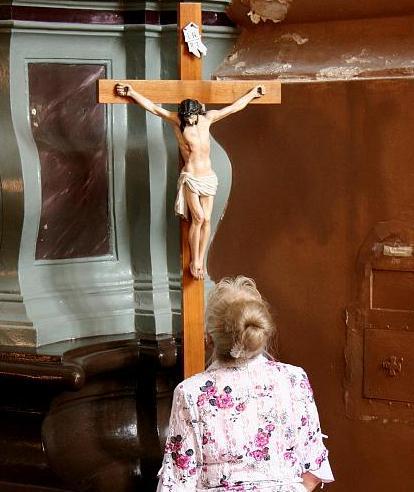 Let us never forget the essential thing: To love God more than anyone or anything else, that means, more than our ego too! To love means to die! Love is crucified! And in moments of crisis you only need to lift up your eyes and to be aware that God sees you now and to bear the present pain. You can also think of your physical death. It will come one day and it will be late then! Now – today there is still time for repentance, for zealousness.


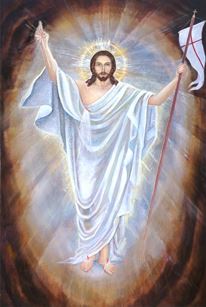
“Look at My hands and My feet. It is I Myself! Touch Me and see.”
Luk 24:39 (12/4/2026 – 26/4/2026)