Is the priest T. Halík a heretic? /Part 4/
 Further analysis of the theological and literary activity of T. Halík:
4. Method of virtual reality
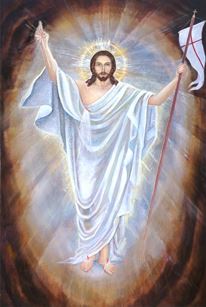
Halík writes: “The Resurrection is an event of an eschatological character – that is indicated by the expression “the third day”, which is not simply a chronological fact – bursting into time; it needed time to penetrate the hearts and minds of the disciples and bring light thereto, enabling them also to understand the meaning of Christ’s suffering and cross.” (Night of the Confessor, 2006, p.216)
Why is Halík so disturbed by the expression “the third day” in the Scripture? Because he tolerates no concrete facts and no reality. He floats in imagination, eschatology and virtual reality, and cannot bear a concrete reality. The third day is the third day; what does he mean to discover about it? Number three is number three and a day is a day. Every small child knows that third comes after first and second, and that a day is a day and not a week, month or year. And because he is not clear about it, he must invent a kind of knockout theory and so he says, in other words, that it was only on the third day that the apostles realized that the Lord Jesus had died three days before, and that was the resurrection in their minds which we are to believe in, as Halík tries to convince us. This was a drama in one act in which, as he says, both versions of the story take place at the same time. And the apostles, in his view, preached this stupidity all over the world. We ask: How did Halík come to the conclusion that “the third day is not simply a chronological fact”? Using the term “eschatological”, he deliberately obscures not only the very nature of Christianity but also the specific day of the Resurrection of Christ. Halík denies the fact of the third day and gives it an “eschatological character”, which in this case means abstract time. Surely, e.g. the Book of Revelation, chapter 11, speaks symbolically about three and a half days or one thousand two hundred and sixty days; however, everyone understands these facts in the given context and knows that they have a symbolic meaning. The same applies e.g. to the Book of the Prophet Daniel, chapter 12. But we cannot confuse the levels, as is deliberately done by Halík. The third day in relation to the Resurrection is the third day – i.e. Christ died on Friday and the third day is Sunday, which is the Day of Resurrection. That is also why the whole Christian world celebrates the historical event of the Resurrection on Sunday. The spirit represented by Halík objects to anything that is concrete or to any reality and therefore he obscures and questions everything. He needs to make the Gospel a doubtful and non-binding story or myth about which you can think anything you like. Real events in time and space are shifted to the sphere of imagination and virtual reality. Here Halík is like a fish in water. But it is not only historical events from the past that he shifts to the sphere of virtual reality but also our real life, which then results in so-called paradoxical Christianity and a life of fabricated paradoxical nonsense. Such unreal and untrue life lacking in sound self-criticism and sound judgment comes to a tragic end both here and after death. This new Halík’s view is supposedly the result of a special “enlightenment” and so, contrary to all normal experience, he says that all is one in essence and he himself also “is fully both this and that”. Analogously, we could continue – if one is fully both this and that, one is, for example, fully a man and fully a donkey. This knowledge would in some cases mean a really useful enlightenment.
He who believes in Halík’s myths and denies the Gospel is considered to be “an intellectual” keeping abreast of things. This is a new spiritual standard. But to live by such faith is by no means living one’s life afresh but rather a madhouse and hell both on earth and after death. In Halík’s view, however, all is one – hell or eternal salvation.
The reality of true Christianity is different, thank God. It is supported by the testimony of millions of martyrs and millions of saints who are a true pattern of charity, not to be found in any other religion – Buddhism, Hinduism or Islam. We Czechs have a precious heritage, the treasure of faith, as expressed in the song in praise of Sts Cyril and Methodius: “Bože, cos ráčil” (O God, You willed): “O God, You willed that the blessed light of faith should shine into the hearts of our fathers a thousand years ago… To You we raise the voice of our prayer from our fatherland: Preserve the heritage of our fathers, O Lord! … Saints Cyril and Methodius brought to us the Holy Scripture, from which source we may draw the gold of heavenly wisdom for ever and serve God… Through your labours, O Saints Cyril and Methodius, you brought us to the knowledge of Christ, the salvation of our land.”
Conclusion: Examining the writings, spirit, forms of expression and pernicious fruit of T. Halík after 26 years of his public activity, we arrive at an unequivocal conclusion: T. Halík is not only a heretic but an arch-heretic.
+ Methodius OSBMr + Timothy OSBMr
Secretary Bishops of the Byzantine Catholic Patriarchate
http://vkpatriarhat.org/en/?page_id=9564
26 January 2016
Download: Is the priest T. Halík a heretic? /Part 4/ (26/1/2016)