 The most controversial document of the wolves’ Council in Crete is “The Mission of the Orthodox Church in the Contemporary World”. It contains several substantial, hidden heresies. The project document was adopted already in Chambésy (21 to 28 January 2016) and now, on the very first day of the Council in Crete, it was definitively ratified. Who is the author of this criminal document? Heretical theologians – on the orders of Patriarch Kirill. He, along with the apostate Bartholomew, is responsible for its formulation and ratification. The fact that the apostate Kirill and his delegates did not come to Crete is only a strategic manoeuvre. It is still the aim of Kirill to push through the heretical documents under artificial authority of the Council (Eighth Pan-Orthodox Council) without losing the image of orthodoxy in the eyes of the Russian Orthodox public. Consequently, it will be enough just to quote a phrase about unity and step by step to accept heresies approved by the wolves’ Council. Kirill has already begun to put it into practice by his message of greeting to the assembly in Crete. Disguising himself with phrases about Christ praying for unity of the Church, he absurdly requires unity with heresies and antichrist rather than total unity with the Gospel of Christ and with Christ!
This verse is preceded by the words: “And why do you look at the speck in your brother’s eye, but do not consider the plank in your own eye? Or how can you say to your brother, ‘Let me remove the speck from your eye’; and look, a plank is in your own eye?” So we see the speck in our brother’s eye, which indeed is there, but we cannot see the plank in our own eye. It means that we see even a little fault in our brother but we do not notice our faults and sins. Jesus says: “remove the plank from your own eye” and He emphasizes the word “first”. Despite our good will we tend first to remove the speck from our brother’s eye. Therefore we must literally make a step of faith associated with true repentance – that means admit our own fault, and by this repentance we remove the plank from our own eye, i.e. from the system of our false thinking. After we remove our plank, Jesus does not say that we can then be indifferent to our brother and to appeal to false mercy or false love – no. The next step we are to make is to help remove the speck from our brother’s eye. Jesus says that if we remove our plank, we will be able to see spiritually. Without removing the plank, we will not see spiritually.
 Heaven surpasses all our imagination. Let us imagine supreme happiness, unspeakable beauty, and yet heaven is far more beautiful. The Scripture says about heaven that no eye has seen, nor ear heard, nor the heart of man imagined what God has prepared for those who love Him. What then this heaven must be like if it surpasses our imagination?!
Let us imagine the most beautiful things in the world – the most beautiful jewels, the most beautiful works of art or the most beautiful scenery – this all is nothing compared with the beauty of heaven.
Let us imagine the beauty of our earth, the beauty of God’s creation. Imagine you are in the Alps watching the sunrise or the sunset or the magnificent scenery in the land of glaciers.
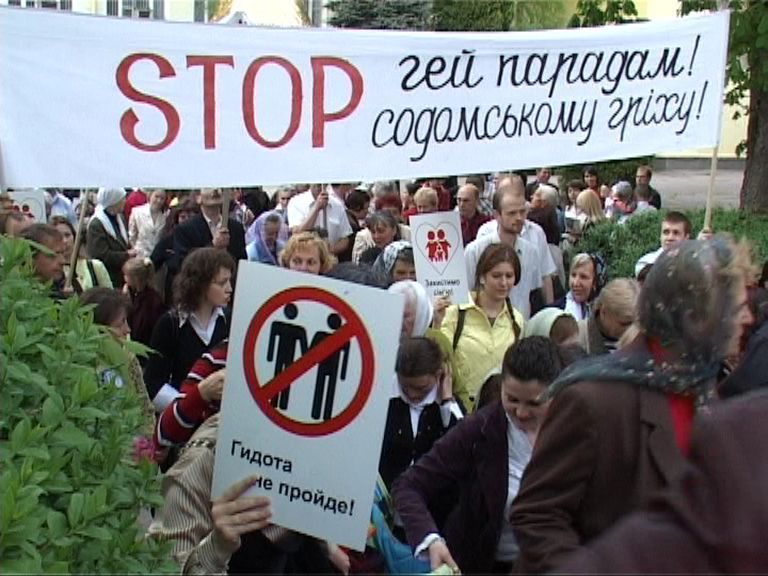 On 27 May 2016, the United States Congress, Washington, DC 20515, posted through Ambassador a letter to the Ukrainian government. It reads:
Quote: “We ask that the Ukrainian Government call on the criminal justice system to bring those responsible to justice and support upcoming Pride events (12 June 2016).”
Response: Let these congressmen try to command Turkey, China, Saudi Arabia, Pakistan, Iran or Iraq to hold a gay pride parade in their capitals, and if they do not obey, let these congressmen try to threaten them to introduce a system of criminal sanctions.
Whom do the US congressmen want to condemn and punish in fact? The answer is a quote from their letter: “Activists reported alarming statements by clergy and members of local city and regional councils, who called on individuals to ‘fight back’ against the Equality Festival.” It follows that priests, monks, bishops, pastors as well as members of local and regional councils, who called for the preservation of moral values and the Ukrainian nation against moral degradation, should be condemned and punished. What an absurd requirement of USA! The congressmen intend to punish the representatives of religious and public life for performing their duty and standing in defence of the nation and its values against demoralization and devastation. Can the rights of the Ukrainian people not be defended anymore? Is defence of rights punishable? Can the Ukrainian clergy no longer preach God’s Word?
 Here the Lord Jesus points out again the practical part of the life of every man, namely the relationship to our neighbour. The first commandment says that we should love God with all our heart… And the second is like it – we should love our neighbour as ourselves. The opposite of love is egoism. Love forces man into self-denial and self-sacrifice. Egoism makes our “self” the centre of universe. Self-love is connected with spiritual blindness which is called pride. Pride is the deadly poison which penetrated into human nature with the first sin. It was manifested in disbelief in God’s word – the truth – and belief in and surrender to lies and hence the spirit of lies – the devil. The fruit of this sin is death which passes to all men.
 The goal of our life is to be united to God and to live in this communion for all eternity. Eternal life begins already here on earth where God puts us to the test. The length of this test varies from life to life. We all live in different places and in different times, the number of every man’s days is determined and then our earthly pilgrimage will end. These few decades of life will pass very quickly; and, moreover, they are full of suffering, disappointment… Life on earth is but toil and trouble. God gives us His grace in this life, and if we cooperate with it – i.e. deny or humble ourselves a little, patiently bear our cross, physical or mental suffering – our heart is filled with joy which the Lord gives us. But we are always surrounded by evil, envy, various diseases, suffering or loss of our relatives and friends. This is to remind us that the earth is not our permanent place. Our home is in heaven.
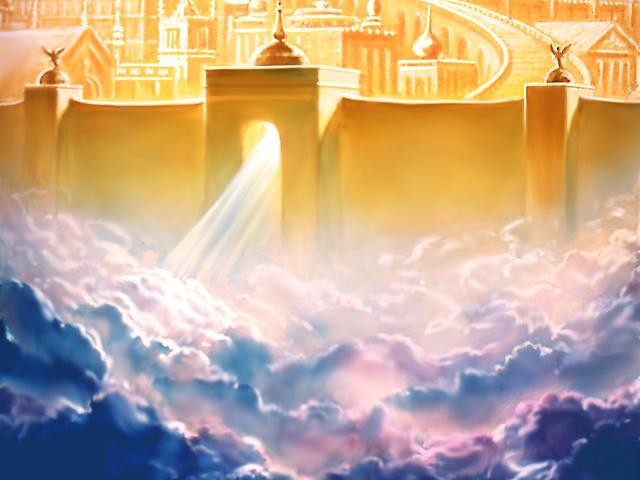 In heaven we will have everything the human heart desires. Our heart desires honour, wealth and power. We will obtain this all in a proper manner in heaven. Honour, wealth and power. It is written in the First Book of Samuel: “The Lord declares: I promise that I will honour those who honour Me.” Can we imagine greater honour than to be honoured by God? And if God honours us, all the inhabitants of heaven will honour us too for remaining faithful to Christ and His truth and not being led astray by lies. All our efforts in our service to God will be revealed.
Do we desire wealth and power? In heaven we will be heirs of God. Just think how rich our Father is and what an inheritance awaits us!
Our Lord often teaches us not to cling to anything – a manner or idea, to be poor in spirit and to seek nothing else but Him alone. There must be nothing to replace Jesus in our life, no other source of pleasure but Him alone who loved us from eternity and humbled Himself to the point of death, even the death of the cross, for our sake.
 We should always try to discern what the Lord wills. The process of a sincere seeking of the will of God in serious life decisions is painful but what we do according to the will of God remains forever! We need to carry His cross, to accept the cross of uncertainty, seeking and powerlessness. Such are the ways of God – it is dying in practice. But it is worth it! Life is too short and we can do nothing more than seek and do His holy will.
The Lord directs our paths, and we must often walk by faith which is both the light and darkness for us, like the pillar of fire and cloud which led the Israelites on their way through the desert. Though many things are obscure to us, God sees and understands everything.
 “Therefore do not worry about tomorrow, for tomorrow will worry
about its own things. Sufficient for the day is its own trouble.”
We worry automatically. What to do with worries? We have to learn to give them to God in prayer every day. This is the only right solution. Our problems are often so big and difficult that we see no way out. We need to begin every prayer with repentance: “Lord, forgive me that I trust in You so little, that I do not seek Your kingdom first, that I am dominated by my self-will every day and then I am overwhelmed with worries and see no way out. This creates a tense atmosphere in which I react impatiently or even angrily towards my neighbours, I hurt them with my words or gestures and disturb our relationships. Please forgive me. You know that I see no way out of this particular worry, I am powerless, but I give this problem to You. You, Lord, are the solution to my insoluble problem. Now I am not alone in my powerlessness, I am powerless together with You. Thank You for Your peace which fills my soul. Lord, I know that You will show Your glory in this problem too in good time. I am not afraid any more; I thank You that this problem, which seems unsolvable to me, is in Your hands.”
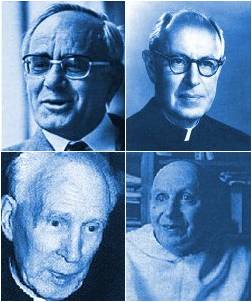 Who are the liberal theologians? They are not men of faith nor defenders of orthodoxy, nor people of deep spirituality and prayer, nor people righteous before God who observe the laws of God without distorting or circumventing it.
Liberal theologians disregard the true spiritual life and spiritual struggle for the salvation of immortal souls. They do not care about a personal relationship with God. They do not show true repentance – admit neither their sin nor sinfulness before God. On the contrary, they conceal sins, sanctify them and make sinfulness the norm. They thus remove God’s law and establish the teachings of men (cf. Corban; Mk 7:11). Moreover, they are people who do not truly love their neighbour because they do not seek his greatest good – that he may truly know Christ and save his soul. They do not follow Christ themselves and if anyone wants to follow Him, they ridicule and intimidate him. They do not know what true wisdom is which is mindful of death, the judgment of God and the reality of eternity. They are eloquent preachers but their preaching kills the truth, so it loses a motivating force. These theologians (false prophets) belabour the letter of Scripture and it is true about them what Jesus said: “The letter kills.”

1) Positive aspects of the Focolare movement:
When the war drew to a close, Chiara Lubich, the founder, and her friends went through a deep spiritual experience that could be an encouragement in faith to many.
Today, the greatest positive aspect is that the Focolare priests meet regularly. When Archbp. J. Graubner was an assistant priest in Valašské Klobouky, some people came to visit him but unfortunately he was not home. The notice board displayed a busy timetable of religion classes, but Tuesday was free. He set it apart for meeting with the Focolare priests. This is praiseworthy. The other Focolare priests likewise set apart this time for this purpose. Other priests in the diocese failed to do so. They were individualists, although many of them were very zealous in repairing churches, in catechesis or pastoral care. But they did not care much about spiritual fellowship with brethren; they thought of it as wasted time. Regular meetings of Focolare members were really something revolutionary within the individualistic structure. When other priests wanted to meet together for fellowship in prayer, God’s Word and mutual encouragement, it always failed after several attempts.


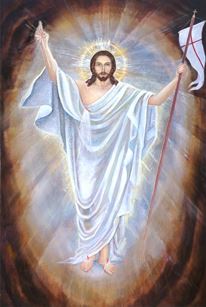
“Look at My hands and My feet. It is I Myself! Touch Me and see.”
Luk 24:39 (12/4/2026 – 26/4/2026)