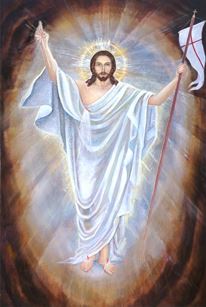
Reflection on Jn 15:16
“You did not choose Me, but I chose you and appointed you that you should go and bear fruit,
and that your fruit should remain, that whatever you ask the Father in My name He may give you.”
Think to yourself for a moment that God chose you: “I did not choose You, my God and Saviour, but You chose me before the foundation of the world…” (cf. Eph 1:4)
Jesus wants me to bear fruit – the fruit of works done according to the will of God and in faith. This fruit should remain forever!
Jesus assures us again that the Father will give us whatever we ask in His name. This holy name of God is “Yehoshua” (Lord is my salvation).
Reflection on Jn 15:12-13
“This is My commandment, that you love one another, as I have loved you.
Greater love has no man than this, that a man lay down his life /soul/ for his friends.”
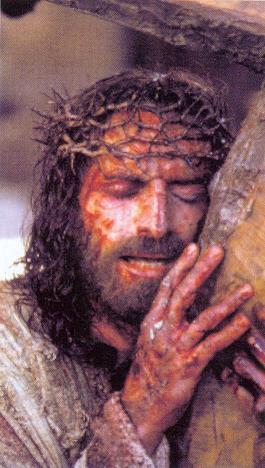
Jesus emphasizes this commandment twice on the evening before His death (see Jn 13:34-35). He says: “A new commandment I give to you”, and He adds: “By this shall all men know that you are My disciples, if you have love one to another.” The Greek original of the Gospel uses the term “agape” for “love”. It is the love of God which is “shed abroad in our hearts by the Holy Spirit who is given to us” (Rom 5:5). This is the love by which Jesus has loved us. Jesus puts it more precisely what kind of love He means: “that you love one another, as I have loved you”. How has Jesus loved us? Being God, He became man; He humbled Himself, assumed human weakness, yet without sin. He was innocent and yet sentenced to death, even death on a cross. He suffered the pains of scourging, crowning with thorns, the way of the cross; He suffered dying amid mockery and in abandonment, and finally painful death. He paid the price for your sin.
Death on behalf of men can be well illustrated by an example from the Auschwitz concentration camp. It happened that one prisoner ran away. Therefore all prisoners were told to stand in a row and every tenth of them was sentenced to death. One of the prisoners was a priest Maximilian.
Reflection on Jn 15:5; 15:7
 At the Last Supper, Jesus reveals the deep mystery of the inner life in God as well as our unity in Christ and through Him in the Father too. At the Last Supper, Jesus instituted the Eucharist. The Gospel of the Apostle John points out the mystery of the Eucharist even some time before. Jesus said: “He who eats My flesh and drinks My blood abides in Me, and I in him.” (Jn 6:56) “I am the living bread.” (v.51) “I am the bread of life. If anyone eats of this bread, he will not die; and the bread that I shall give is My flesh, which I shall give for the life of the world.” “Whoever eats My flesh and drinks My blood has eternal life, and I will raise him up at the last day.” (v.54)
Reflection on Jn 15:4
“Abide in Me, and I in you. As the branch cannot bear fruit of itself,
unless it abides in the vine, neither can you, unless you abide in Me.”
Abide in Me, and I in you
 When the Lord opens our spiritual eyes, it is as if the blind begin to see! The first shock to us is when we realize how long we lived under the influence of the spirit of lies. False prophets, heretical theologians, preach supreme heresies wrapped in pious phrases. Masses of people are thus led to destruction. One would cry and shout: Christians, wake up! Don’t believe in lies! Don’t believe the servants of lies! Believe Jesus! Believe His apostles! Do receive the Word of God, and not human philosophies, pseudo psychologies or heretical theologies! Do receive Jesus by sincere repentance!
Reflection on Jn 14:27
“Peace I leave with you, My peace I give to you; not as the world gives do I give to you.
Let not your heart be troubled, neither let it be afraid.”

Peace of God
The opposite of peace is restlessness. It torments the soul so that it is in a state of constant fear or nervousness. The cause of mental torment may be that you believe a lie and make a big mistake in your life which you must pay dearly for. Then you feel anger or even hatred towards yourself and your neighbours, and you even throw the blame on God! You may be tormented by intrusive thoughts which incite you to crime. You don’t want them to trouble you and you don’t realize that the source of these pressures is a lie, the spirit of lies.
You can have wealth, career, and yet feel restless in your soul! So there are more sources of restlessness: fear of future, remorse for doing evil, sin…
Jesus says: “Peace I leave with you, My peace I give to you; not as the world gives do I give to you. Let not your heart be troubled, neither let it be afraid.” Jesus says: “…My peace I give to you; not as the world gives…”
Reflection on Jn 14:26
But the Comforter, the Holy Spirit, whom the Father will send in My name,
He will teach you all things, and bring to your remembrance all things that I said to you.
 “He will bring to your remembrance…” We can know the whole Scripture by heart, we can have a large amount of information like a computer, but that’s not essential. We need the right information at the right time, and this information may be much useful or it can even save life. We need to project it on the screen of our mind. This reviving in the spiritual sphere is the work of the Holy Spirit. Jesus said His words to the apostles but these words concern us too. His words are eternally true and binding both for the apostles and for us. These words are for life, eternal life. The Gospel of Christ is no human philosophy or human wisdom. The words of Jesus are the Spirit and life. They are simple and call for action. It is not enough to hear them and lead religious discussions. That’s too little. We need to actualize Jesus’ commandments. In conclusion of the Sermon on the Mount, Jesus speaks the parable of two men who built a house. One man built a house on the sand and the other on the rock. The man who built his house on the sand heard the words but did not do them. The man who built his house on the rock heard the words and did them.
Reflection on Jn 14:23
If anyone loves Me, he will keep My word; and My Father will love him,
and We will come to him and make Our home with him.
 Jesus said these words the night before His death. These and other words, which He said before His death, are contained in chapters 13-17 of John’s Gospel. Jesus speaks about love which is necessarily connected with the keeping of His commandments. Jesus repeats: “He who loves Me will be loved by My Father.” (v.21) There are commandments given by God in the Decalogue and commandments and various obligations related to the rites of purification, especially burnt offerings of bulls and lambs and the sprinkling of blood. It is contained in the Second to Fifth Books of Moses. This just prefigured the redemptive death of Christ on the cross. In Christ, this all was accomplished. The record of debt was cancelled (cf. Col 2:14). Jesus the Son of God acts as the Law-giver on His own authority. He repeats several times: “But I say to you…” Jesus does not abolish the Decalogue; on the contrary, He points out its essence. He points to the root of sin, lusts, pride, hatred, revenge. Citation of Christ’s commandments: “You have heard that it was said to those of old, ‘You shall not murder.’ But I say to you that whoever is angry with his brother without a cause shall be in danger of the judgment.” (Mt 5:21-26)
Reflection on Jn 14:21
 “He who has My commandments and keeps them, it is he who loves Me.
And he who loves Me will be loved by My Father,
and I will love him and manifest Myself to him.”
Jesus highlights this truth in verse 23 too. True love for Him is connected not only with the receiving of the Word but there is also one condition: the keeping of His commandments. In fact, it means the following of Christ, which involves the loss of our soul for His sake: “Whoever loses his soul for My sake and the Gospel’s will save it.” (Mk 8:35) If a disciple keeps Christ’s commandments, he will be loved by the Father and by Jesus, and Jesus will manifest Himself to him (see v.21). “We will come to him and make Our home with him.” (v.23) We thus become a living tabernacle like the Blessed Virgin. So the knowledge of Christ cannot be acquired through theological, philosophical or psychological studies but only through love – agape – which becomes manifest not in phrases but in the following of Christ, i.e. in the keeping of Christ’s commandments.
Reflection on Jn 14:20
“On that day you will know that I am in My Father, and you in Me, and I in you.”
We are in Christ, and He in us.
Jesus said: “On that day you will know that I am in My Father, and you in Me, and I in you.” (Jn 14:20)
I realize the truths:
1) Jesus is God, and He is in the Father
2) We are in Christ crucified
3) The risen Christ is in us
Reflection on Jn 14:15-16
If you love Me, keep My commandments. And I will pray the Father, and He will give you another Comforter, that He may abide with you forever.
For the period of the next two weeks, enter into God’s presence, into the column of light, and stand by Christ’s cross beside the Blessed Virgin. There accept the last will of Christ. Repeat the words: “Jesus said to the disciple and now says to me and to the inhabitants of the (Lvov) region: ‘Behold, your mother.” Then pray with your spirit and mind for about a minute, and say in the end: “I receive Your mother on both my and their behalf.” Pray again for the particular regions of Ukraine, standing in the column of light, and make an act of faith – i.e. accept Christ’s testament – on your behalf and on behalf of the inhabitants of the particular region.
Reflection on Jn 14:13-14
And whatever you ask in My name, that I will do, that the Father may be glorified in the Son.
If you ask anything in My name, I will do it.
These words, uttered by Christ on the evening before His death, are a continuation of the preceding words by which Jesus revealed to the Apostles the mystery of interior unity between Him and the Father. The uniting love between you and Christ is conditioned by true repentance, i.e. by keeping Christ’s commandments (see Jn 14:15.21.23). All philosophies, theologies or psychologies which reject true repentance and the following of Christ lead to both temporal and eternal damnation.
To ask in Jesus’ name does not mean just to utter the phrase “in the name of Jesus Christ” spiritlessly. It means to be in interior unity with Christ through true repentance (see Mk 1:15). If you are in unity with Him, then you surely ask according to the will of Christ, which is also the will of the Heavenly Father.
Reflection on Jn 14:9-10
Jesus said to him, “Have I been with you so long, and yet you have not known Me, Philip? He who has seen Me has seen the Father; so how can you say, ‘Show us the Father’? Do you not believe that I am in the Father, and the Father in Me? The words that I speak to you I do not speak on My own authority; but the Father who dwells in Me does the works.”
Let us realize that Jesus speaks to His apostles for the last time, on the evening before He is arrested and sentenced to death. So these are deep truths which He hands on to the apostles in an intimate conversation. First He gives an answer to Thomas who does not understand Jesus’ words about heaven. Jesus is going away, that He may prepare a place for the apostles and all the faithful. Thomas says: “We do not know where You are going, and how can we know the way?” And Jesus says: “I am the way, the truth, and the life. No one comes to the Father except through Me.” And then He adds: “If you had known Me, you would have known My Father also.” The Apostle Philip responds to it by asking Jesus: “Lord, show us the Father, and it is sufficient for us.” Jesus says to him: “Have I been with you so long, and yet you have not known Me, Philip?”
Reflection on Jn 14:6
Jesus said to him, “I am the way, the truth, and the life.
No one comes to the Father except through Me.”
Jesus says about Himself: “I am the way, the truth, and the life.” Jesus said to the Jews: “Before Abraham was, I AM.” (Jn 8:58) They took up stones to throw at Him, for the name of God is “HE WHO IS”. Jesus says that He is the way, the truth, and the life. Jesus is the Truth. The devil is a liar and the father of lies. Jesus said to those who believed in Him: “You shall know the truth, and the truth shall make you free.” (Jn 8:32) He does not speak about an abstract truth but about Divine Truth in the flesh, i.e. about Himself. Jesus also says that He is the Life. The contrary of life is death, both temporal and eternal. Jesus gives us eternal life, and He Himself is Eternal Life. He says: “I am the resurrection and the life. He who believes in Me, though he may die, he shall live.” (Jn 11:25) Jesus says that He is the Way. He says to all who have received Him: “Deny yourself, take up your cross, and follow Me.” The apostles left everything and followed Him. Jesus is the spiritual way which unites us to Him and leads to unity with the Father: “There is salvation in no one else, for there is no other name under heaven given among men by which we must be saved.” (Acts 4:12) He is true God.
Reflection on Jn 14:1-2
Let not your heart be troubled; you believe in God, believe also in Me.
In My Father’s house are many mansions; if it were not so, I would have told you.
I go to prepare a place for you.
Chapter 14 captures deep truths concerning the mystery of the inner unity with Christ and the Heavenly Father. This mystery is also related to the Holy Spirit. Jesus uttered these truths on the evening before His death. He spoke about the faith in Him and about love which is made manifest in the keeping of His commandments. We are going to repeat the first two verses of chapter 14 for a period of two weeks.
In verse one, Jesus says: “Let not your heart be troubled…” These words also refer to you personally. Every day we face situations in which our heart is troubled; we feel tension and fear, see how evil and lies destroy the truth and good… It is a matter concerning our health, responsibility, financial problems, family problems, the war in the Eastern Ukraine…
Reflection on Jn 13:14-15
“If I then, your Lord and Teacher, have washed your feet, you also ought to wash one another’s feet. For I have given you an example, that you should do as I have done to you.”
Chapters 13-17 of the Gospel of John record the words and acts of Jesus on the last evening of His earthly life. Jesus washed the apostles’ feet. Peter opposed resolutely but accepted it in the end. After washing their feet, Jesus said to the apostles: “Do you know what I have done to you? You call Me Teacher and Lord, and you say well, for so I am.” And then He says to them: “If I then, your Lord and Teacher, have washed your feet, you also ought to wash one another’s feet. For I have given you an example…”
Reflection on Jn 12:27-28
Now My soul is troubled, and what shall I say? ‘Father, save Me from this hour’? But for this purpose I came to this hour. Father, glorify Your name. Then a voice came from heaven, saying, “I have both glorified it and will glorify it again.”
In verses 24 and 25, Jesus speaks a parable of the grain of wheat, and then He speaks about losing or saving one’s soul for eternity. In verse 27, He speaks about His soul: “Now My soul is troubled, and what shall I say? ‘Father, save Me from this hour’?” And Jesus Himself answers: “But for this purpose I came to this hour. Father, glorify Your name.” These words are an example for us too. In verse 26, Jesus says: “If anyone serves Me, let him follow Me; and where I am, there My servant will be also.” Jesus did not use the word servant but slave (doulos), as seen in the original Greek version of the New Testament.
Actual VIDEO
- BCP: A Call for a Revolution in the Catholic Church – From the Head (Part 2)
- BCP: A Call for a Revolution in the Catholic Church – From the Members (Part 1)
- BCP: Was Pope Francis a public heretic or not? Part 13
- BCP: Was Pope Francis a public heretic or not? Part 11
- BCP: Was Pope Francis a public heretic or not? Part 9