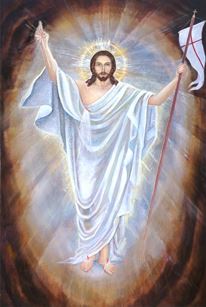
Reflection on Jn 13:14-15
“If I then, your Lord and Teacher, have washed your feet, you also ought to wash one another’s feet. For I have given you an example, that you should do as I have done to you.”
Chapters 13-17 of the Gospel of John record the words and acts of Jesus on the last evening of His earthly life. Jesus washed the apostles’ feet. Peter opposed resolutely but accepted it in the end. After washing their feet, Jesus said to the apostles: “Do you know what I have done to you? You call Me Teacher and Lord, and you say well, for so I am.” And then He says to them: “If I then, your Lord and Teacher, have washed your feet, you also ought to wash one another’s feet. For I have given you an example…”
What does it mean for us to wash one another’s feet if we want to be true followers of our Lord and Teacher? It means little self-humiliations in relation to my brother in Christ. His soul is marked by sin, various bad habits which annoy me, and gestures which I automatically condemn. But these evil habits, sins and all spiritual dirt of his have already been cleansed by the Blood of Christ. My task is just to wash his feet. It means that I humble myself before my brother, which penetrates his heart and causes his soul to be cleansed! At the same time, this service of mine cleanses my soul also, and my brother benefits from it too.
Where and when did Jesus give us an example? At the Last Supper. On the night before His death, He instituted the Eucharistic sacrifice which anticipated His self-giving for our salvation. The sacrament of the Eucharist makes present His death at Calvary. Before His death, at the Last Supper, Christ institutes this sacrament of His love for us with the words: “This is My body which is given for you. This is My blood which is shed for you.” For whom? For His disciples. Who can share in a communion with Christ through this sacrament? Those who do not serve sin, i.e. lies and evil, but Christ! To serve Christ means to keep His commandments. This is how it looks in practice – we keep falling and have to repent time and again. We thus respond to His call: “Deny yourself, take up your cross daily and follow Me!” (cf. Lk 9:23) Where to? To death. To the death of your soul which you are to lose for the sake of Christ and the Gospel. This means to enter into the death of Christ time and time again (cf. 2Cor 4:10f). This is a matter of the obedience of faith, abiding in Christ through daily little denials of your self, your selfishness, your unbelief, your rebellion, your grumbling. And this means to walk in the Spirit of God, not in the spirit of the world!
The foundation, centre and top of repentance is the truth about yourself, your neighbour and God. The truth means humility! Humility, self-criticism, opens our spiritual eyes so that we are able to see. Humility opens our spiritual ears so that we are able to hear the word and the voice of God. Humility, or repentance, gives us the strength to recover from spiritual paralyzation through healing by Christ. Repentance cleanses us from spiritual leprosy ever anew.
Why did the Lord Jesus wash the apostles’ feet? To give an example both to them and us, that we also should wash one another’s feet. Jesus did not wash the Pharisees’, Sadducees’ or Gentiles’ feet or the feet of mere sympathizers but the apostles’ feet – i.e. of those who after the descent of the Holy Spirit followed Him by preaching the Gospel, the word of Christ, and who lost not only their souls (cf. Mk 8:35f) but even their lives as martyrs for the sake of Christ and the Gospel!
The process of cleansing in a living fellowship is the washing of one another’s feet. People would talk about the early Christians with admiration: “Look how they love each other!” The apostles and early Christians in Jerusalem indeed were of one heart. They were of one mind, and even had all things in common (cf. Acts 4:32).
The question of property: How do present-day Christians use material possessions? The greatest wealth which a father or mother can give their son or daughter is a good Christian upbringing. This upbringing is founded on correct – divine – principles. It teaches virtue. This involves dying to one’s self, obeying God’s laws, serving God. The prudent man thinks seriously about death, God’s judgment and eternity.
A true religious community, i.e. spiritual family, can only be sound when its members wash one another’s feet – which is a true process of purification, or repentance. The same applies to a sound Christian family, the father being the head of the family. He himself also needs a fellowship of Christian men who are to be true heads of their families. Their wives must submit to them in serious matters concerning family. Both of them are thus obliged to set a good example to their children. The proverb says: “Words move people, examples compel them.” Children must obey their parents. Care for children is a cross to be carried by the parents, which purifies them and helps them grow spiritually and die to their self. A Christian family must be a healthy cell of the true Church and an example of selfless love to other families. The family must be aware that its most important task is to keep the lives of all its members for eternity through true repentance and the following of Christ. The purpose of life is not to accumulate property or to make a career. All this is short-lasting and passing. Things should serve us, not vice versa. We should serve God. If we serve Him in earnest, we ourselves benefit from it most. If we keep the First Commandment, i.e. if we love God, the love of God – Agape – is in our hearts. This love leads us to truly love ourselves and our neighbours. Jesus washed the apostles’ feet, and then He opens their hearts and speaks about the Holy Spirit and about true love – Agape – i.e. the love of Him who lays down His life for His friends. He reveals the mystery of God’s presence in us, in our hearts, through our faith in Christ and our communion with the Father.
In chapter 17, at the end of His last meeting with the apostles before His death, Jesus prays to the Father for spiritual unity, that the apostles may be one, just as He is in the Father, and the Father in Him, that the apostles also may be in Christ and hence in communion with the Father.
On the following day, at the last hour of His earthly life, Jesus makes His will, saying to the disciple by the cross: “Behold your Mother!” This is connected with spiritual transplantation, with the receiving of a new spiritual centre, a new heart, which is the living tabernacle of God. The Mother of Jesus is this tabernacle. Genetically programmed spiritual infection transmitted from the first woman, Eve, has its focus in the soul – in our heart in particular, out of which proceed all evil thoughts and sin. Mary is the new Mother, the new Eve. She transforms us spiritually into Christ, if we really honour her and receive her as our Mother. She is full of grace, full of the Holy Spirit – kecharitomenee (Lk 1:28). She teaches us to live with Christ and in Christ. There is no better spiritual teacher and no better example of following Christ and abiding in communion with Him. She is the slave of the Lord. At times of spiritual crisis, turn to her and with her to Jesus.
Download: Reflection on Jn 13:14-15
Actual VIDEO
- BCP: A Call for a Revolution in the Catholic Church – From the Head (Part 2)
- BCP: A Call for a Revolution in the Catholic Church – From the Members (Part 1)
- BCP: Was Pope Francis a public heretic or not? Part 13
- BCP: Was Pope Francis a public heretic or not? Part 11
- BCP: Was Pope Francis a public heretic or not? Part 9