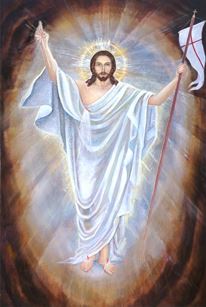
Reflection on 1Cor 6:9-10
 The Word of God says that the unrighteous will not inherit the kingdom of God. The opposite of unrighteousness is righteousness. He is righteous who gives God what is due to God and man what is due to man. It is written about Saint Joseph that he was a righteous man. The Holy Scripture, however, speaks above all about the righteousness of God which consists in the fact that sin was justly punished. Dying on the cross, Jesus suffered the punishment for all our sins and all our unrighteousness. Only if we have believed in Christ, i.e. put on His righteousness, we can be saved. We cannot make amends for sins or the root of sin in us by our own efforts.
These verses enumerate ten forms of the bondage of sin which make man unrighteous and a slave of a particular sin. The following verse says that we were justified in the name of our Lord Jesus Christ. Salvation is for free, through faith; it is the gift of God (Eph 2:8). The Word of God emphasizes: Do not be deceived! The meaning of these words can also be translated as follows: Stop deceiving yourselves! People like deceiving themselves and refuse to call a sin a sin, to fight against it or to break with it.
Word of Life – Acts 26:18 (4/12/16 – 18/12/2016)
“To open their eyes, in order to turn them from darkness to light,
and from the power of Satan to God,
that they may receive, through faith in Me,
forgiveness of sins and an inheritance among those who are sanctified.”
Reflection on Acts 26:18
“To open their eyes, in order to turn them from darkness to light, and from the power of Satan to God,
that they may receive, through faith in Me, forgiveness of sins
and an inheritance among those who are sanctified.”
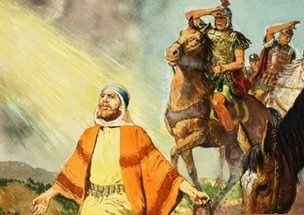 Jesus said these words when He appeared to the Apostle Paul before his conversion, on his way to Damascus. He went to Damascus to arrest Christians as their greatest enemy, and to bring them bound to Jerusalem. As he went on his way, at about noon Jesus appeared to him in a bright light. Paul fell from his horse, became blind, and had to be led by the hand into Damascus. When Jesus appeared to him, He said these words to him: “I send you to the Jewish people as well as to the Gentiles to open their eyes, in order to turn them from darkness to light, and from the power of Satan to God…”
Jesus entrusted the Apostle with the task of opening people’s eyes by bearing witness to Him in the power of God so that they may turn from darkness to light. So both the Jews and the Gentiles were in darkness and had to be converted. The Jews as well as the Gentiles were in the power of Satan and needed to turn to God. They had to receive Christ so as to receive, through faith in Him, forgiveness of sins and an inheritance among the sanctified.
Reflection on Acts 4:11-12
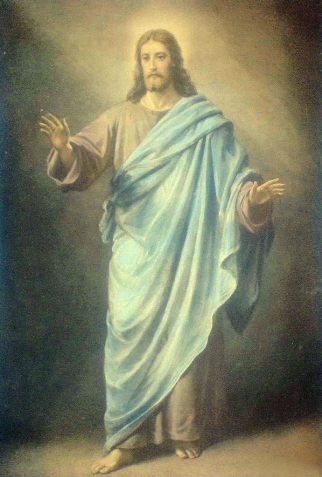 Peter and John stood before the high priests, the elders and the scribes who had arrested them by reason of healing the lame man and preaching the Gospel. Peter delivered his first apologetic sermon before all.
How is it possible that those who were behind closed doors, filled with fear, a few days ago now stand firm and preach the risen Christ in public and without fear of threats or punishment? The Word of God says: “You shall receive power when the Holy Spirit has come upon you; and you shall be My witnesses (martyres).” The Apostles received the fullness of the Holy Spirit. And then there was no more place for fear in their souls. On the contrary, it was the high priests and the scribes who were filled with fear when they saw the fearlessness of the Apostles and the power which Jesus had given them.
There is salvation in no one else! There is salvation in Jesus alone! There are no other ways or alternatives of salvation but Jesus Christ. There is no other name by which we must be saved. These words are true and will be true forever.
Word of Life – Acts 4:11-12 (20/11/16 – 4/12/2016)
“Jesus is the stone that was rejected by you, the builders,
which has become the cornerstone. And there is salvation in no one else,
for there is no other name under heaven given among men
by which we must be saved.”
Word of Life – Acts 2:41-42 (6/11/16 – 20/11/2016)
“Then those who gladly received his word were baptized;
and that day about three thousand souls were added to them.
And they continued steadfastly in the apostles’ doctrine and fellowship,
in the breaking of bread, and in prayers.”
Reflection on Acts 2:41-42
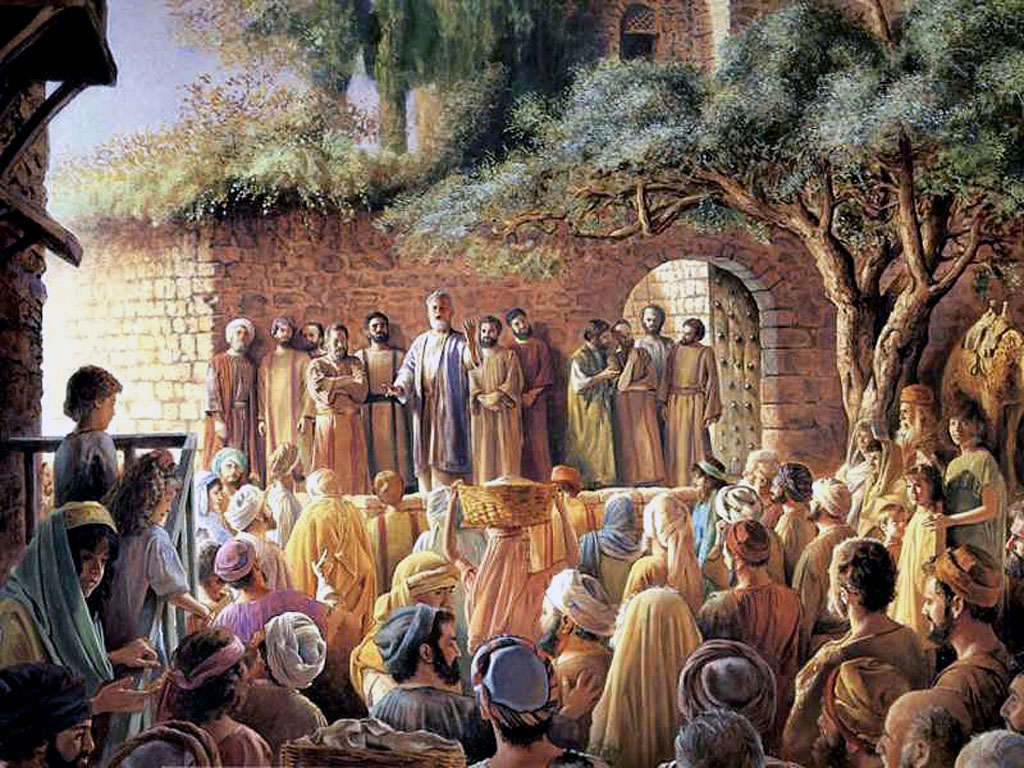 “Those who received his word were baptized; and that day about three thousand souls were added to them. And they continued steadfastly in the apostles’ doctrine and fellowship (koinonia), in the breaking of bread (Eucharist), and in prayers.” That was the fruit of the descent of the Holy Spirit and of Peter’s sermon – the Church – living fellowship – was born and started to grow. On the seventh day, Sunday, when we commemorate the Resurrection of Christ and the Descent of the Holy Spirit, we try to find time for prayer, Divine Liturgy and fellowship. Here we can receive again the apostles’ doctrine through the Word of God and also receive encouragement through the examples of saints and martyrs as well as through personal testimonies of faith.
Word of Life – Acts 2:38-39 (23/10/16 – 6/11/2016)
“Then Peter said to them, “Repent, and let every one of you be baptized
in the name of Jesus Christ for the remission of sins;
and you shall receive the gift of the Holy Spirit.
For the promise is to you and to your children,
and to all who are afar off, as many as the Lord our God will call.””
Reflection on Acts 2:38-39
“Then Peter said to them, ‘Repent, and let every one of you be baptized in the name of Jesus Christ for the remission of sins; and you shall receive the gift of the Holy Spirit. For the promise is to you and to your children, and to all who are afar off, as many as the Lord our God will call.’”
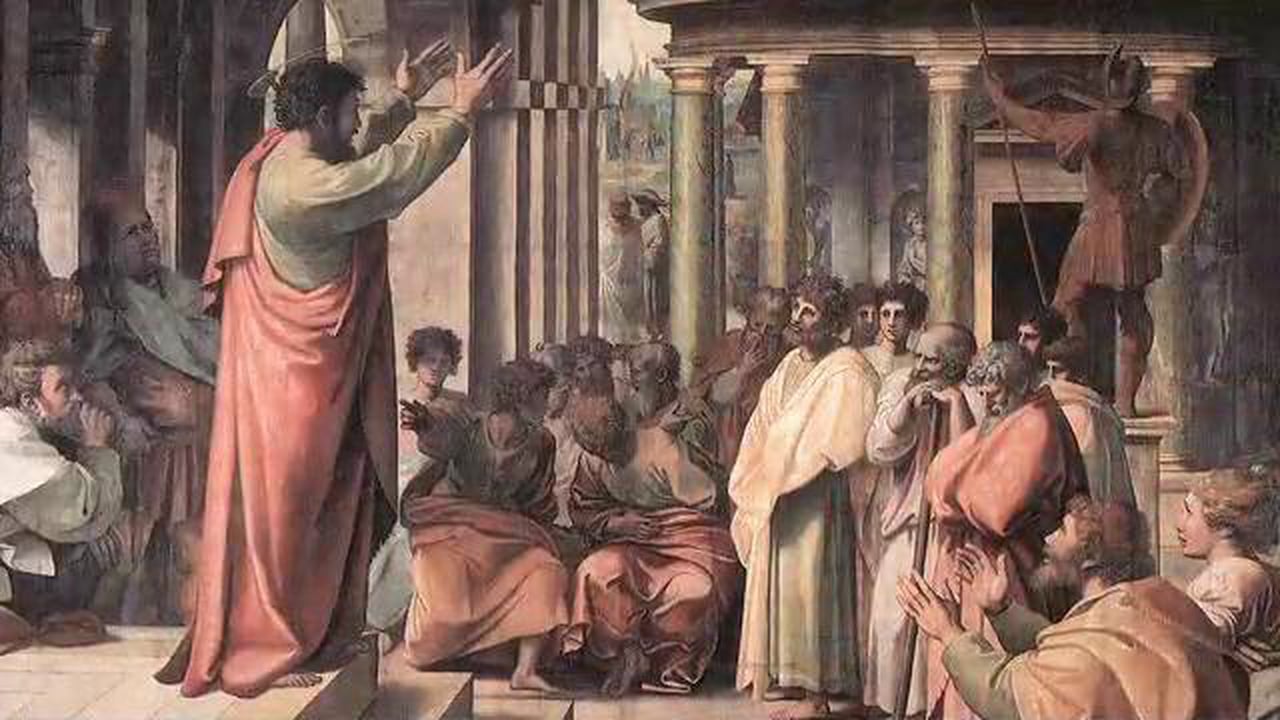 These words were spoken by Peter in his sermon on the Day of Pentecost when the Holy Spirit descended on the Apostles. They began to praise God for His wonderful works in unknown languages, so the foreigners who had come to Jerusalem heard them speaking in their own languages. Interestingly, if we notice where the pilgrims of the different nationalities came from – Medes and Elamites, those dwelling in Mesopotamia, Cappadocia, Pontus – we find out that it was the territory of present-day Turkey, which is now fully Islamized. For example, some of the Church Fathers, namely St Basil, St Gregory of Nyssa and St Gregory of Nazianzus, lived and worked in Cappadocia. Other nationalities mentioned here are Egyptians, Libyans, Romans, Cretans, Arabs, even to the territory of present-day Iran and Iraq. Today, these territories are occupied by Islam. Christianity was destroyed there by force.
Reflection on Acts 1:5.8
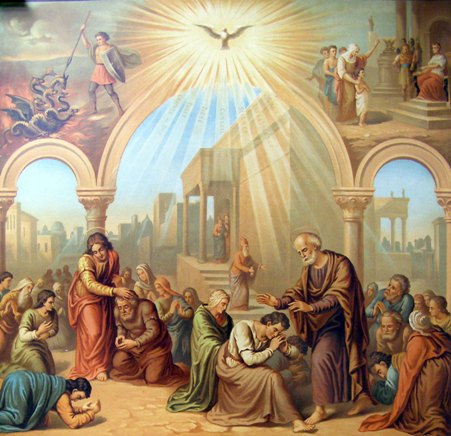 Jesus said these words on the Mount of Olives on the fortieth day after His Resurrection, when ascending into His glory before the eyes of the apostles and disciples. Jesus emphasized that the apostles needed to receive the fullness of the Holy Spirit. They had already received Him on the Day of Christ’s Resurrection but not in fullness.
Jesus also told the apostles to stay in the city of Jerusalem until the Holy Spirit descended on them in fullness (cf. Lk 24:49). “…until you are endued with power from on high.”
Almost all of you, dear believers, have received the fullness of the Holy Spirit. The Holy Spirit enlightens our mind and strengthens our will, that we may be true witnesses of our Lord Jesus Christ!
Word of Life – Acts 1:5.8 (9/10/16 – 23/10/2016)
“For John truly baptized with water, but you shall be baptized with the Holy Spirit
not many days from now. You shall receive power when the Holy Spirit
has come upon you; and you shall be witnesses to Me in Jerusalem,
and in all Judea and Samaria, and to the end of the earth.”
Word of Life – Mt 8: 2-3 (25/9/16 – 9/10/2016)
“And behold, a leper came and worshipped Him, saying, “Lord, if You are willing,
You can make me clean.” Then Jesus put out His hand and touched him, saying,
“I am willing; be cleansed.” Immediately his leprosy was cleansed.”
Reflection on Mt 8:2-3
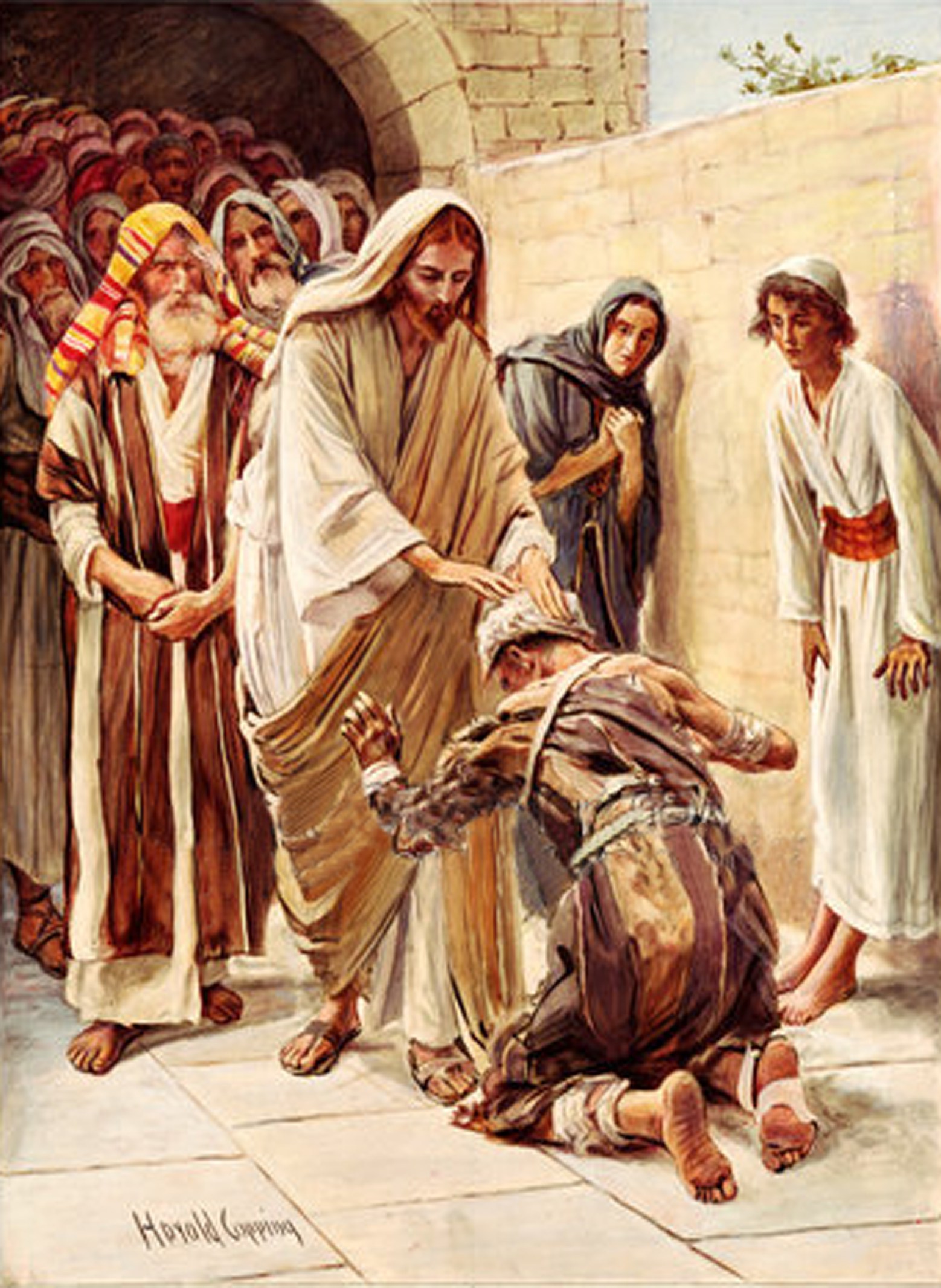 This event happened after Jesus finished His Sermon on the Mount of Beatitudes, where He presented simple life principles leading to eternal life. To lead us to the essence, Jesus completes here what Moses had not expressed explicitly in the Law of God. Referring to the commandment “You shall not kill!”, Jesus points out the root and says that we cannot even nourish hatred in our heart. Referring to the commandment “You shall not commit adultery!”, Jesus warns that even a lustful look is a manifestation of adultery. Concerning forgiveness, He emphasizes: “God will not forgive you if you do not forgive your neighbour” etc. At the end of the Sermon on the Mount Jesus speaks about an extremely important principle, which He explains in the parable of two builders. One of them built a house quickly but without foundations. The other built the foundation on the rock. When a storm came, it turned out that only a house built on the rock of Christ’s teaching shall stand. However, to build on the rock it is not enough to be theologically educated, even if this theology is truly Catholic. An academic Christian will not stand; one must be a practising Christian who not only hears the word of God (not modern heresies) but also puts it into practice.
Gebetswachen (das unaufhörliche Gebet) /german version/
 Das Byzantinisch katholische Patriarchat ermutigt Christen, sich in einem unaufhörlichen Gebet an Gott zu wenden. Er wird euch Weisheit und Mut geben, um gegen die dämonischen Mächte der Finsternis zu kämpfen. Er wird eure Nation durch euren Glauben retten. Setzt daher eine Gebetswache ein! Jeder soll ein ganzes Jahr lang täglich das Gebet in Zeit der heiligen Stunde von 20 bis 21 Uhr übernehmen. 23 Menschen werden dann die restlichen 23 Stunden des Tages besetzen und so wird eine Gebetswache, die eine Woche lang beten soll. Danach beten drei Wochen lang drei andere Gebetswachen, ebenfalls jeweils eine Woche lang. Dieser Rhythmus wiederholt sich das ganze Jahr hindurch. Die Wachwechsel findet am Sonntagabend um 21 Uhr statt.
Stellt eine Liste mit 23 Personen für die jeweiligen 23 Stunden der Gebetswachen während des Tages auf und beginnt am Sonntagabend mit dem Gebet des Glaubens. Nach dem Ende der ersten Woche macht man eine Pause für drei Wochen und in der vierten Woche fängt man wieder an. Man tut dies das ganze Jahr über. Gott verspricht euch die Errettung eurer Nation.
Word of Life – Mt 7:24-25 (11/9/16 – 25/9/2016)
“Therefore whoever hears these sayings of Mine, and does them,
I will liken him to a wise man who built his house on the rock:
and the rain descended, the floods came, and the winds blew and beat on that house;
and it did not fall, for it was founded on the rock.”
Reflection on Mt 7:24-25
 In the preceding verses, Jesus points out the essence – doing the will of God: “Not everyone who says to Me, ‘Lord, Lord,’ shall enter the kingdom of heaven, but he who does the will of My Father in heaven.” If we seek first the will of God in our life and if we also try to do it, it is true about us that we are like a wise man who built his house on the rock. Sooner or later the winds blow, the rain descends and the floods come, but if our house is founded on the rock, it will not fall. The problem why we try to build a house on the sand many times is that we easily believe in what seems good to us, evokes our interest, offers advantage and makes the impression that right this attractive option is the ideal solution in our decision-making. Once we cling to this vision and try to achieve our dream, we are no longer willing to seek the will of God because we avoid the thought that we should abandon our house on the sand. It seems so hard, disadvantageous and often even repulsive to us to start building on the rock, and so under the pressure of the false good we throw away the true good, or we make ourselves believe that this false good is the will of God.