Reflection on Rom 7:1-2
 Or do you not know, brethren, that the law has dominion over a man as long as he lives? For the woman who has a husband
is bound by the law to her husband as long as he lives. But if the husband dies, she is released from the law of her husband.
Or do you not know, brethren, that the law has dominion over a man as long as he lives? For the woman who has a husband
is bound by the law to her husband as long as he lives. But if the husband dies, she is released from the law of her husband.
Interpretation for Rom 7:1-2 and Rom 7:3
Christ the End of the Law
In Romans 6 we saw how God delivered us from sin; in Romans 7 we see how He delivers us from the Law. In chapter 6 we were shown the way of deliverance from sin in the picture of a master and his slave; in chapter 7 we are shown the way of deliverance from the Law in the picture of two husbands and a wife. The relation between sin and the sinner is that of master to slave; the relation between the Law and the sinner is that of husband to wife.
Word of Life – Rom 6:23 (27/1/2019 – 10/2/2019)
“For the wages of sin is death,
but the gift of God is eternal life in Christ Jesus our Lord.”
Reflection on Rom 6:23
 “For the wages of sin is death, but the gift of God is eternal life in Christ Jesus our Lord.”
Let us imagine God’s judgment, demons stand on the left, angels on the right and all mankind behind us. In front of us there is a big screen, and we who are judged stand under the screen. All our life is shown on the screen. At the end, a large inscription appears on the screen: “The wages of sin is death – eternal death – eternal hell.” This is righteous judgment of sin which is rebellion against God and obedience to the devil. The seed of the devil in us, which is original sin, forces us to obey evil, the devil, and to revolt against God. The root of sin in us bears poisoned fruits which are harmful both to us and others and set us against God. The verdict is final – death. We need to be aware of it. That’s the reality. There is only one way out – only in time; on the day of God’s judgment there will be no more chance of salvation, for the time of test and trial, which is our life, will have ended. Therefore we have to know and bear in mind that the solution – salvation from eternal death – is only in Jesus who is the Son of God and became man just for our sake, to deliver us from sin.
Reflection on Rom 6:22
 “But now having been set free from sin, and having become slaves of God, you have your fruit to holiness, and the end, everlasting life.”
The condition for being set free from sin is to become slaves of God. Chapter six of the Epistle to the Romans very often uses the term “slave”. On the one hand, there is a reality of slavery to sin. Even if we want to get out of this slavery by our own efforts, we cannot. We can be set free from this kind of slavery neither by our own efforts nor by any other means but only by the power of God, and we receive this power under one condition – that we give ourselves wholly to God. It means that we accept His commandments and are guided by the Spirit of God, and no longer by the spirit of the world, the spirit of lies. This freedom, however, has one basic condition – we must lose our soul for Christ’s sake and the Gospel’s (Mk 8:35).
Word of Life – Rom 6:22 (13/1/2019 – 27/1/2019)
“But now having been set free from sin, and having become slaves of God,
you have your fruit to holiness, and the end, everlasting life.”
Reflection on Rom 6:19
 “I speak in human terms because of the weakness of your flesh. For just as you presented your members as slaves of uncleanness, and of lawlessness leading to more lawlessness, so now present your members as slaves of righteousness for holiness.”
This verse expresses again what this chapter has already said before, namely that we should not present our members as slaves of uncleanness, or of lawlessness leading to more lawlessness. On the contrary, we should now put our members fully at the disposal, i.e. present them as slaves, of righteousness for holiness. The Apostle indicates here that sin particularly exploits uncleanness and lawlessness. Therefore we have to stand firmly on the side of righteousness. There are as it were two banners here – the banner of slavery to evil against the banner of true freedom. In this battle, we have to learn the art of fighting. Above all, we should avoid the near occasion of sin, which is a sign of true humility and wisdom. If it is not possible, and we have done the best in our power, God will show us a way out.
Word of Life – Rom 6:19 (30/12/2018 – 13/1/2019)
“I speak in human terms because of the weakness of your flesh.
For just as you presented your members as slaves of uncleanness,
and of lawlessness leading to more lawlessness,
so now present your members
as slaves of righteousness for holiness.”
Reflection on Rom 6:17-18
Thanks be to God that, being converted, we were given the grace to receive the salvific teaching based on the faith in our Lord and Saviour Jesus Christ. We have been delivered by Him from enslavement caused by sin, and we have taken the new path of righteousness.
Chapter six speaks about sin many times. It says: “…though you used to be slaves (Gr. duloi) to sin…”. Today we can see clearly what it is like to be a slave to sin. Sin in the heart of man hates above all truth and true self-criticism, so its essence is pride. It means lack of self-criticism, unwillingness to admit the truth, unwillingness to learn from our own mistake and, on the contrary, an attempt to throw the blame on others or on God, or on so-called circumstances.
Sin includes murder, seeking help from the devil in witchcraft or other occult practices; sin also includes fraud, theft, abuse, rape, unclean thoughts, words or deeds, all kinds of perversion, divorce, hatred, war. What is the fruit of sin? Suffering, tears, loneliness, prison, death. People become slaves to drugs or alcohol, they become homeless or criminals. The reality of sin cannot be denied.
Word of Life – Rom 6:17-18 (16/12/2018 – 30/12/2018)
But thanks be to God that, though you used to be slaves to sin,
you wholeheartedly obeyed the form of teaching to which you were entrusted.
You have been set free from sin and have become slaves to righteousness.
The Epiclesis /Part four: The Epiclesis – The Temple and Iconostasis/
26 November 2018
 The biblical model of the Christian temple is the vision given by God (to Moses). It was applied to the Jerusalem Temple. The basic structure consists of the Holy of Holies, where God is present in a special way, the Holy Place, where the priests offered sacrifices to God, and the place for people.
The Eastern temple with an iconostasis, altar and tabernacle has preserved this biblical structure to this day. The Western Church had preserved it only until the Second Vatican Council which carried out an absurd reform. After the reform, the priest, who represents the people and offers sacrifice to God on the altar in their behalf, has turned his back to the centre of the temple, which is the tabernacle where God’s presence dwells constantly. Moreover, in many places the tabernacle has been removed from the centre of the temple. The reform has also removed the rail which separated the place for priests and for those who served at the altar.
The Epiclesis /Part three: The Epiclesis – How to experience the Epiclesis in the Liturgy/
25 November 2018
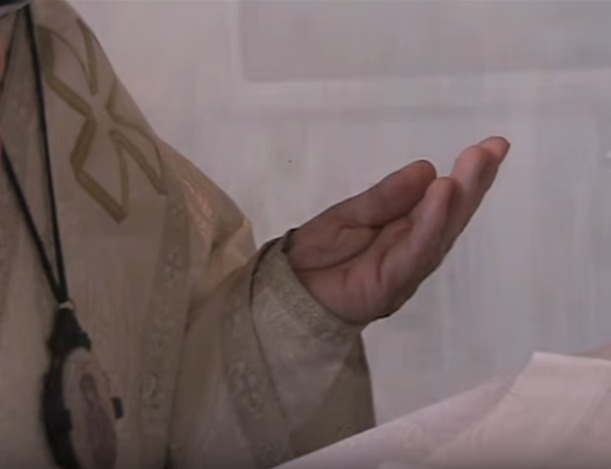 The Epiclesis is the invocation of the Holy Spirit both on us and on the gifts. It has three parts:
1) The priest kneels and implores God in a spirit: “Send down the Holy Spirit upon us” (Note: Throughout the Epiclesis, the chorus sings the antiphon: “We praise You…” or there is silence).
God promises through the prophet Ezekiel (37): “Behold, I will send spirit into you, and you shall live.” – We beseech in spirit: Lord, give us the Spirit of repentance, that we may live!
“I will put sinews on you” – Put sinews on us – the gift of prayer!
“I will bring flesh upon you” – Fill us with the power of Your commandments!
“I will cover you with protective skin” – Give us living communities!
“I will put Spirit in you, and you shall live” – Put the fullness of the Spirit in us, that we may live! Ye-ho-shu-aaa
Word of Life – Rom 6:16 (2/12/2018 – 16/12/2018)
“Do you not know that if you present yourselves to anyone
as obedient slaves, you are slaves of the one whom you obey,
either of sin, which leads to death, or of obedience,
which leads to righteousness?”
Reflection on Rom 6:16
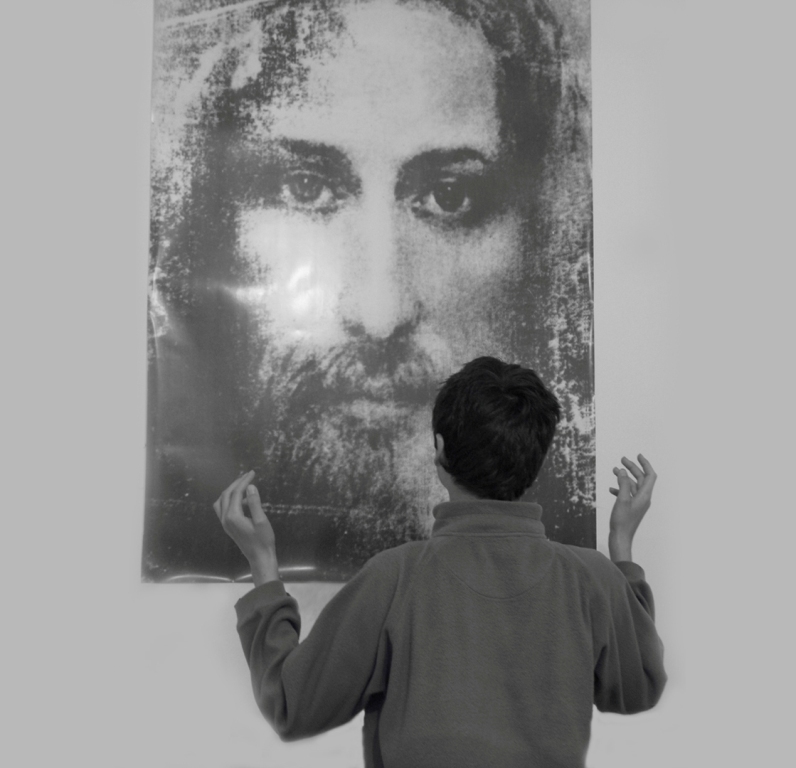 “Do you not know that if you present yourselves to anyone as obedient slaves, you are slaves of the one whom you obey, either of sin, which leads to death, or of obedience, which leads to righteousness?”
This verse from the Scripture reveals a deep truth about obedience the fruit of which is eternal life in heaven or eternal death in hell.
Apart from the word obedience, this verse also emphasizes the word slave (Gr. dúlos). According to the Greek original, the verse should actually read as follows: Do you not know that if you present yourselves to anyone as obedient slaves, you are slaves of the one whom you obey? You are either slaves of sin, which leads to death, or you obey God, which leads to justification from sin and to life.
If we do not serve God wholeheartedly, we are not free but we are slaves of original sin which is in us. We automatically obey original sin, i.e. the source of lies and evil in our heart. Original sin clouds our mind and weakens our will so that we hate the truth about ourselves, reject the true good and refuse to serve God and keep His commandments.
The Epiclesis /Part two: The Holy Spirit and the Epiclesis/
22 November 2018
 Before His death, before sacrificing His body and blood on the cross, Jesus established this sacrifice of the cross to be offered to God for the remission of sins. The symbolic sin-offerings, when the blood and life of the sacrificial lambs was offered in the Jerusalem temple, lost their significance. Jesus is the true Lamb who took on Himself the sins of the world (Jn 1:29). Before the completion of His sacrifice of the cross, Jesus instituted a new sacrifice, which is also a new covenant (Mt 26:26) for the forgiveness of sins. At the Last Supper, He took bread and said, “This is My body, which is given for you.” Then He took the cup of wine and said, “This is My blood of the new covenant, which is shed … for the remission of sins.”
What about the Apostles? What did they think? They did not understand His words because His sacrifice had not yet been accomplished. During the Last Supper, Jesus also spoke a number of times about the Holy Spirit, “I still have many things to say to you, but you cannot bear them now. However, when the Spirit of truth has come, He will guide you into all truth.” (Jn 16:13)
The Epiclesis /Part one: The Difference between Eastern and Western Liturgy/
21 November 2018
Part one: The Difference between Eastern and Western Liturgy, the Question of Epiclesis
Part two: The Holy Spirit and the Epiclesis
Part three: How to experience the Epiclesis in the Liturgy
Part four: Liturgical Space and Iconostasis
Part one: The Difference between Eastern and Western Liturgy, the Question of Epiclesis
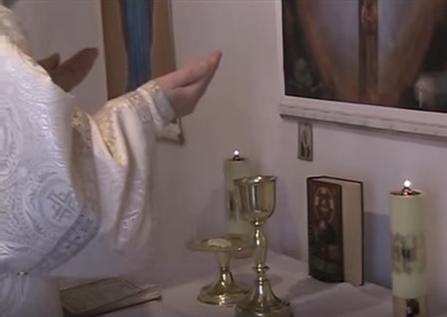 The Eastern Liturgy of St Basil the Great and St John Chrysostom (4th century) contains the Epiclesis. The Epiclesis is also found in other Eastern rites. It comes directly from the Apostolic Tradition.
What is the difference between Eastern and Western Liturgy? The Western Liturgy was radically modified at the Second Vatican Council. The reform introduced four Canons instead of one. The pre-conciliar Latin Liturgy had no mention of the Holy Spirit in the Canon. The reformed conciliar Liturgy does make mention of the Holy Spirit but it has been inserted before the words of Institution. Unlike the Latin Liturgy, the Eastern Liturgy includes a so-called intense invocation of the Holy Spirit, or the Epiclesis, after the words of Institution.