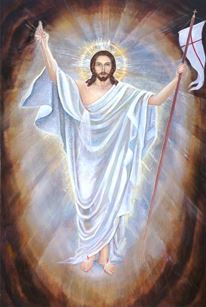
Reflection on Mt 6,33
“Seek first the kingdom of God and His righteousness, and all these things shall be added to you.”
 Jesus emphasizes the word “first”. It seems to us a trivial thing; however, if the kingdom of God and the salvation of our soul are given the second place in our life, there is a danger that thousands of good things will deceive us and we will lose God’s kingdom. Seeking is a painful process. And where is the kingdom of God? The Scripture says: “within” or “among you” (Lk 17:21). Indeed, if we seek first the kingdom of God, all other things, the things we really need, will be added to us. You can see for yourself. If your family seeks first the kingdom of God, God will give His blessing to your children, protect your family and fill the family relationships with self-sacrificing love. But if you seek first everything else and move the kingdom of God to the last place, there is a danger that you will lose everything. The crucial word is “first” (Greek ‘proton’)! Whenever you have a problem, first ask: Where is Jesus? And He answers: “I am with you all the days of your life. (cf. Mt 28:20) The only problem is that you are not with Me.” In the next two weeks, try to remember at least several times a day the crucial words: Where is Jesus?
Reflection on Mt 6:24
No one can serve two masters; for either he will hate the one and love the other,
or else he will be loyal to the one and despise the other. You cannot serve God and mammon.
 The word mammon means wealth and property, especially dishonestly obtained at the expense of one’s neighbour. It also indicates a bribe intended to silence a witness or judge. Jesus points out the demonic enslaving power of mammon: “No one can serve two masters; for either he will hate the one and love the other, or else he will be loyal to the one and despise the other. You cannot serve God and mammon.” So eventually the faith, in the sense confidence or trust, in mammon excludes the faith in God. Therefore, Jesus contrasts the relationship to God and the relationship to mammon and calls for a personal choice between the two.
Wealth
Wealth is considered in the Bible either as God’s blessing, a reward for justice, or a curse. Depending on who wields wealth and how he uses it. The blessing of wealth is described at length in Job 29, where it is closely associated with the glory of man. According to Scripture, wealth is for others rather than for one’s own needs. Job did not consider distribution of wealth as a duty but as a privilege. This ideal has utterly degenerated.
Reflection on Mt 6:22-23
The light of the body is the eye. If therefore your eye is clear, your whole body will be full of light.
But if your eye is bad, your whole body will be full of darkness.
If then the light in you is darkness: the darkness itself how great shall it be!
 Jesus says: “The light of your body is the eye.” Some translations read: “The lamp of your body is the eye.” Jesus then speaks about a single, or clear, eye, the fruit being that the whole body is full of light.
It is important to know that man has a physical eye and an inner – spiritual – eye. The spiritual eye reflects the inner life. Man either lives by the law of God and so he is wise, or has the light of wisdom, or he lives a sinful life, commits evil and so he is in darkness, spiritually blind. This spiritual eye is an inner look turned toward God, listening to the voice of conscience, perceiving that God sees everything and that nothing is covered that will not be revealed. Each of us will give an account for everything. If man lives his life with God and according to God’s commandments, his inner eye is sound.
Reflection on Mt 6:19-21
 Do not lay up for yourselves treasures on earth, where moth and rust destroy and where thieves break in and steal; but lay up for yourselves treasures in heaven, where neither moth nor rust destroys and where thieves do not break in and steal. For where your treasure is, there your heart will be also.
Jesus shows us in a simple way that it is unwise to lay up for ourselves treasures on earth. He says that moth and rust destroy them and thieves steal them. Moreover, the main thief who steals everything is death. And Jesus says: “Be prepared; you know neither the day nor the hour…”, and He speaks about a man whose land yielded plentifully and who planned to build large barns and thus to be secure about the future. God said to him: “Fool! This night your soul will be required of you, and the things you have prepared, whose will they be?” These words are not only addressed to oligarchs or rich people but to every one of us. Why? Because it is also written: “Lay up for yourselves treasures in heaven, where neither moth nor rust destroy…” This is a commandment: we are commanded to lay up for ourselves treasures in heaven.
Reflection on Mt 6:14-15
 In the “Our Father”, Jesus emphasizes seven petitions to the Heavenly Father. One of them is asking forgiveness: “And forgive us our trespasses, as we forgive those who trespass against us.” He adds a commentary to this petition. He highlights the fact that we must forgive our neighbours in our daily life. We need to know that God is merciful and forgives all our sins if we ask Him. But there is one condition, namely, to forgive those who have done us wrong. The essential thing we need in order to forgive others as a matter of course is to face the truth about ourselves. It means that we self-critically admit our trespasses against God. We did not seek first the kingdom of God and His righteousness, we do not care about the salvation of our own souls, we boycott the truth and the reality of death. We bury our heads in the sand like an ostrich to avoid the thought of God’s judgment and then heaven or hell which is in store for us after death. No one will return from there. Time is precious and we live in indifference, or even in rebellion against God; we do not keep His commandments, we do not even know them or seek to know them. We are seduced by vanity and lies, and we embrace it to our own detriment. These sins breed depression, hatred, isolation, diseases, unsolvable problems, broken families, conflict situations, yet we do not want to admit the truth or see our guilt too. We do wrong to others by our carelessness, envy, jealousy, anger, pride – and not only that. We should also be aware of our sinful thoughts, because there is nothing covered that will not be revealed.
Reflection on Mt 6:6
 Jesus gives specific instructions for prayer. The first thing He advises is: “go into”; He does not say: “remain outside”. He also says where to go: “into your room”. There can be a physical and a spiritual room. A spiritual room is our heart. We close the door of our senses which are affected by everyday happenings, and then we are able to focus on the presence of God. God is here, I open the door to Him, and there in my inner room, in secret, as Jesus says, the Father hears. That is why it is here that I need to pray and come into contact with God. The first step in prayer is an act of contrition. Admit before God your faults and sins, self-will, idle words, evil thoughts etc.
Apart from personal prayer there is also communal prayer, but this is not the prayer Jesus speaks about here. You need to go into your room, not someone else’s. You should have a place in your home, too, where you can pray!
Reflection on Mt 6:3
“When you do a charitable deed, do not let your left hand know what your right hand is doing.”
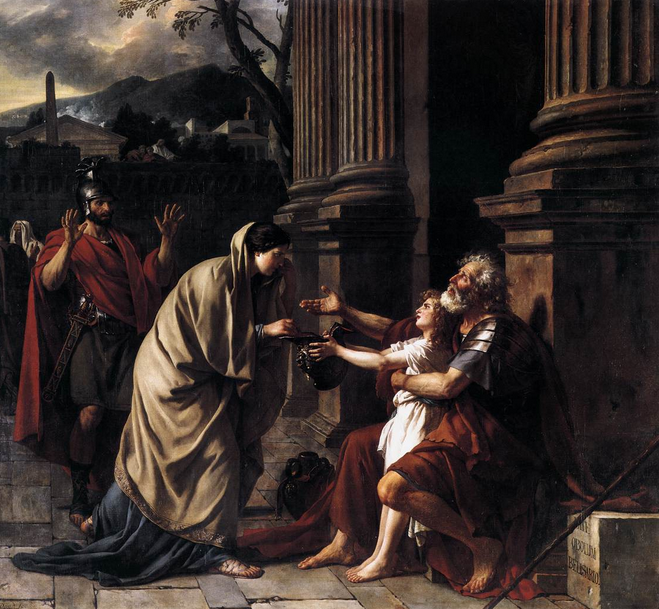 These words, which our Lord Jesus tells us, are not intended for discussion but rather for practice, and they have a deep meaning. They involve a double sacrifice: partly you renounce something of your own on behalf of others and partly, if you do it in secret, you renounce human praise. Jesus explains that the purpose is “that your charitable deed may be in secret; and your Father who sees in secret will Himself reward you openly”. He will give you a divine, eternal reward rather than a human one. It holds true that we lose to gain. We lose the material to gain the immaterial. We offer the temporary to gain the eternal. Remember: Your Father sees what you do in secret, and Jesus reminds you: “He will reward you!”
Reflection on Mt 5:43-44
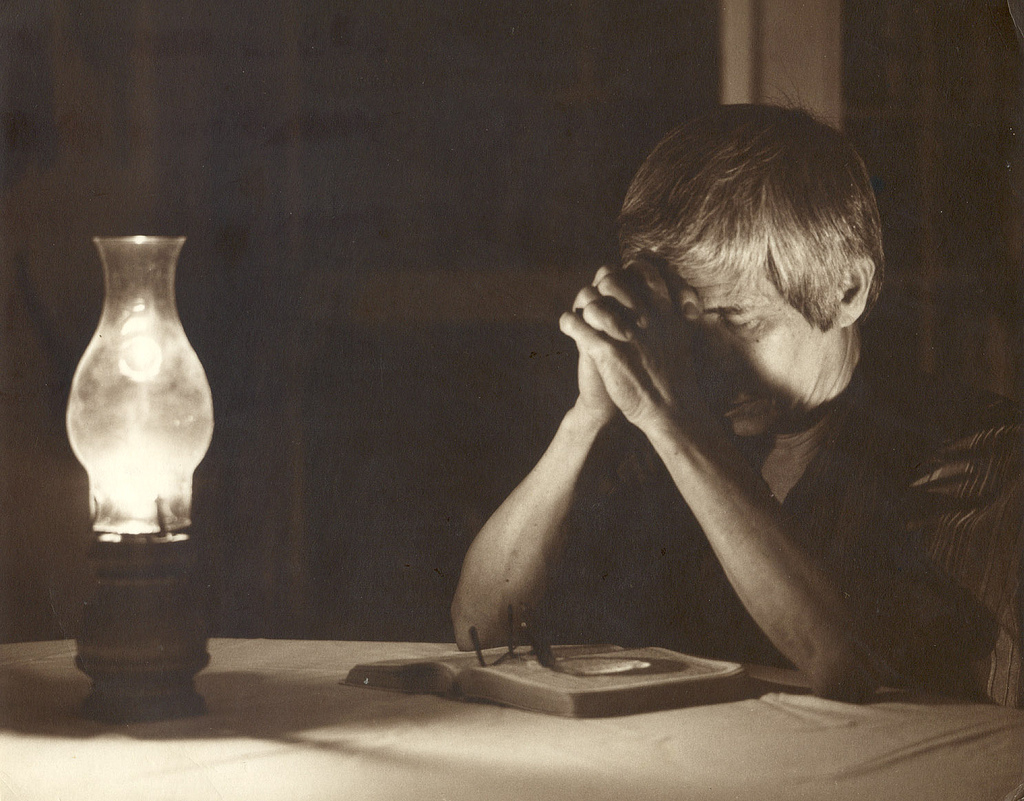 The Old Testament reads: “You shall not hate your brother in your heart. You shall surely rebuke your neighbour…” (Lev 19:17-18) Jesus explains why we should love our enemies and pray for those who persecute us: “…that you may be sons of your Father in heaven; for He makes His sun rise on the evil and on the good, and sends rain on the just and on the unjust. For if you love those who love you, what reward have you? Do not even the tax collectors do the same? And if you greet your brethren (friends) only, what do you do more than others? Do not even the pagans (tax collectors) do so? Be perfect, therefore, just as your Father in heaven is perfect.” (v.45-48)
Reflection on Mt 5:38-39
 And Jesus continues: If anyone wants to sue you and take away your tunic, let him have your cloak also. And whoever compels you to go one mile, go with him two. Give to him who asks you, and from him who wants to borrow from you do not turn away.
The commandment “an eye for an eye and a tooth for a tooth” seems cruel to us; however, it was intended to establish basic justice and to prevent avalanche-like revenge. Man has a tendency to pluck out two eyes for one eye and to knock out all teeth for one tooth. But Jesus tells us to forgive, to respond to evil by doing good and to hatred by showing forgiveness.
The Epistle to the Romans reads in the spirit of this appeal: “Repay no one evil for evil. Have regard for good things in the sight of all men. Beloved, do not avenge yourselves, but rather give place to the wrath of God… If your enemy is hungry, feed him; if he is thirsty, give him a drink; for in so doing you will heap burning coals of shame on his head. Do not be overcome by evil, but overcome evil with good.”
Reflection on Mt 5:33-34
 In the Old Testament, the person taking an oath took God as witness and called down upon himself a curse which was incurred by those who broke the oath or did not tell the truth. The person sometimes put himself under oath by God (1Sam 20:3; 1Sam 25:26), sometimes by man who was thus bound to avenge the broken oath. To make the oath stronger, sometimes an animal was offered for sacrifice. It was cut in two and the person taking the oath passed between the parts of it. Perhaps the symbolical meaning was that if a person breaks the oath (Gen 15:8-18; cf. Jer 34:18), he will suffer the fate of the animal. The Israelites took an oath before the altar of the Lord (1Ki 8:31) or by the temple (Mt 23:16f).
The Law strictly forbade a false oath (Lev 19:12), but entrusted punishment entirely to God (1Ki 8:31f; Zec 5:4).
Reflection on Mt 5:32
 “But I say to you that whoever divorces his wife for any reason
except fornication causes her to commit adultery;
and whoever marries a woman who is divorced commits adultery.”
Jesus develops the truth about the sacrament of marriage in chapter 19: The Pharisees came to Him, testing Him, and saying to Him, “Is it lawful for a man to divorce his wife for just any reason?” And He answered and said to them, “Have you not read that He who made them at the beginning made them male and female, and said, ‘For this reason a man shall leave his father and mother and be joined to his wife, and the two shall become one flesh?’ So then, they are no longer two but one flesh. Therefore what God has joined together, let not man separate.” They said to Him, “Why then did Moses command to give a certificate of divorce, and to put her away?” He said to them, “Moses, because of the hardness of your hearts, permitted you to divorce your wives, but from the beginning it was not so. And I say to you, whoever divorces his wife, except for fornication, and marries another, commits adultery.” His disciples said to Him, “If such is the case of the man with his wife, it is better not to marry.” But He said to them, “All cannot accept this saying, but only those to whom it has been given.”
Reflection on Mt 5:29
 Jesus speaks here about temptations and about the way of fighting them. The major battlefield is our mind. The devil attacks our mind through temptations more than anything else. This fight is relentless and does not stop as long as we are alive. You cannot allow thoughts to cross your mind as they like. We are accountable to God for every thought that crosses our mind, so we need to stop it and carefully check if this thought is obedient to Christ. We learn from the Scripture as well as from the experience of the saints that whatever communication between human and demonic powers takes place in the human mind. Every demonic temptation which seduces man is targeted on the human mind. The enemy also exploits the human body in order to win man over to his side and to win his approval. Therefore, at every moment of his tempting the enemy develops a certain thought, e.g. he arouses envy, anger or hatred.
Reflection on Mt 5:27-28
 Original sin, which consists in revolt against God and His commandments, has deeply wounded all spheres of human life. In terms of carnality, this wounded nature becomes manifest in sinful lusts which affected Adam and Eve immediately after the fall (Gen 3:7). Therefore, God laid down the sixth and ninth commandments to prevent the infection of the sin of impurity.
In these words spoken in the Sermon on the Mount, Jesus points out the root of adultery. He says that one can commit adultery not only physically but in one’s heart too if one unites oneself to a lustful thought. In such case, the instrument of sin is an impure look and the place of sin is the human heart – a lustful, impure mind.
Reflection on Mt 5:21-22
You have heard that it was said to those of old, ‘You shall not murder, and whoever murders will be in danger of the judgment.’ But I say to you that whoever is angry with his brother without a cause shall be in danger of the judgment. And whoever says to his brother, ‘Raca!’ shall be in danger of the council. But whoever says, ‘You fool!’ shall be in danger of hell fire.
 A) You have heard that it was said, ‘You shall not murder!’
The Fifth Commandment says: You shall not murder! Evil thought connected with deceit and manipulation and resulting in hatred is the root of murder. There is not only physical murder but also psychological and spiritual one. Behind all three forms of murder there is a spirit of lies and death. Man is easily manipulated by his own self-deceit or is deceived by others whom he believed or immediately by the devil’s suggestive thoughts. The Fifth Commandment also includes ruining one’s own health. Today you can read on every pack of cigarettes: “Smoking kills!” The same is the effect of drugs, alcohol, immoral life (AIDS, sexual murders, revenge out of jealousy…), or risking one’s own or someone else’s health. Abortion and euthanasia are sins of killing too.
Reflection on Mt 5:20
 Jesus speaks about two kinds of righteousness. About the righteousness of the scribes and Pharisees, and about the righteousness by faith. Unless our righteousness is by faith, we shall not enter the kingdom of God.
The word ‘righteousness’ means that everyone should be given his due. The Word of God says: “The wages of sin is death” (Rom 6:23) and “All have sinned” (Rom 3:23). Thus, all people justly deserve death for sin, and not only temporal death but also eternal one, i.e. separation from God – hell.
Reflection on Mt 5:11-12
 These words of Christ are the last eighth Beatitude. In His preceding words, too, Jesus speaks about persecution and also emphasizes the reward, which is the kingdom of heaven. Persecution pertains to the life of true faith. The early Christians were persecuted in Jerusalem. The first martyr was Stephen, a deacon. The first of the apostles to die a martyr was James, the brother of the apostle John. Both of the brothers agreed with the request of their mother that they be the first in the glory of heaven. When Jesus asked them if they were able to drink the cup of suffering which Jesus drinks, they said: “We are able.” John suffered bloodless martyrdom bravely and fully by the cross. St James suffered bloody martyrdom when he was beheaded with the sword in 42 A.D. Bloodless, psychological martyrdom is when we suffer revilement, persecution, lies and all kinds of evil for the sake of Christ.
Actual VIDEO
- BCP: A Call for a Revolution in the Catholic Church – From the Head (Part 2)
- BCP: A Call for a Revolution in the Catholic Church – From the Members (Part 1)
- BCP: Was Pope Francis a public heretic or not? Part 13
- BCP: Was Pope Francis a public heretic or not? Part 11
- BCP: Was Pope Francis a public heretic or not? Part 9