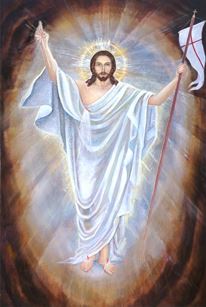
Reflection on 1Cor 6:9-10
 The Word of God says that the unrighteous will not inherit the kingdom of God. The opposite of unrighteousness is righteousness. He is righteous who gives God what is due to God and man what is due to man. It is written about Saint Joseph that he was a righteous man. The Holy Scripture, however, speaks above all about the righteousness of God which consists in the fact that sin was justly punished. Dying on the cross, Jesus suffered the punishment for all our sins and all our unrighteousness. Only if we have believed in Christ, i.e. put on His righteousness, we can be saved. We cannot make amends for sins or the root of sin in us by our own efforts.
These verses enumerate ten forms of the bondage of sin which make man unrighteous and a slave of a particular sin. The following verse says that we were justified in the name of our Lord Jesus Christ. Salvation is for free, through faith; it is the gift of God (Eph 2:8). The Word of God emphasizes: Do not be deceived! The meaning of these words can also be translated as follows: Stop deceiving yourselves! People like deceiving themselves and refuse to call a sin a sin, to fight against it or to break with it.
Reflection on Acts 26:18
“To open their eyes, in order to turn them from darkness to light, and from the power of Satan to God,
that they may receive, through faith in Me, forgiveness of sins
and an inheritance among those who are sanctified.”
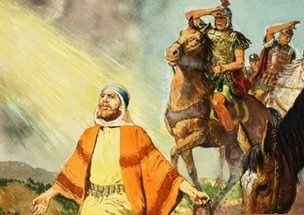 Jesus said these words when He appeared to the Apostle Paul before his conversion, on his way to Damascus. He went to Damascus to arrest Christians as their greatest enemy, and to bring them bound to Jerusalem. As he went on his way, at about noon Jesus appeared to him in a bright light. Paul fell from his horse, became blind, and had to be led by the hand into Damascus. When Jesus appeared to him, He said these words to him: “I send you to the Jewish people as well as to the Gentiles to open their eyes, in order to turn them from darkness to light, and from the power of Satan to God…”
Jesus entrusted the Apostle with the task of opening people’s eyes by bearing witness to Him in the power of God so that they may turn from darkness to light. So both the Jews and the Gentiles were in darkness and had to be converted. The Jews as well as the Gentiles were in the power of Satan and needed to turn to God. They had to receive Christ so as to receive, through faith in Him, forgiveness of sins and an inheritance among the sanctified.
Reflection on Acts 4:11-12
 Peter and John stood before the high priests, the elders and the scribes who had arrested them by reason of healing the lame man and preaching the Gospel. Peter delivered his first apologetic sermon before all.
How is it possible that those who were behind closed doors, filled with fear, a few days ago now stand firm and preach the risen Christ in public and without fear of threats or punishment? The Word of God says: “You shall receive power when the Holy Spirit has come upon you; and you shall be My witnesses (martyres).” The Apostles received the fullness of the Holy Spirit. And then there was no more place for fear in their souls. On the contrary, it was the high priests and the scribes who were filled with fear when they saw the fearlessness of the Apostles and the power which Jesus had given them.
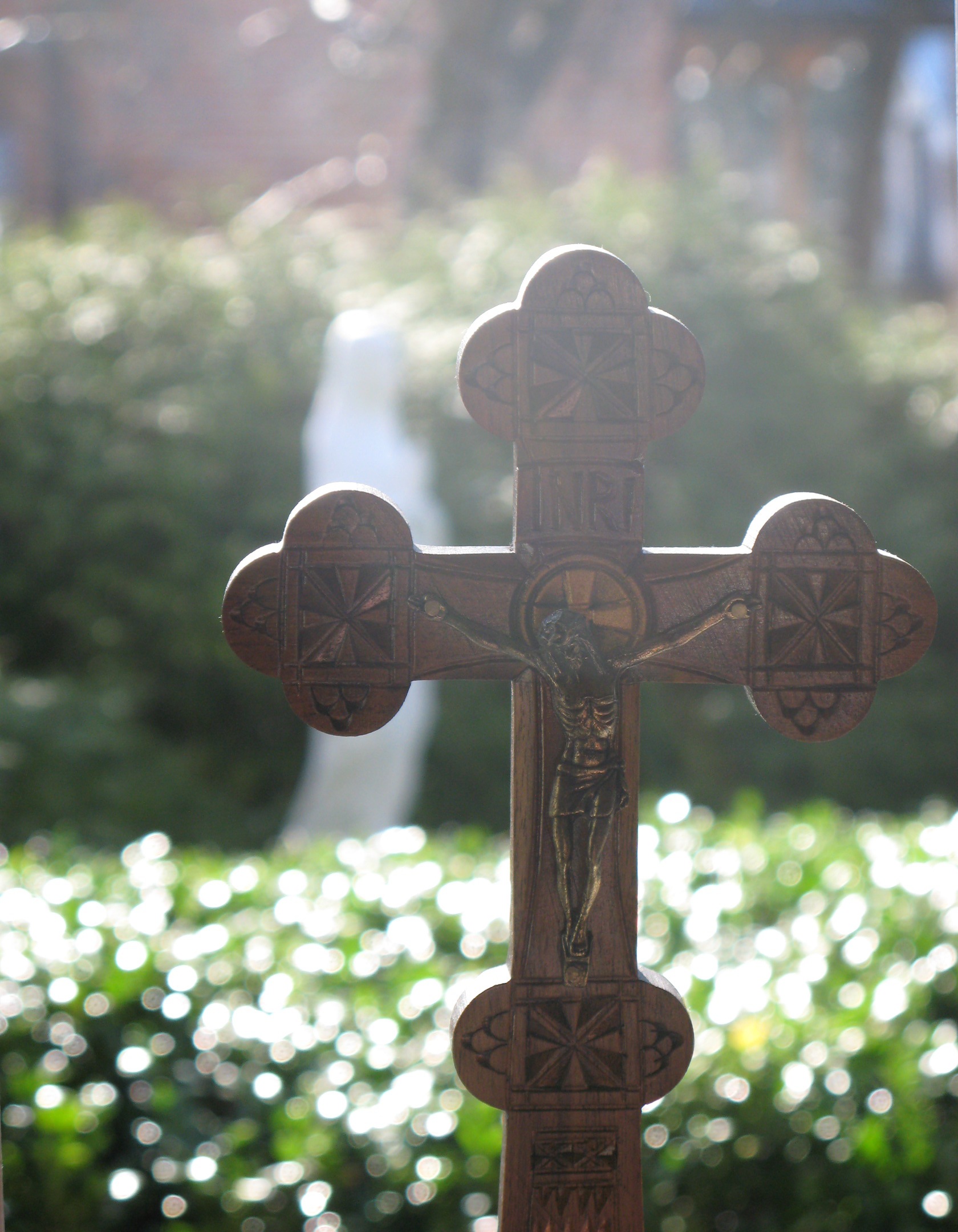
There is salvation in no one else! There is salvation in Jesus alone! There are no other ways or alternatives of salvation but Jesus Christ. There is no other name by which we must be saved. These words are true and will be true forever.
Reflection on Acts 2:41-42
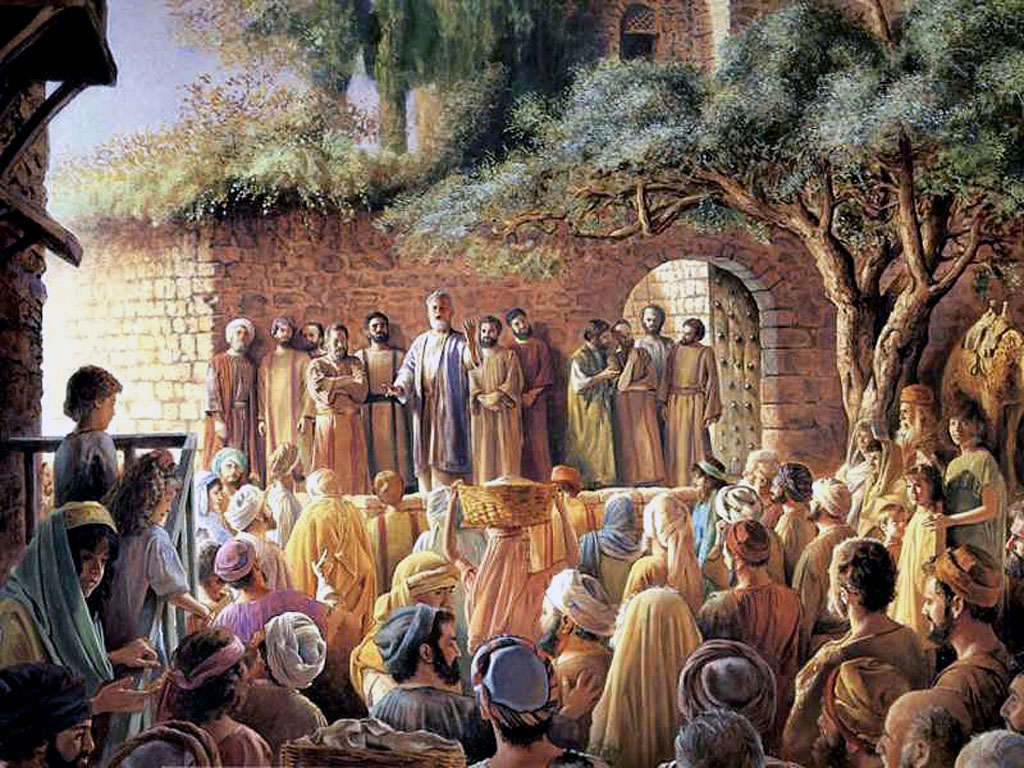 “Those who received his word were baptized; and that day about three thousand souls were added to them. And they continued steadfastly in the apostles’ doctrine and fellowship (koinonia), in the breaking of bread (Eucharist), and in prayers.” That was the fruit of the descent of the Holy Spirit and of Peter’s sermon – the Church – living fellowship – was born and started to grow. On the seventh day, Sunday, when we commemorate the Resurrection of Christ and the Descent of the Holy Spirit, we try to find time for prayer, Divine Liturgy and fellowship. Here we can receive again the apostles’ doctrine through the Word of God and also receive encouragement through the examples of saints and martyrs as well as through personal testimonies of faith.
Reflection on Acts 2:38-39
“Then Peter said to them, ‘Repent, and let every one of you be baptized in the name of Jesus Christ for the remission of sins; and you shall receive the gift of the Holy Spirit. For the promise is to you and to your children, and to all who are afar off, as many as the Lord our God will call.’”
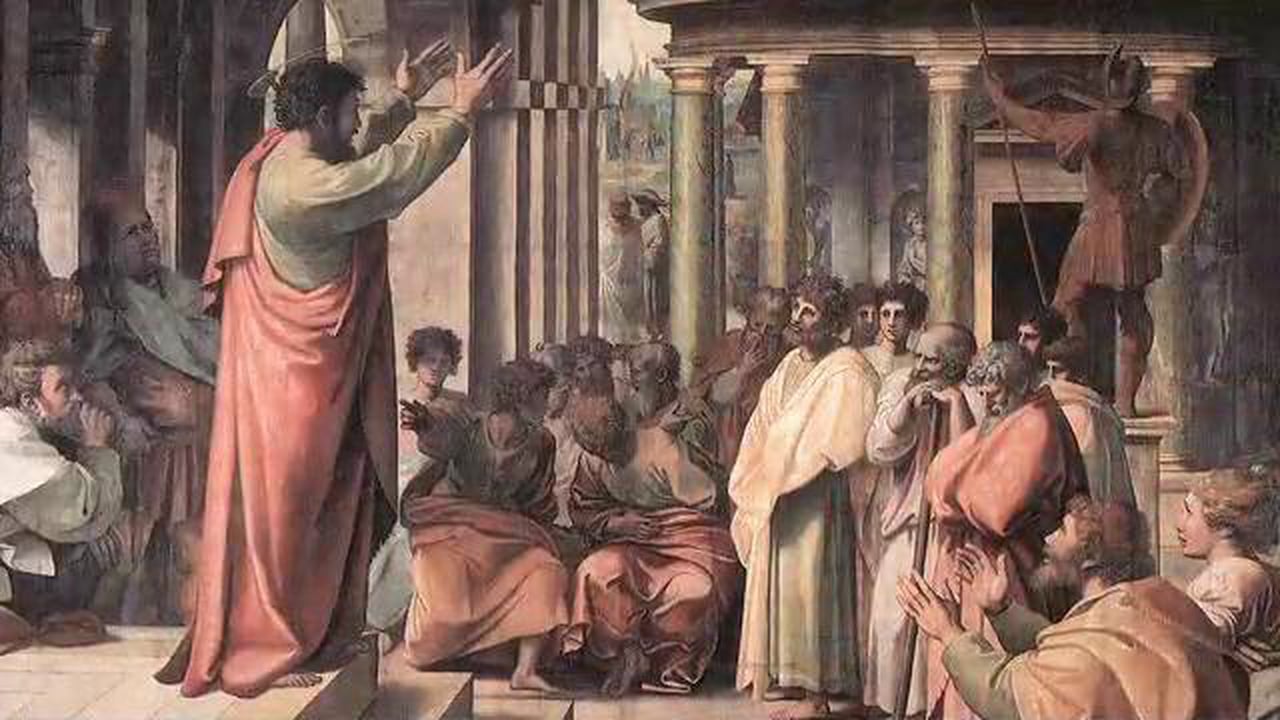 These words were spoken by Peter in his sermon on the Day of Pentecost when the Holy Spirit descended on the Apostles. They began to praise God for His wonderful works in unknown languages, so the foreigners who had come to Jerusalem heard them speaking in their own languages. Interestingly, if we notice where the pilgrims of the different nationalities came from – Medes and Elamites, those dwelling in Mesopotamia, Cappadocia, Pontus – we find out that it was the territory of present-day Turkey, which is now fully Islamized. For example, some of the Church Fathers, namely St Basil, St Gregory of Nyssa and St Gregory of Nazianzus, lived and worked in Cappadocia. Other nationalities mentioned here are Egyptians, Libyans, Romans, Cretans, Arabs, even to the territory of present-day Iran and Iraq. Today, these territories are occupied by Islam. Christianity was destroyed there by force.
Reflection on Acts 1:5.8
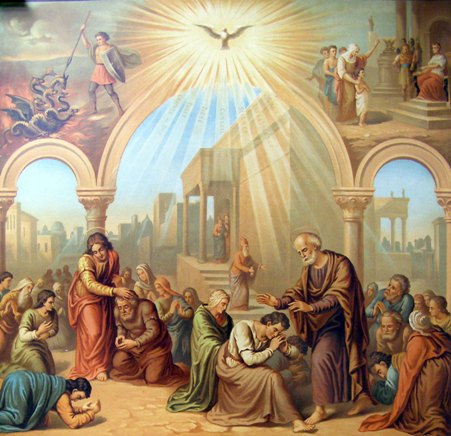 Jesus said these words on the Mount of Olives on the fortieth day after His Resurrection, when ascending into His glory before the eyes of the apostles and disciples. Jesus emphasized that the apostles needed to receive the fullness of the Holy Spirit. They had already received Him on the Day of Christ’s Resurrection but not in fullness.
Jesus also told the apostles to stay in the city of Jerusalem until the Holy Spirit descended on them in fullness (cf. Lk 24:49). “…until you are endued with power from on high.”
Almost all of you, dear believers, have received the fullness of the Holy Spirit. The Holy Spirit enlightens our mind and strengthens our will, that we may be true witnesses of our Lord Jesus Christ!
Reflection on Mt 8:2-3
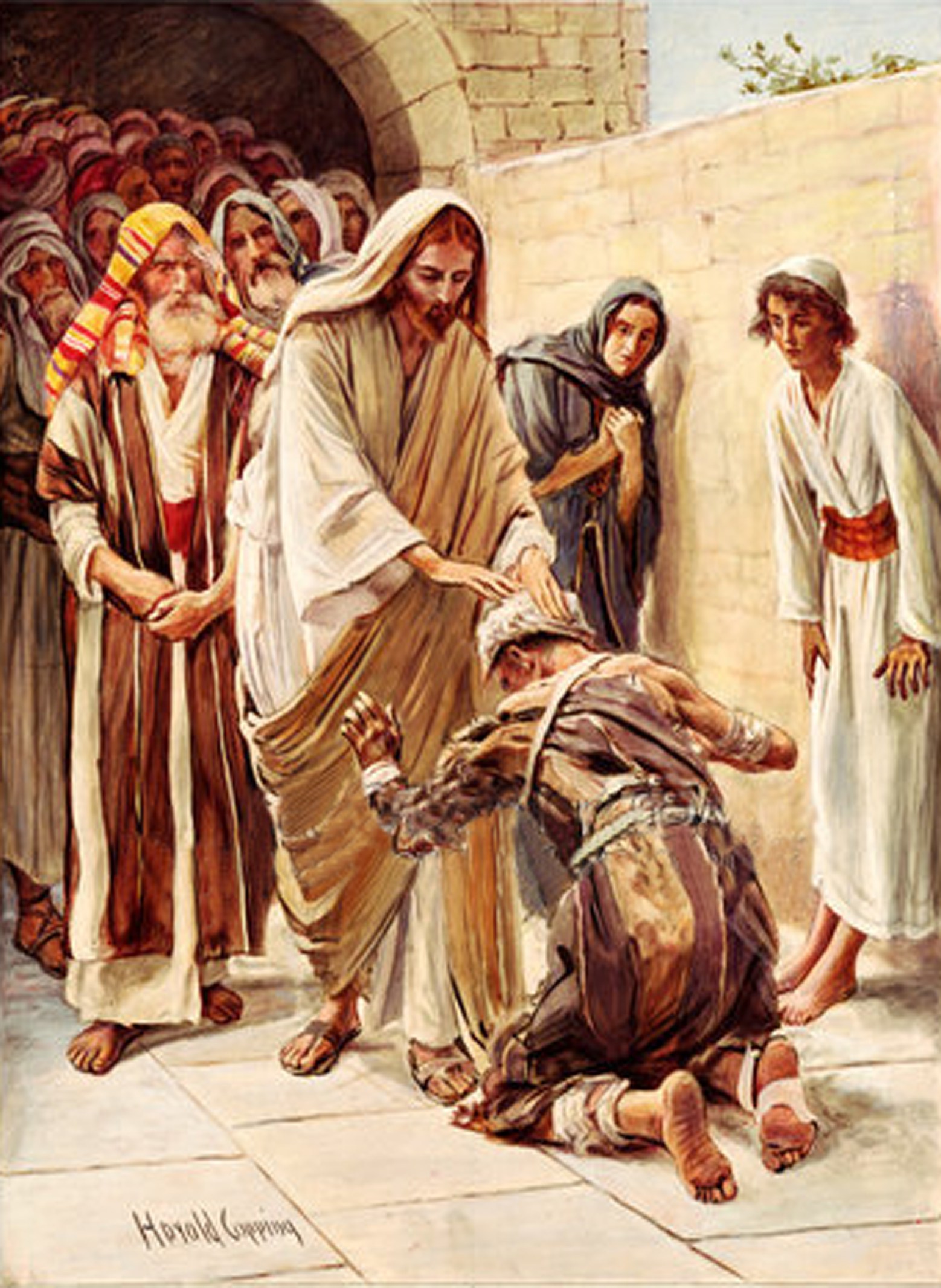 This event happened after Jesus finished His Sermon on the Mount of Beatitudes, where He presented simple life principles leading to eternal life. To lead us to the essence, Jesus completes here what Moses had not expressed explicitly in the Law of God. Referring to the commandment “You shall not kill!”, Jesus points out the root and says that we cannot even nourish hatred in our heart. Referring to the commandment “You shall not commit adultery!”, Jesus warns that even a lustful look is a manifestation of adultery. Concerning forgiveness, He emphasizes: “God will not forgive you if you do not forgive your neighbour” etc. At the end of the Sermon on the Mount Jesus speaks about an extremely important principle, which He explains in the parable of two builders. One of them built a house quickly but without foundations. The other built the foundation on the rock. When a storm came, it turned out that only a house built on the rock of Christ’s teaching shall stand. However, to build on the rock it is not enough to be theologically educated, even if this theology is truly Catholic. An academic Christian will not stand; one must be a practising Christian who not only hears the word of God (not modern heresies) but also puts it into practice.
Reflection on Mt 7:24-25
 In the preceding verses, Jesus points out the essence – doing the will of God: “Not everyone who says to Me, ‘Lord, Lord,’ shall enter the kingdom of heaven, but he who does the will of My Father in heaven.” If we seek first the will of God in our life and if we also try to do it, it is true about us that we are like a wise man who built his house on the rock. Sooner or later the winds blow, the rain descends and the floods come, but if our house is founded on the rock, it will not fall. The problem why we try to build a house on the sand many times is that we easily believe in what seems good to us, evokes our interest, offers advantage and makes the impression that right this attractive option is the ideal solution in our decision-making. Once we cling to this vision and try to achieve our dream, we are no longer willing to seek the will of God because we avoid the thought that we should abandon our house on the sand. It seems so hard, disadvantageous and often even repulsive to us to start building on the rock, and so under the pressure of the false good we throw away the true good, or we make ourselves believe that this false good is the will of God.
Reflection on Mt 7:15-16
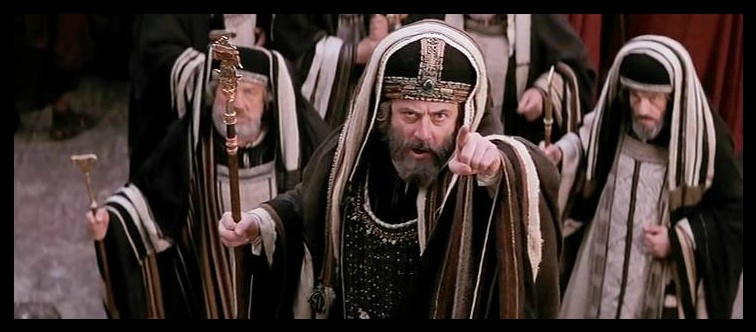 By these words the Lord Jesus teaches and warns us that in order to persevere on the narrow way leading to eternal life, we should first beware of false teachings, heresies and those who preach them (heretics and apostates). So this is the most essential thing – to keep the true faith and a true inner relationship with Christ. Therefore, the Apostle Paul says that if an apostle, or even an angel from heaven, should preach a different (i.e. false) gospel, let him be accursed (cf. Gal 1:8-9).
We know the Word of God and we know the Tradition of the Church. We have God-given conscience. This all gives us the power and the art of discerning the teaching of Christ from the false teaching of the current apostate hierarchy and theologians. The Lord Jesus established forever that he who is of the Truth and of God hears His voice and will not follow a stranger. And he who is not of God does not hear His voice (cf. Jn 7:17; Jn 8:47; Jn 18:37).
Reflection on Mt 7:13-14
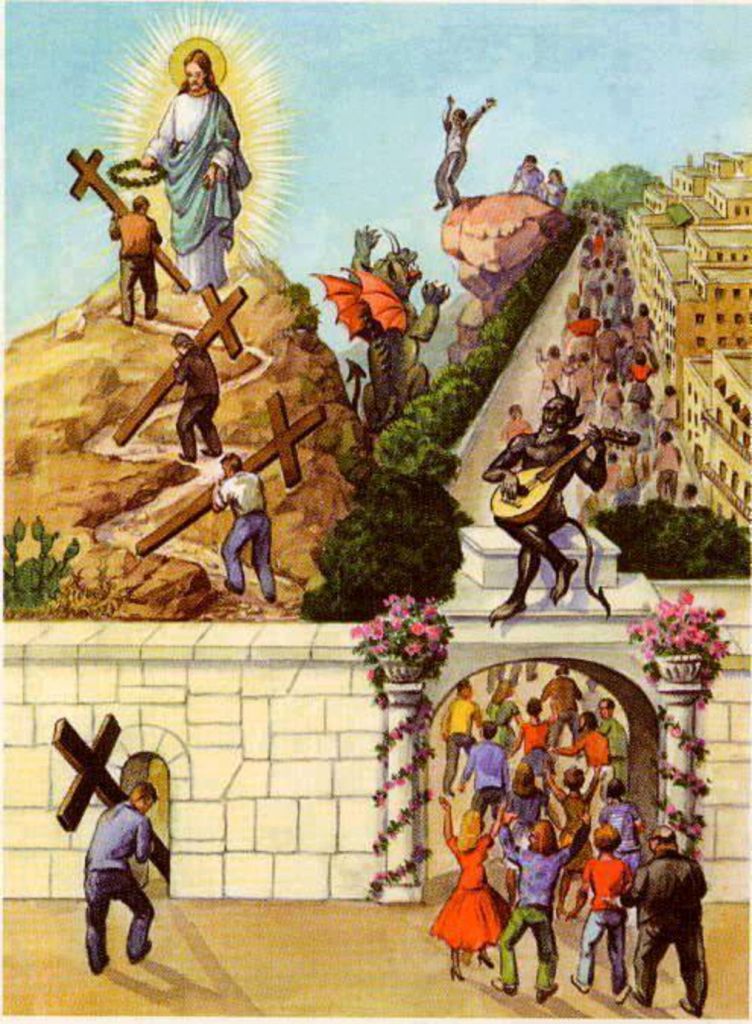 Jesus speaks about the narrow gate and difficult way which leads to life. The narrow gate is Christ’s commandments of love and the difficult way is Christ’s cross and His death by which one enters into eternal life. The broad way which leads to destruction is the way of egoism, moral licentiousness, deceit and lies, which is often tied up with the demonic practices of divination, magic or spiritualism, de facto the worship of evil and demons. This way leads to eternal destruction. The painful reality is that mass media, public opinion, fashion, destructive influences such as decadent music or art, admiration of the occult, promotion of perversion etc. literally drag the souls onto the broad way to destruction. They persuasively present it as prestige and if anyone refuses to follow it, one is ridiculed. The narrow way of justice is presented as something degrading and old-fashioned. He who does not love the truth is easily deceived. Today young people need the courage to struggle against the decadent current. This is true heroism!
Reflection on Mt 7:12
“Therefore, whatever you want others to do to you, do also to them, for this is the Law and the Prophets.”
 Original sin programmed schizophrenia in the soul and therefore man uses a double measure. We are uncritical of ourselves and unwilling to admit or see manifestations of our egoism, but we are very sensitive about egoism of others, we criticize or even hate it. We have special demands – we want people to respect our will and to approve of everything we do, to see our problems, and even to guess what they should do for us without us humbling ourselves and asking them to do it for us, and if they do not act according to our ideas, we take offence.
Reflection on Mt 7:7
“Ask, and it will be given to you; seek, and you will find; knock, and it will be opened to you.”
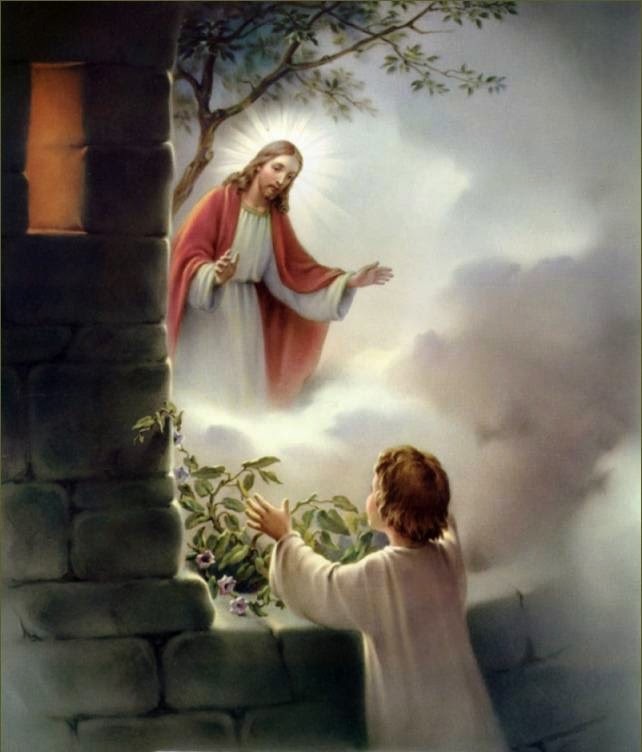 What should we ask for in the first place, what should we seek, and which door should we knock at?
We should above all ask for the gift of repentance, that our eyes may be opened, rather than for material or temporal good. We should ask the Lord to grant us that we may understand the Gospel of Christ, that we may love Jesus and desire to be with Him in prayer. Those who are not married should also ask for the desire and the strength to live a life consecrated to God in chastity, obedience and poverty – out of love for Christ and for the salvation of souls.
We should above all seek Jesus, seek His Face in prayer and there find all our happiness and true joy. We should long for this dedication – holiness.
Reflection on Mt 7:6
 What is meant by the words holy and pearl? The Lord Jesus means above all His Word and the Divine mystery. Our Pearl is Christ and His Gospel. In the Divine Liturgy, we pray before Holy Communion: “I will not reveal the mysteries to Your enemies, nor will I give You a kiss as did Judas.”
Who are the dogs? In the first place religious Pharisees but also all people who do not have good intentions at present but consciously resist the Spirit of Christ. “But outside are dogs and sorcerers and sexually immoral and murderers and idolaters, and whoever loves and practises a lie.” (Rev 22:15)
Who are swine? People knowingly indulging in sinful lusts (homosexuals, paedophiles, transsexuals, fornicators, adulterers…) who shamelessly resist the Gospel of Christ (the Law of God) and refuse to repent of their slavery to sin.
Reflection on Mt 7:5
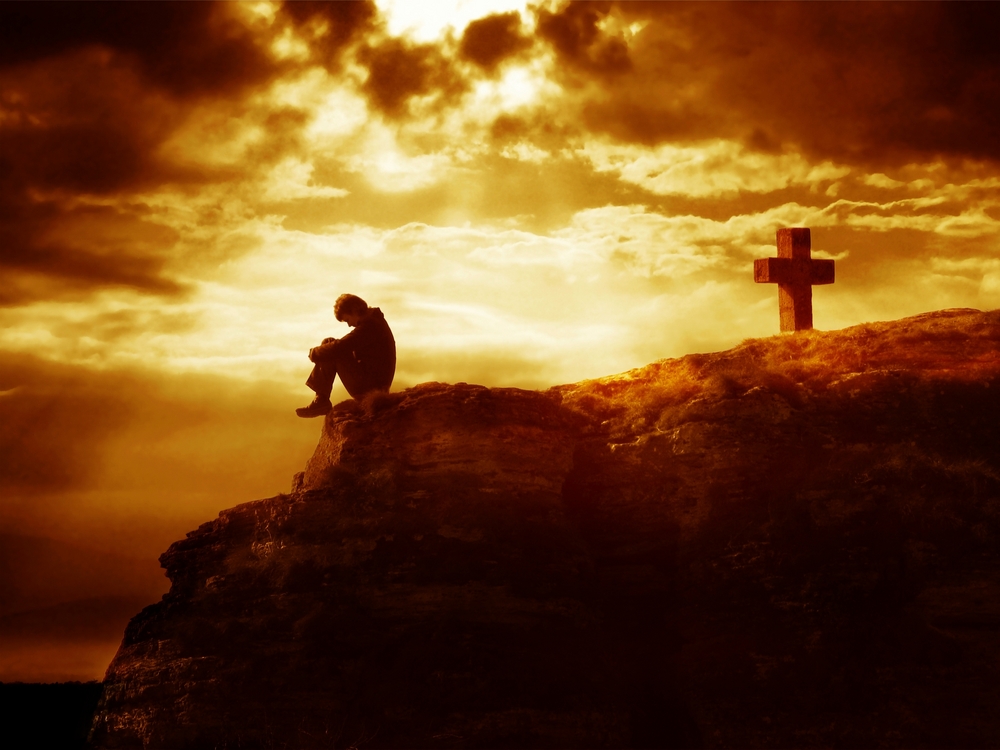
This verse is preceded by the words: “And why do you look at the speck in your brother’s eye, but do not consider the plank in your own eye? Or how can you say to your brother, ‘Let me remove the speck from your eye’; and look, a plank is in your own eye?” So we see the speck in our brother’s eye, which indeed is there, but we cannot see the plank in our own eye. It means that we see even a little fault in our brother but we do not notice our faults and sins. Jesus says: “remove the plank from your own eye” and He emphasizes the word “first”. Despite our good will we tend first to remove the speck from our brother’s eye. Therefore we must literally make a step of faith associated with true repentance – that means admit our own fault, and by this repentance we remove the plank from our own eye, i.e. from the system of our false thinking. After we remove our plank, Jesus does not say that we can then be indifferent to our brother and to appeal to false mercy or false love – no. The next step we are to make is to help remove the speck from our brother’s eye. Jesus says that if we remove our plank, we will be able to see spiritually. Without removing the plank, we will not see spiritually.
Reflection on Mt 7:1-2
 Here the Lord Jesus points out again the practical part of the life of every man, namely the relationship to our neighbour. The first commandment says that we should love God with all our heart… And the second is like it – we should love our neighbour as ourselves. The opposite of love is egoism. Love forces man into self-denial and self-sacrifice. Egoism makes our “self” the centre of universe. Self-love is connected with spiritual blindness which is called pride. Pride is the deadly poison which penetrated into human nature with the first sin. It was manifested in disbelief in God’s word – the truth – and belief in and surrender to lies and hence the spirit of lies – the devil. The fruit of this sin is death which passes to all men.
Reflection on Mt 6:34
 “Therefore do not worry about tomorrow, for tomorrow will worry
about its own things. Sufficient for the day is its own trouble.”
We worry automatically. What to do with worries? We have to learn to give them to God in prayer every day. This is the only right solution. Our problems are often so big and difficult that we see no way out. We need to begin every prayer with repentance: “Lord, forgive me that I trust in You so little, that I do not seek Your kingdom first, that I am dominated by my self-will every day and then I am overwhelmed with worries and see no way out. This creates a tense atmosphere in which I react impatiently or even angrily towards my neighbours, I hurt them with my words or gestures and disturb our relationships. Please forgive me. You know that I see no way out of this particular worry, I am powerless, but I give this problem to You. You, Lord, are the solution to my insoluble problem. Now I am not alone in my powerlessness, I am powerless together with You. Thank You for Your peace which fills my soul. Lord, I know that You will show Your glory in this problem too in good time. I am not afraid any more; I thank You that this problem, which seems unsolvable to me, is in Your hands.”
Actual VIDEO
- BCP: A Call for a Revolution in the Catholic Church – From the Head (Part 2)
- BCP: A Call for a Revolution in the Catholic Church – From the Members (Part 1)
- BCP: Was Pope Francis a public heretic or not? Part 13
- BCP: Was Pope Francis a public heretic or not? Part 11
- BCP: Was Pope Francis a public heretic or not? Part 9