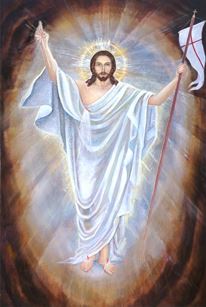
Reflection on Rom 8:26
 “Likewise the Spirit also helps in our weaknesses. For we do not know what we should pray for as we ought, but the Spirit Himself makes intercession for us with groanings which cannot be uttered.”
This truth is extremely topical for us. If we have believed in Jesus and received His Spirit, the Spirit of God especially in a simple prayer literally groans in us without words or makes intercession with groanings which cannot be uttered. How often we feel pain or fear and we are unable to explain it or to express it in words. But if we stand before God, aware of His presence, and give Him our pain, fear, instability, suffering, the loss of our loved ones, an uncertain future – both ours and of our close relatives, we do not even know how to pray and what for. And it is said that right then the Spirit of God makes intercession for us with groanings which cannot be uttered.
There are many concrete examples. One of them: It happened at the beginning of last century in America. A certain farmer and his wife were genuine Christians who had at heart above all the salvation of immortal souls in their family. Children had grown up and left. They established their own families. The elderly parents prayed for them.
Reflection on Rom 8:23
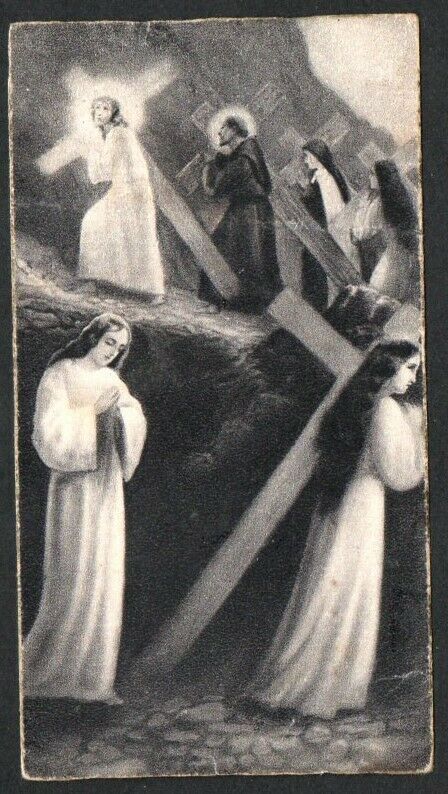 “We ourselves, who have the firstfruits of the Spirit, groan inwardly
as we wait eagerly for our adoption as sons, the redemption of our bodies.”
It is said that even we ourselves, who already have the firstfruits of the Spirit, do not yet have His fullness.
We do have the firstfruits of the Spirit, but while we are in time the poisonous seed passed on us from our first parents works in us until the last moment, and therefore sin subjugates our body. We have believed and received Jesus, we are children of God and the Spirit gives us strength; nevertheless, we still groan because sin, spiritual darkness and apathy towards spiritual things pull us down. It is beyond human power to change our physicality with the seed of original sin in it which will last until the hour of death; and so we await the redemption of this body. How will redemption be accomplished? The Scripture tells us that the spirit of the righteous will go away into eternal glory, but the body will decay after death. It is only at the Second Coming that God will raise our body from the dust of the earth and give life to it, and he will also transform it to be like the body of Christ.
Reflection on Rom 8:17
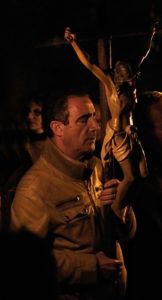 “And if children, then heirs – heirs of God and joint heirs with Christ, if indeed we suffer with Him, that we may also be glorified together.”
The previous verse 16 reads: “The Spirit Himself bears witness with our spirit that we are children of God.” And this is followed by verse 17 which we are going to reflect on at the beginning of Lent: “And if children, then heirs – heirs of God…” Are we aware of what it means to be an heir of God? If someone had said in the past that he or she was the Emperor’s child, and hence his heir, others would have been envious: “They will get so much without making any effort, and they inherit a fortune! Why not us? Why not me?”
Imagine a billionaire who has no children and suddenly decides to make you heir of all his wealth. Oh, how happy you would be! What a great fortune! But think: will such wealth really make you happy? You have only one stomach and you can only be in one place at one time. If you fell seriously ill and were confined to bed with fever, you would just look helplessly at all this wealth and money. What good would it be for you if you inherited the whole world? The Lord Jesus Himself says, after all: What profit is it to a man if he gains or inherits the whole world, and loses his own soul?
The lamp of the body is the eye (+german version)
 “The lamp of the body is the eye. So, if your eye is healthy, your whole body will be full of light, but if your eye is bad, your whole body will be full of darkness.” (Mt 6:22-23)
If a person is blind, he sees nothing but darkness. If your eyes are healthy, you can see everything.
There is light which comes to us through our physical sight. We can see the light of the day, people, trees, houses, the beauty of nature. There is also the light of reason through which we can know certain hidden truths. Then there is also the light of faith. Thank God for the light of reason, but it cannot show us everything. How many people, all kinds of philosophers, rely on reason; however, if they are not converted and do not use their reason to serve God, they are like mediums of the spirit of darkness. E.g. Marx, Darwin… Darwin was an atheist and Marx was a Satanist.
Reflection on Rom 8:16
 The Spirit Himself bears witness with our spirit that we are children of God.
Let us realize that the Spirit of God is in us. But let us also realize that the deepest part of our being is our spirit. What is the difference between our soul and our spirit? Both are spiritual and it is hard to distinguish between them. The soul has God-given powers, but the spirit is the pure “self”, the deepest essence of our being. At the same time, it is the opposite of the negative self, the so-called old self, ego, which binds and substitutes for the spirit. Our spirit longs for God as the magnetic needle always points to the North, because God is our beginning, and we are created in His image having an immortal spirit.
Reflection on Rom 8:15
Let us notice some terms in the Greek original, such as “pneuma douleia” and “pneuma hiuothesia”. Pneuma means spirit, doulos means slave. So it is said that we did not receive the spirit of bondage (slavery). Huios means son, hiuothesia means adoption as sons. It is said that we did not receive the spirit of bondage again to fear. The term “to fear” is expressed with the words “eis (unto, towards) phobos”. The Greek word “phobos” is used internationally to denote fear – phobia. We received the Spirit of adoption by whom we cry out – Greek “krazomen”. Krazo literally means cry aloud. In the Gospel of St Matthew we read that as Jesus was dying He cried out with a loud voice – “krazomen” (Mt 27:50). The word “Abba” is Hebrew for a diminutive form of ‘Father’, like “Daddy!” The Greek original uses the word “elabete” twice. Lambano (elabon) – to take, receive. It is written here: “you did not receive the spirit of bondage, but you received (elabete) the Spirit of adoption”. So much, briefly, for the explanation of terms.
Now let us realize the spiritual content, and this is the main thing to reveal the depth of certain truths. The word ‘receive’ (labein) is very important. The Scripture says that as many as received Him, to them He gave the right to become children of God (Jn 1:12).
Reflection on Rom 8:14
 As many as are led by the Spirit of God, these are sons of God.
The majority of people are led by the spirit of the world and ignore the Spirit of God. The spirit of the world, however, does not make people sons of God but rather sons of rebellion and wrath. Be aware of the dignity of being a son of God.
Question: What does verse 15 say about the Spirit of adoption (sonship)?
Answer: ……………………
Question: And what does the Spirit of God together with our spirit bear witness about in verse 16?
Answer: ……………………
Reflection on Rom 8:12-13
Therefore, brethren, we are debtors – not to the flesh, to live according to the flesh. For if you live according to the flesh you will die; but if by the Spirit you put to death the deeds of the body, you will live.
Question: According to Rom 8:12, what are we not debtors to?
Answer: ………………………………………………………………………………………………………………………………………………
Question: What follows from this according to Rom 8:12?
Answer: ………………………………………………………………………………………………………………………………………………
Reflection on Rom 8:11
 But if the Spirit of Him who raised Jesus from the dead dwells in you, He who raised Christ from the dead will also give life to your mortal bodies through His Spirit who dwells in you.
Let us notice in this verse 11 and in the previous verses the connection with the mystery of the Holy Trinity. It is written here: “The Spirit of Him who raised Jesus from the dead…” We know from other Scripture verses that the whole Trinity – the Father, the Son and the Holy Spirit – participates in the resurrection of Christ. Being man, Jesus was raised by God, by the power of God, but from another point of view, being true God, He rose by His own power. Jesus is God from God, Light from Light, true God from true God, as we confess in the Creed.
This verse 11 emphasizes that the Spirit of Him – i.e. the Father – raised Jesus from the dead. But it also says that this Spirit, the Spirit of the Father, dwells in us, and He, the Spirit of the Father who raised Christ from the dead will also give life to our mortal bodies. Once again, it emphasizes: “…through His Spirit who dwells in us.” So let us be aware that the Spirit of God who dwells in the Father also dwells in us through the saving faith. And what will this Spirit do? He will give life to our mortal bodies.
Reflection on Rom 8:10
 “And if Christ is in you, the body is dead because of sin, but the Spirit is life because of righteousness.”
This verse repeats and emphasizes what the essence is of our victory over sin. The preceding verse states a condition: “…if the Spirit of God dwells in you.” And this condition is confirmed at the end of the verse with the words: “If anyone does not have the Spirit of Christ, he is not His.” So if the Spirit of God dwells in us, we belong to Christ because we have His Spirit. The Scripture says: “Let this mind be in you which was also in Christ Jesus.” And then: “Do you not know that the Spirit of God dwells in you? You are the temple of God, the temple of the Holy Spirit.” In another place, it says: “…that Christ may dwell in your hearts through faith.” Jesus said: “If anyone loves Me, he will keep My word; and My Father will love him, and We will come to him and make Our home with him.” So the Spirit of God makes Jesus and the Father present in us. The whole Trinity dwells in us, as Jesus Himself says. And verse 10, which we are going to recite for two weeks, highlights the following: “And if Christ is in you, the body is dead because of sin, but the Spirit is life because of righteousness.”
Reflection on Rom 8:9
 “But you are not in the flesh but in the Spirit, if indeed the Spirit of God dwells in you. Now if anyone does not have the Spirit of Christ, he is not His.”
Let me ask the essential question: Are these words, saying that I am not in the flesh, really true about me? Does the Spirit of God dwell in me? Is it not the mind and spirit of the world that rules in me? The sign of the Spirit of God really dwelling in me is that I allow Him to work in prayer as well as in decision-making; in other words, I live according to the Spirit. And here is a very important truth related to the previous one: “If anyone does not have the Spirit of Christ, he is not His.” Do I have the Spirit of Christ? The Scripture says: “Let this mind be in you which was also in Christ Jesus.” And it is the Spirit of God who guides us into the mind of Christ, which is founded on the doing of God’s will. But in order to do God’s will we must seek it first.
How shall we obtain the Spirit of Christ? The Word of God says: “He who is joined to the Lord is one spirit with Him.” When we strive for spiritual union with the Lord in interior prayer, we receive His Spirit. His Spirit then guides us into divine truths and into union with Him.
Reflection on Rom 8:7-8
Because the carnal mind is enmity against God; for it is not subject to the law of God, nor indeed can be.
So then, those who are in the flesh cannot please God.
The preceding verse reads, “For to be carnally minded is death, but to be spiritually minded is life and peace.”
The Spirit of God through the Apostle Paul once again repeats and categorically emphasizes the basic contradictions: to be carnally minded and to be spiritually minded. We need to be aware that our mind reflects our life. If we live according to the flesh, we set our minds on the things of the flesh. And if we live according to the Spirit, we set our minds on the things of the Spirit.
What does it mean to live according to the flesh? It means to ignore God in our personal life and to occupy our minds with mere material interests, with no respect for God’s commandments, without seeking God’s truth, giving no thought to God’s judgment or eternity.
Reflection on Rom 8:5-6
 “For those who live according to the flesh set their minds on the things of the flesh, but those who live according to the Spirit, the things of the Spirit. For to be carnally minded is death, but to be spiritually minded is life and peace.”
Verses 5-6 are a continuation of the preceding verses and explain again that those who live according to the flesh set their minds on the things of the flesh and those who live according to the Spirit set their minds on the things of the Spirit. Next it is said that to be carnally minded is death, but to be spiritually minded is life and peace. This concerns both time and eternity. The fruit of the former is death and the fruit of the latter is not only temporal but also eternal life.
We need to realize again that setting our minds on the things of the Spirit and living according to the Spirit is connected with the law of the Spirit. And the law of the Spirit is essentially connected with Jesus, it is in Him. Those who are in Christ are spiritually rather than carnally minded – that means, they do not set their minds on themselves but on Jesus.
Reflection on Rom 8:4
“…that the righteous requirement of the law might be fulfilled in us
who do not walk according to the flesh but according to the Spirit.”
Verse 4 of the Epistle to the Romans says that the condition for the righteousness of the law to be fulfilled in us is that we should not live according to the flesh, i.e. according to the law of sin which is in us but according to the Spirit of God. This chapter eight often repeats the Greek word “sarkos”, which is translated as ‘flesh’. In this sense, it means the lower physical aspect of the human being. It is exposed to a very strong influence of the law of sin and negative lusts that enslave man. The Greek word “soma” is used for ‘body’, which also includes the mental aspect. On the other hand, the related verses speak about the Spirit, meaning the Holy Spirit. Verse 16 says that deep within us, in our soul, is our human spirit, and it is written: “The Spirit Himself bears witness with our spirit that we are children of God.” Taking note of the previous three verses, verse 1 emphasizes that there is no condemnation to those who are in Christ Jesus. Again, it is emphasized that the law of the Spirit of life in Christ Jesus has made us free from the law of sin and death.
Reflection on Rom 8:3
 For what the law could not do in that it was weak through the flesh, God did by sending His own Son in the likeness of sinful flesh, on account of sin: He condemned sin in the flesh.
This verse of Scripture is a continuation of the preceding one which says that the law of the Spirit has made me (you) free from the law of sin and death. Verse 3 speaks about the law, which means the Law of Moses, i.e. the Law of God, which contains certain ordinances which are good and true, but the law does not give us the strength to wholly obey them. The law, as Scripture says, above all convicts us of sin. That is why God sent His Son to die for us. He took human flesh, in other words came in the likeness of sinful flesh on account of sin, to overcome sin, this spiritual poison, in His flesh.
“Surely He has borne our griefs and carried our sorrows … and by His stripes we are healed. … All we like sheep have gone astray; we have turned, every one, to his own way; and the Lord has laid on Him the iniquity of us all. He was oppressed and He was afflicted, yet He opened not His mouth; He was led as a lamb to the slaughter. … He poured out His soul unto death, and He was numbered with the transgressors, and He bore the sin of many, and made intercession for the transgressors.” (cf. Isa 53:4-12) This was foretold by the prophet Isaiah several centuries before the coming of Jesus – the Saviour.
Reflection on Rom 8:1-2
“There is therefore now no condemnation to those who are in Christ Jesus, who do not walk according to the flesh, but according to the Spirit. For the law of the Spirit of life in Christ Jesus has made me free from the law of sin and death.”
These Scripture verses from the Epistle to the Romans are a continuation of the preceding verses where the Apostle cries out: “O wretched man that I am! Who will deliver me from this body of death?” In chapter eight we read that those are free who are in Christ Jesus. The law of the Spirit of life in Christ Jesus makes us free from the law of sin and death. The process of our deliverance in every new situation is accomplished again and again only in Christ Jesus.
The law of sin is a machine against which we are powerless relying on our human efforts. The law of the Spirit of life works in those who “walk according to the Spirit of God rather than according to the flesh” (Rom 8:1).
Actual VIDEO
- BCP: A Call for a Revolution in the Catholic Church – From the Head (Part 2)
- BCP: A Call for a Revolution in the Catholic Church – From the Members (Part 1)
- BCP: Was Pope Francis a public heretic or not? Part 13
- BCP: Was Pope Francis a public heretic or not? Part 11
- BCP: Was Pope Francis a public heretic or not? Part 9