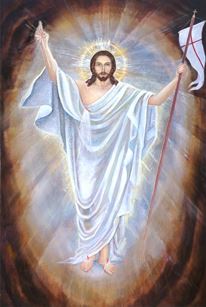
Reflection on Jer 51:42
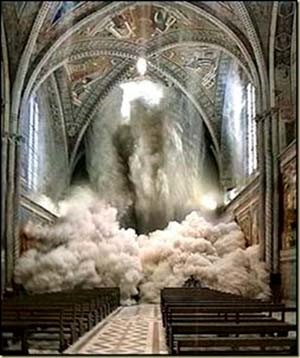
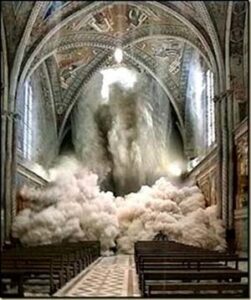 The sea will rise over Babylon; its roaring waves will cover her.
The prophet Jeremiah, especially in the last chapters, prophesies against Babylon. But there is also a historical Babylon mentioned in Genesis 1. It speaks of the pride of man wanting to build a great tower. The name Babel or Babylon means confusion. God confused the speech of these proud builders and scattered them throughout the earth.
In the 1st millennium BC, the nation of Israel was like between two millstones. One was the Babylonian Empire and the other was Egypt. The prophets, whether Isaiah, Jeremiah, or others, very often made pronouncements against Babylon. According to Gen 10:6-10, Nimrod, the grandson of Ham, founded the city of Babylon. The city grew greatly, but was completely destroyed in the revolt against Assyria in 683 BC. It was later rebuilt on both sides of the Euphrates. The name itself signified to the Old Testament prophets the anti-God power that controls the world. It is a demonic power that will rise up against God in the last days. “Babylon, the great city” (Rev 14:8; 16:19; 17:5) is symbolized by the image of the great whore (Rev 17:1; 19:2), the mother of fornication and abominations of the earth (Rev 17:5). This harlot sits on a brownish beast with seven heads and ten horns. A similar prophecy is uttered by the prophet Daniel in chapter 7, and the images of pagan goddesses also depict them sitting on beasts. The prostitute in the Book of Revelation is gaudily dressed and adorned, and has her name written on her forehead, after the manner of the Roman harlots, and this name is “The Mystery”. She is drunk with the blood of the saints who were killed in her city. The beast is meant to be the Antichrist (Rev 13), who, in conjunction with ten kings, destroys the city and burns it with fire (Rev 17:16) at God’s command (17:17; 18:8; 19:2).
The destruction of Babylon, which is the antithesis of the New Jerusalem descending from heaven to earth (Rev 21:2), is echoed by the rejoicing in heaven and the lamentation of the inhabitants of the earth (Rev 18:9). However, Christians will be saved because they will be commanded to come out of Babylon (Rev 18:4; cf. Isa 48:20; 52:11; Jer 58; Mt 24:15f). In John’s Revelation, Babylon is probably meant to be the Rome of that time. “The city on seven hills” was a figurative expression for Rome at the time. Later, too, the powers hostile to God were localized in Rome; they were essentially demonic, satanic forces. The Apostle Peter (1Pe 5:13) also refers to Rome as Babylon.
Nowadays, especially after the pseudo-pope Bergoglio promulgated Fiducia supplicans, which legalizes one of the gravest sins, and in addition introduces its blessing in a kind of pseudo-marriage, the Vatican has become an apocalyptic Babylon. The words of the prophet Isaiah apply to contemporary Rome and the Vatican: “Alas! See how the faithful city has become a harlot! She once was full of justice; righteousness used to dwell in her – but now murderers.” (Isa 1:21)
Today, when the so-called Synod on Synodality is taking place in Rome, which is abrogating God’s laws and commandments and turning the Catholic Church into the harlot of the Antichrist with a sodomite anti-gospel and with a pseudo-pope who has dedicated himself to Satan under the influence of a sorcerer, the Lord calls again through the prophet Isaiah: “Hear the word of the Lord, you rulers of Sodom; give ear to the law of our God, you people of Gomorrah.” (Isa 1:10)
And as for contemporary Catholics, Isaiah cries out: “Unless the Lord of hosts had left to us a very small remnant, we would have become like Sodom, we would have been made like Gomorrah.” (Isa 1:9)
The Word of Life, which we think about through the prophet Jeremiah, says: “The sea will rise over Babylon, its roaring waves will cover her.” Yes, sooner or later, judgment will come upon Babylon.
Download: Reflection on Jer 51:42