Lent
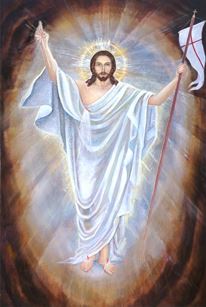
Every year at the end of the Great Lent we commemorate the death and resurrection of Christ. The Lenten period is the time of preparation when we need to stop and devote more time to God and our soul. Jesus said about the liberation of man from the evil spirit: “This kind of demon does not go out except by prayer and fasting.” (Mt 17)
Fasting can be physical or spiritual.
Spiritual fasting: We should abstain from useless and harmful information. It requires discipline of vision and thought. Our thoughts are influenced by the mass media, billboards, people we talk to who think only of earthly and vain things and do not think or speak about the most important things, such as death, God’s judgment and eternity.
There is not only a “negative” aspect of fasting – that you abstain from something, but also a “positive” one – that you receive information leading to the recovery of intellectual and spiritual life.
Some people turn off the television and do not watch it all through the Lenten period. The time they save they devote to prayer, reading the lives of saints or the Holy Scriptures, or family life.
Physical fasting: As far as food is concerned, it is recommended that we choose a certain form of fasting. It is a common practice for Christians to observe a fast on Wednesdays and Fridays throughout the year. During the Lenten period, all try to make an extra resolution. We have several years’ experience of a fasting rhythm which one can practise all through the year. It is a fast of three and a half days a week (cf. Rev 11). On fasting days we eat nothing, we just drink water. The fast lasts from Sunday evening to Monday evening (24 hours), from Tuesday evening to Wednesday evening (24 hours), and from Thursday evening to Saturday morning (36 hours) – three and a half days altogether. Sunday is the Day of Resurrection, so according to an ancient tradition, there is no fast on Sunday.
Prayer in Lent: We contemplate the passion of Christ. One form is the Stations of the Cross, which we can practise at home – it was a common practice of the Catacomb Church when the believers used their prayer books containing the Stations of the Cross with images. Another form is contemplation of the sufferings of Christ according to His seven last words on the cross (see booklet “Death and Resurrection of Christ” http://vkpatriarhat.org/en/?category_name=celebration-of-sunday). Contemplation of the sufferings of the Lord consists of reflections on Gethsemane, the Stations of the Cross and the seven last words from the cross. The optimal time for reflection is from 20:00 to 21:00, the so-called holy hour.
On Thursday from 20:00 to 21:00 we contemplate:
a) the Last Supper and Gethsemane,
b) from Gethsemane to Golgotha,
c) the first word from the cross.
On Friday from 20:00 to 21:00 we contemplate:
a) the second word from the cross
b) the third word from the cross
c) the fourth word from the cross.
On Saturday from 20:00 to 21:00 we contemplate:
a) the fifth word from the cross
b) the sixth word from the cross
c) the seventh word from the cross.
In the Lenten period we also pray the Rosary.
Thought of death: Think of Jesus’ death on the cross for one minute every day. At the same time, think of your death too and realize the unity of your death and Christ’s death. Repeat together with Jesus His last words on the cross: “Father, into Your hands I commit My spirit.”
Prayer stop: We have practised a prayer stop seven times a day for several years – when getting up, at 9:00, 12:00, 15:00, 18:00, 21:00 and before sleep. The prayer stop consists of three parts. Two permanent parts – prayer of contrition and an act of love. The third part changes every two weeks (Word of Life).
We say the prayer of perfect contrition, calling on the name of Jesus. God’s Word says: “Whoever calls on the name of Jesus will be saved.” We stand by the cross in spirit, and look at the five wounds of Christ. And we repeat five times: “Jesus, Jesus, Jesus, have mercy on me.” The prayer of contrition will be most needed at the moment of death. This prayer is like a spiritual insurance against eternal damnation. (see http://vkpatriarhat.org/en/?p=4952) During Lent, realize that at the moment when you call on the name of Jesus and achieve an act of perfect contrition, God forgives you your sins. You can say in the spirit: “Jesus, I believe, and I thank You!” Remember that these sins have been erased from the book of life. In the hour of death you will be judged of them no more.
An act of love (Shema Israel): The greatest commandment is to love God with all our heart, with all our soul and with all our strength. Jesus is true God and our Saviour. We say: “Jesus, my God, I love You with all my heart, with all my soul and with all my strength. Now I lose my soul for Your sake and the Gospel’s.” Realize the words “I lose my soul for Your sake” at least once a day during the Lenten period.
Word of Life: This is a Bible verse. We now live the words of Jesus. It is recommended that one not only reads these words but learns them by heart. Try to realize the essence of these words, how these words relate to you. Realize that God is speaking to you through these words. Even mechanical repetition of the words is of great significance both spiritually and mentally.
“Blue Life” in Lent: Children make a certain resolution for the week days in Lent (i.e. except Sundays). They write down the tasks and every time they fulfil the task, they colour in a square blue. Example:
– The fight against laziness – when you get up quickly or obey your mother, you can colour in the square at once.
– When you pray the morning prayer stop.
– When you clean your teeth.
– When you do short morning exercise (3-5 minutes).
– The fight against “a sweet tooth” – you resolve not to eat sweets, chocolates (except on Sundays).
– The fight against curiosity – you resolve not to watch TV.
– Older children who have mobile phones resolve not to use them. They resolve not to use the internet, except in the case of school duties, and not to visit the websites they do not need to.
– When you do a good deed – either you help at home, or you help other people (e.g. you give up your seat for an older person in the bus).
– When you pray the prayer stops during the day (9:00, 12:00, 15:00, 18:00, 21:00). It does not have to be exactly at that hour, you may pray during a break between classes which is closest to this hour.
– When you pray at least for 15 minutes in the holy hour. Children who go to bed earlier can pray for the first 15 minutes and then two prayer stops (instead of 21:00 and before sleep).
Great Lent (video-lecture): http://vkpatriarhat.org/en/?p=5754
Download: Lent