4) HALIK AND HERESIES
In the current crisis period, the majority of the Catholic hierarchy and theologians have adopted an anti-Gospel and the spirit of Assisi – the spirit of New Age, the spirit of antichrist. They thus officially expelled the Holy Spirit – the Spirit of Truth – from the Church. An example of a heretical theologian in the Czech Republic and in the EU is T. Halik.
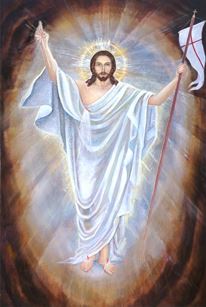
T. Halik does not formulate his heresies concretely and clearly, on the contrary, he does not formulate them at all, and that intentionally. His conceptions of faith and salvation have completely different contents from how they have been accepted and comprehended in the Catholic Church. He states: “Resurrection of Christ is no other ‘miracle’ from the series of wonders which a reader of the Bible has already got used to…” (T. Halik: Night of the confessor, 2006, pg. 21f) What does T. Halik want to express by this statement? In the first place he implicitly denies whatever miracle and hence, of course, even the greatest miracle of the Bible – Christ’s resurrection. However, he does not say it clearly. He counts on human pride and on the fact that man wants to look “on the level” so as to be taken seriously. But in order to be taken seriously by T. Halik, one has to renounce normal thinking because it looks primitive. One has to adopt some kind of “higher” thinking and “higher” knowledge (gnosis). Who is not willing to respect this “higher” knowledge (today the New Age and buddhist gnosis) of his as the knowledge of someone who is an expert in spiritual sphere, is considered to be on a low spiritual and intelligence level, incapable of engaging in a dialogue on a “higher” level with him. When he evokes such atmosphere of pride and draws his listeners, especially young people, into it and when in this way he starts speaking to them of Christian mysteries, then suddenly, without any intention, they will draw such conclusions in which all fundamental truths of Christianity are denied and ridiculed. This happens in such a way that T. Halik does not even express the heresies clearly but his listeners automatically draw an inference in that spirit and accept them internally. When those who manage to recover from this find out that actually they have already got beyond the teaching of the Catholic Church and when they want to convict T. Halik of heresy, they will be ridiculed by him, that this heresy was pronounced by them, not by him. In this respect he is really a master of lie and deceit who abuses words, gives them different meanings and artfully distorts the truth at various levels. He uses Christian terminology, but introduces the spirit of buddhism, the spirit of the New Age!
T. Halik further says about resurrection: “By this conception (or if you like by an image or a metaphor) one wants to tell much more.” We are asking: What much more? In fact, by this statement he covertly denies the very historical event of Christ’s resurrection. However, this is a heresy condemned long time ago!
Halik ridicules the truths of faith, he even calls Christ’s resurrection a myth and a fairy-tale with a happy ending. Quotation: “The story of Easter can be read in two completely different ways. Either as a two-act drama where in the first act a just and innocent man is condemned and executed, and in the following, second act, he is risen and received by God. This first reading means that ‘resurrection’ is a happy end and the whole story is therefore a typical myth or an optimistic fairy-tale with a happy ending.”
Who takes the true of resurrection in earnest, the one finds oneself in a position of primitive man who takes seriously myths and fairy-tales with happy endings. T. Halik thereby ridicules the resurrection and psychologically does not permit anyone to receive it in the way as it has been preached by the Church throughout the two millenia.
T. Halik continues: “The second reading (can be read) as a one-act drama in which both versions of the story take place simultaneously. Yet only the second, ‘parallel’, reading, is a reading through the eyes of faith. However, the faith here means two things: partly an understanding that there is a paradox (that the second level of the story of ‘resurrection’ is a reinterpretation of the first one, not its happy conclusion)…”
Out of this nonsense and obscuration of terms, which are antilogical, T. Halik makes big mysticism and who does not believe it, the one is a total primitive, because “…only the second ‘parallel’ reading is a reading through the eyes of faith.” It means that who does not construct whatever total absurdities from the Gospel which do not correspond with reality at all and then does not read these absurdities through the eyes of faith, the one is unbelieving, whereas the one who does not know what it’s all about but tries to give an air of complete agreement with T. Halik, such man in his opinion is a believing Christian. Will this be a generation of modern Christians inspired by Tomas Halik? Regrettably with tacit blessing of Card. M. Vlk.
T. Halik further states that “the faith means two things here”. We are really curious about them! The first thing which the faith is supposed to mean is an understanding that “there is a paradox”, so, in fact, he thereby says that first we need to understand that these absurdities of his, which he submits to be believed, are so paradoxical that they really cannot be understood and that one has to believe them by this strange faith. Only some higher spiritual group of intelligence, which has its permanent residence in mental home, is able to penetrate into this “higher” mysticism; all the rest are left just to believe in these absurdities. Is this the future Christianity to which T. Halik is trying to convert us?
T. Hal?k further explains his paradox in the way that “the second level of the story of ‘resurrection’ is a reinterpretation of the first one, not its happy conclusion”. What does he mean by this “reinterpretation” is not said. Intentional understatement belongs to his effective theological – demagogical methods.
T. Halik does not admit even one per cent possibility that the real historical resurrection could have taken place. In his view, resurrection signifies only another expression of death. Rather than receive the clear news of the Gospel as it is, he invents such total nonsense. He piles a plenty of incongruous terms so that a plain and logical event of the Gospel should not be received as it is but that it should become complicated and impossible for sound reception. He puts together death and resurrection, claims that it is one and the same thing, and demands a belief in this nonsense and paradox. This “higher” mysticism of T. Halik is obviously based on the buddhist koan because, as he says, everything is one in essence. What does the term “reinterpretation” mean according to T. Halik? Christ did not die, He is ‘alive forever’, similarly to Lenin about whom bolsheviks declared the same after his death: they said that he lives in his writings and heritage of thought which he left.
We ask in earnest what this has in common with the saving biblical faith. What is the biblical faith? This faith is expressed in our Christian Creed and in receiving Jesus as one’s personal Saviour and Lord who died on Golgotha for my sins, overcame the spirit of lie and death and by His resurrection confirmed His Divinity as well as the truthfulness and bindingness of the Gospel which is connected with the eternal life and future resurrection. This faith leads us to a reasonable thinking and gives us the strength to bear our life crosses. This faith, however, is diametrically different from T. Halik’s faith built on absurd paradoxes.
In his book “There is No Firmness Without Trembling” T. Hal?k presents the following axioms:
1) The Word of God is not accepted as the truth revealed by God; 2) human reason is denied the possibility of objective knowledge (see pg. 82, 83). A practical example is Halik’s answer to the question if all religions are equal. His answer is: “I can give three different answers and insist on all of them: NO, I DO NOT KNOW, MAYBE.”
ad 1)“My answer is NO … as a religionist who, when studying religions more closely, can see a number of differences.”
This answer is not an answer to the substance of the question. Christian religion is revealed by God, pagan religions are a mere figment of human psychology and philosophy.
ad 2) “I DO NOT KNOW – and I inherently distrust people who pretend to know it,… no man knows ‘all religions’ so much that he could adequately compare and evaluate them.”
Setting a lack of knowledge as if it was a wisdom and thereby excluding a possibility for a correct answer results in the truth being knocked down. The Church is the mystical body of Christ, the source of the revealed Truth given for one’s salvation. Thereby it differs from pagan religions.
ad 3) “‘MAYBE’ (all religions are equal). … if I want to have a true dialogue, I have to put aside the conviction that I am the exclusive proprietor of the whole Truth.”
What does this “maybe” mean? If we use this question to compare various pagan religions among themselves, then we can nod that maybe they are equal, but the teaching of the Church is as follows: “It would be contrary to the Catholic faith to consider the Church as one way of salvation alongside those constituted by the other (pagan) religions… One cannot attribute to these a divine origin…” (Dominus Iesus, 21) (see Four Words from Ukraine, http://www.community.org/book.html)
T. Halik tries to persuade the readers that there is no absolute truth, that there is no difference between truth and lie, good and evil and that somewhere deep all contradictions are one. On this foundation he further persuades the readers that Christian God and god of buddhists is identical and he states that it is possible to be a buddhist and a Christian at the same time: “I am a Christian and a Buddhist at the same time.” (pg. 96). This is apostasy.
In his writings and speeches Halik demagogically denies the essential truths of common human sense, casts doubt upon the normal way of thinking and raises his own philosophical axioms which have no foundation and, on top of it, are illogical.
In the view of T. Hal?k Christ and Buddha are one and all actually is one, even contradictions are one (pg. 57).
T. HalIk does not admit the unicity of Christ and Christianity in relation to pagan religions with respect to salvation (pg. 55), and therefore he is not a Christian any longer.
In all his books Halik ridicules all Christian foundations. He pulls down all the pillars of Christianity. In the Epistle to the Romans there are pointed out the two roots of homosexuality, and that is human pride that denies the true God, the Creator, and idolatry which is the worship of man, animals and demons (cf. Rom 1:18-27). The apostate priest T. Halik denies the true God, has embraced the idolatry of syncretism and become an advocate of homosexualism. If he is a Buddhist, let him be one, but he can then no longer be a Catholic or a Christian!
Compiled by the Bishops’ Synod of the Ukrainian orthodox Greek-Catholic Church
Cc:
– President Vaclav Klaus
– Vice Chancellor Petr Hajek
– Chairman of the Czech Bishops’ Conference Msgr. D. Duka
– Mass media in the Czech Republic