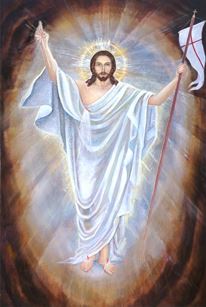
Lord, let me see!
 We should see Christ in our neighbour. In the parable of the Last Judgment, Jesus says the same to those who will be saved and to those who will be condemned with only a slight difference: “…whatever you did for one of the least of these brothers of mine” or “whatever you did not do”. And then He says: “you did for Me” or “you did not do for Me”. Jesus is in my neighbour, especially in my brother – he is baptized, has received Christ, wants to follow Him with a sincere heart, and even wants to sacrifice his life for His sake, and yet there is a barrier – spiritual prison. My brother does not see Christ in himself and neither do I, and what is more, I do not see Christ in me either, so there is double blindness – the two of us do not see.
We strive to fight against sin and repent, so Christ abides in us through faith. But where and how does He abide in us? He is not on the throne of our heart to reign. There is our ego there. He is like a beggar somewhere in the corner and not only that. He is literally in prison. Our ego, our sin keeps Him in prison so that He cannot live in us. He is in prison and we have not come to Him. When did I realize at least once that Jesus is in me? When did I stop in my decision-making, seeking His will? How many self-willed decisions – i.e. without Jesus – I have made during the day!? He is hungry in me. And I do not give Him the food of my obedience to God’s Word. He is thirsty in me. He thirsts to make me free, to help me, and so He Himself becomes a prisoner. He thirsts after my love, He thirsts after my time for Him. Jesus says, “I was sick and you did not visit Me.” He is sick in me. He wants me to come to Him. He took upon Himself my sickness, my sins. He carried our iniquities, a man of sorrows; He had no form or comeliness (cf. Isa 53:3-4). I was sick – and you did not come to Me. Why? Why did you not come? Because you had your interests, your worries, your enjoyments, your truths. That was why you did not come to Me. When Jesus was scourged, He was stripped of His garments. He was almost naked. Before the soldiers nailed Him to the cross, they stripped Him of His garments which had stuck to the body, to His wounds. When He was nailed to the cross, He was naked. “I was naked and you did not clothe Me.” The thought of the sin of unchastity, nakedness, is related to our mind (heart) as well. E.g. when the old self exposes the nakedness of the brother not to clothe him but rather to disgrace him even more. “When I was naked, you did not clothe Me in the garments of chastity, in the thoughts of chastity.” How unchaste our heart is through various films or sights which penetrated our heart through billboards, obscene images in magazines, or which were “shot like an arrow” into our heart without our consent, or sometimes even with our consent. Christ suffers nakedness for these sins – “and you did not clothe Me”. So Jesus is in the prison of the soul infected with original sin. In this prison, He is naked, sick, thirsty, hungry and abandoned. “You did not come to Me, today you did not come to Me and comfort Me.”
Thus, we will be judged not only for doing bad things but also for ignoring Jesus in us and for ignoring Him, hungry and thirsty, in our brethren too. Telling this parable, Jesus points out physical mercy towards our neighbour; however, it fully applies to the spiritual sphere too. If I become aware of these sins in relation to Jesus, these sins of negligence, indifference or spiritual cynicism, which I commit repeatedly day after day, as well as spiritual blindness – my failure and even reluctance to think of what Jesus suffered for me, I should be cut to the heart. That’s why I call: Jesus, please pierce my heart of stone and let me see that I live my own way of life, that I seek and do my own will and do not seek the kingdom of God and His righteousness. I make no effort to seek Your will in earnest and do it. I waste precious time, time which will never return, time in which my and my neighbours’ eternity is being decided. I am spiritually blind. I do not see Jesus in me and I do not see Him in my neighbour either. Unless my stereotyped way of thinking in certain respects undergoes a painful change through sincere repentance according to the standards of Jesus’ commandments, in other words, unless I build a system of virtues, or good habits, unless I put on Christ, I waste my time and in the hour of death – which can be today – I will weep over all my life. Lord, let me see! These are the words of the blind man in the Gospel. The Resurrection of Christ is tied up with the words: “…and their eyes were opened.” We will surely see Christ in the hour of death. May we then hear His voice saying: “Good and faithful servant, enter into the joy of your Lord!” Are we faithful servants? Are we faithful in suffering, in trials? At such moments we see our weakness, the power of our old self which deceives us and holds us in bondage to lies and blindness so that we do not see Jesus either in ourselves or in our brethren.
Jesus is both in you and in your brother, and it is painful that you do not see Him and the eyes of your faith are blind to this truth. “And I did not know it,” Jacob said when on his way to Haran he had a vision of a ladder and angels descending and ascending on it, and a vision of the glory of God. He said: “How holy this place is! This is the gate of heaven, and I did not know it!” Indeed, your soul is the gate of heaven and, what is more, angels descend and ascend to worship Christ who is in you and whom you do not see. Saint Augustine says in tears: “How much time I wasted! I did not see Your love and I did not love You. Too late have I loved You.”
Download: Lord, let me see!